
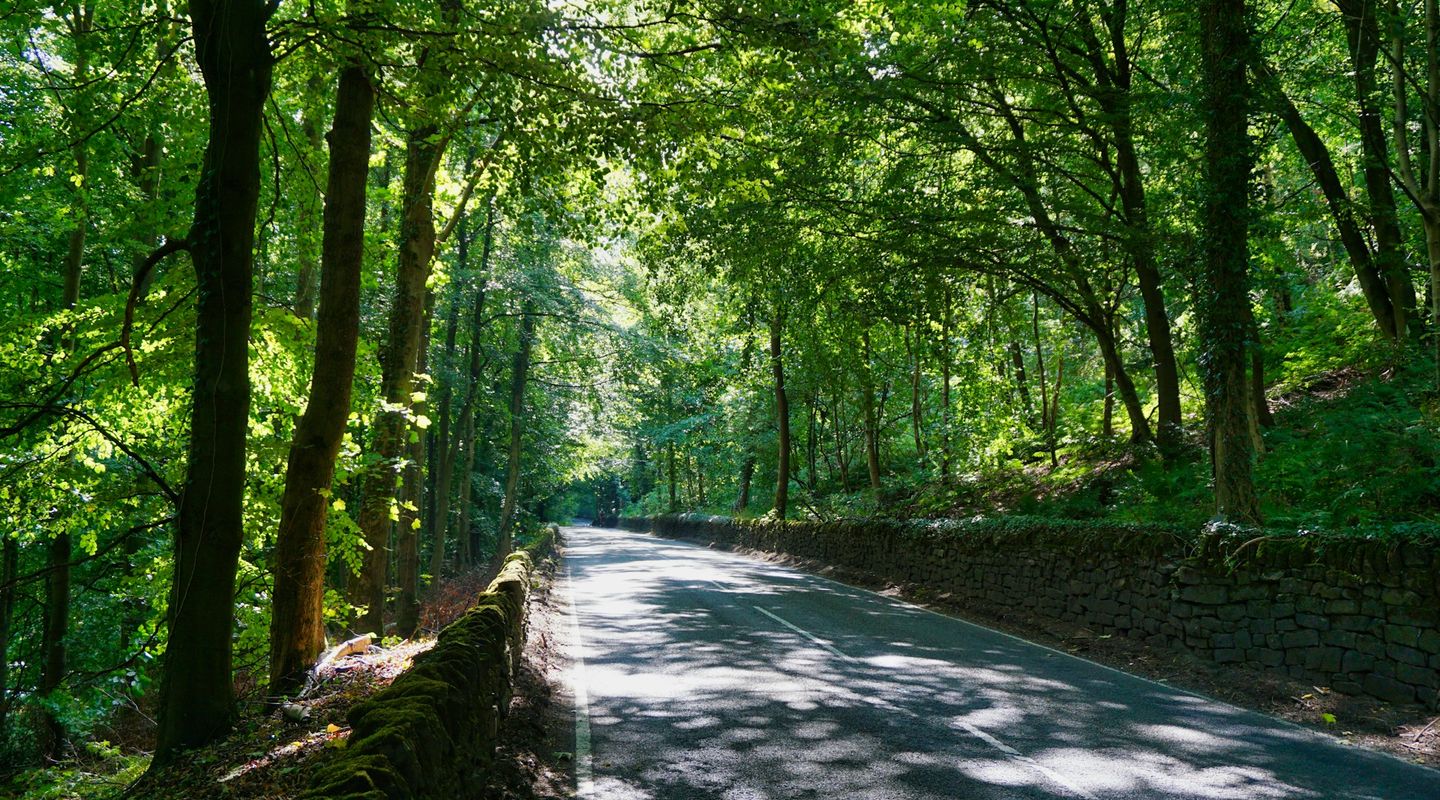
Single carriageways explained: rules and speed limits
A single carriageway is a road where the two directions of traffic are not separated by a central reservation. The national speed limit for a car on a single carriageway is 60mph, though many single carriageways have lower limits. The defining feature is the lack of a central reservation, not the number of lanes.

Earn points and use them to save money in the app. Download today.


What is a single carriageway?
A single carriageway is a road where traffic travelling in opposite directions is not physically separated by a central reservation. The two directions share the same stretch of carriageway, often divided only by road markings.
The key point is that the definition is about separation, not the number of lanes. A wide road with several lanes can still be a single carriageway if there is no central reservation, while a narrow road with one lane each way separated by a barrier is a dual carriageway.
Several Highway Code rules around road priority and vulnerable road users have changed in recent years - our guide to the recent Highway Code changes covers the biggest rule updates and what they mean for drivers day to day.
What is the speed limit on a single carriageway?
The national speed limit for a car or motorcycle on a single carriageway is 60mph. This is the maximum that applies when no other limit is signed, shown by the national speed limit sign: a white circle with a single diagonal black stripe.
Many single carriageways have lower limits, such as 30, 40 or 50mph, set by local signs. Where a lower limit is signed, that limit applies. The 60mph national limit is a maximum for ideal conditions, not a target, and a safe speed is often well below it.
For a journey on these roads in a borrowed or hired car, temporary car insurance is the quickest way to get your own cover for the trip.
How is it different from a dual carriageway?
The difference is the central reservation, not the number of lanes. A dual carriageway has a central reservation or barrier separating the two directions of traffic; a single carriageway does not.
This catches people out, because a single carriageway can be wide with multiple lanes, and a dual carriageway can be narrow. If there is a physical separation down the middle, it is a dual carriageway; if the only thing between you and oncoming traffic is paint, it is a single carriageway.
Motorways are the highest tier of road, and a guide to the UK's major motorway routes explains the main ones and what sets them apart.
Many routes transition between single and dual carriageway - our guide to dual carriageways explains the different speed limits, road markings and rules that apply once the central reservation appears.
Speed limits for vans and larger vehicles
Speed limits on a single carriageway are lower for some vehicles. A standard van or goods vehicle up to 7.5 tonnes is limited to 50mph, rather than the 60mph that applies to cars.
A car towing a trailer or caravan is also limited to 50mph on a single carriageway. Car-derived vans, the small van versions of ordinary cars, follow the car limits instead. Always apply the lower of the national limit and any signed limit.
Speed limits are just one of the adjustments - our guide to driving a van for the first time covers everything from blind spots to parking in a practical step-by-step guide.
Different speed limits apply to vans on single carriageways - but first you need to be licensed for the vehicle - our guide to what vans you can drive on a car licence explains the 3,500 kg limit and when a higher licence category is required.
Why single carriageways need extra care
Single carriageways carry a high share of serious collisions, because oncoming traffic is close and overtaking means crossing into its path. Combined with junctions, bends, and slower vehicles, this makes them more demanding than their open feel suggests.
Overtake only where you can see far enough ahead and the markings allow it, never on the approach to a bend, junction or brow of a hill. The 60mph limit can feel safe on an open stretch, but the same road can be lethal where visibility drops.
Overtaking on a single carriageway
Overtaking on a single carriageway means using the opposing lane, so it carries real risk and must be judged carefully. Only overtake when you can see the road is clear far enough ahead to pull out, pass and return safely.
Road markings guide you: where the line on your side is solid, you must not cross it to overtake except in limited circumstances. Double white lines and hatched areas are there precisely where overtaking is most dangerous, so treat them as a firm instruction.
Misjudging the gap when overtaking is dangerous, and knowing the stopping distances at each speed helps you judge when it is safe to go.
Fixed cameras are also common on faster single-carriageway stretches - our guide to UK speed cameras covers Gatso, average-speed, and AI camera types and how each works.
This is where most overtaking risk sits, and our complete guide to overtaking rules covers dual carriageways, cyclists and HGVs too.
Single-track roads and passing places
A particular type of single carriageway is the single-track road, common in rural and upland areas, where there is only enough width for one vehicle. These rely on passing places: short widenings, often marked with a sign, where one vehicle waits to let another by.
The etiquette matters as much as the rules. If an oncoming vehicle approaches and the passing place is on your left, pull into it; if it is on your right, wait opposite it so the other driver can use it. Never park in a passing place, and use them to let faster traffic behind you overtake rather than holding up a queue. Single-track roads also demand low speeds and good anticipation, because you cannot see far around bends and a tractor, cyclist or walker could be just out of sight. A friendly wave to acknowledge a driver who has waited for you is the custom on these roads, and it keeps the whole system working smoothly for everyone using them. Reversing to the nearest passing place is sometimes the right thing to do if you meet head on, so be ready to give way as well as to take your turn.
Single carriageways and the Highway Code
The rules for single carriageways sit within the wider Highway Code guidance on speed and overtaking. Knowing the national limit is only part of it; reading the road, the signs and the markings is what keeps you safe.
For the related rules on faster roads, our guide to dual carriageways and motorway driving covers how limits and lane discipline change once the directions are separated. The national speed limit sign is also covered in our guide to UK road signs.
Frequently asked questions
What is the speed limit on a single carriageway?
The national speed limit for a car on a single carriageway is 60mph, shown by the national speed limit sign. Many single carriageways have lower signed limits, such as 40 or 50mph, and where one is signed it applies instead.
What is the difference between a single and dual carriageway?
The difference is the central reservation, not the number of lanes. A dual carriageway separates the two directions of traffic with a central reservation or barrier; a single carriageway does not, so only road markings divide oncoming traffic.
Can a single carriageway have more than one lane?
Yes. A single carriageway can have several lanes and still be a single carriageway, because the definition is the lack of a central reservation. If there is no physical separation between the two directions, it is a single carriageway whatever the lane count.
What is the van speed limit on a single carriageway?
A standard van or goods vehicle up to 7.5 tonnes is limited to 50mph on a single carriageway, lower than the 60mph for cars. Cars towing a trailer are also limited to 50mph. Car-derived vans follow the car limits.
Why are single carriageways more dangerous?
Oncoming traffic is separated only by markings, and overtaking means crossing into its path, so single carriageways carry a high share of serious collisions. Junctions, bends and slower vehicles add risk, so a safe speed is often well below the 60mph limit.
Temporary insurance quote
Get a price in under 60 seconds!