

What vans can you drive on a car licence?
A standard car licence (category B) lets you drive any van up to 3,500kg maximum authorised mass, which covers the vast majority of vans on the road. Heavier vehicles need an additional licence: C1 for 3,500 to 7,500kg, and C above that. Electric vans get a little more leeway.

Earn points and use them to save money in the app. Download today.


Can you drive a van on a car licence?
Yes. A standard category B car licence lets you drive a van, provided it does not exceed 3,500kg maximum authorised mass (MAM), sometimes called gross vehicle weight. That covers most vans, including popular models the size of a Ford Transit and below.
So for an ordinary house move, DIY run or hire van, your normal driving licence is almost certainly enough. The licence question only arises with larger, heavier vans, which is where the categories above category B come in.
Once you know which van you can legally drive, the next step is understanding the limits that apply - our van speed limits guide breaks down what applies on different road types for vans of different weights.
What is the maximum weight on a car licence?
The limit is 3,500kg MAM. Maximum authorised mass is the most the vehicle is allowed to weigh fully loaded, including the van itself, the fuel, the driver, passengers and the cargo, not just the empty weight.
This matters because a van can have plenty of physical space but still hit its weight limit before it is full. You can find the MAM on the van's plate (usually in the door shut or under the bonnet) or in the V5C logbook. As long as it is 3,500kg or under, a category B licence covers it.
The classification can affect which rules apply - our guide to car-derived vans explains what qualifies as a car-derived van and why the distinction matters for insurance, speed limits and road tax.
Are electric vans different?
Yes, slightly. Because batteries are heavy, the law allows category B licence holders to drive zero-emission vans up to 4,250kg MAM, rather than 3,500kg. The extra 750kg is to account for the weight of the battery and electric powertrain.
This means an electric version of a van you could drive on a car licence is still covered, even though it weighs more than its diesel equivalent. The allowance applies to fully electric and hydrogen vans, not to hybrids.
Whichever type you drive, our guide to driving a van for the first time covers the practical things to know.
What needs a C1 or C licence?
Above 3,500kg, you need more than a car licence:
- 3,500kg to 7,500kg MAM requires a category C1 licence
- Over 7,500kg MAM requires a full category C (lorry) licence

A large Luton van or a 7.5-tonne box van therefore needs at least a C1. Anyone who passed their car test before 1 January 1997 usually has C1 entitlement automatically; those who passed later have to take a separate test for it.
Taking your test in an automatic or semi-automatic restricts you to those vehicle types - our guide to semi-automatic gearboxes explains what the licence restriction covers and which gearbox types fall under it.
If you are licensed for the van, the next question is whether to hire a man with one or borrow it yourself - our comparison of man with a van versus borrowing one weighs the effort, cost, and insurance responsibility of each option.
Passenger and seat rules
A category B licence covers vehicles with up to 8 passenger seats in addition to the driver. Vans are goods vehicles, so this is rarely the limiting factor, but it matters for crew vans and minibus-style vehicles.
If a vehicle has more than 8 passenger seats it is treated as a minibus or bus and needs a category D1 or D licence, regardless of its weight. For ordinary vans, the weight limit is what to watch, not the seats.
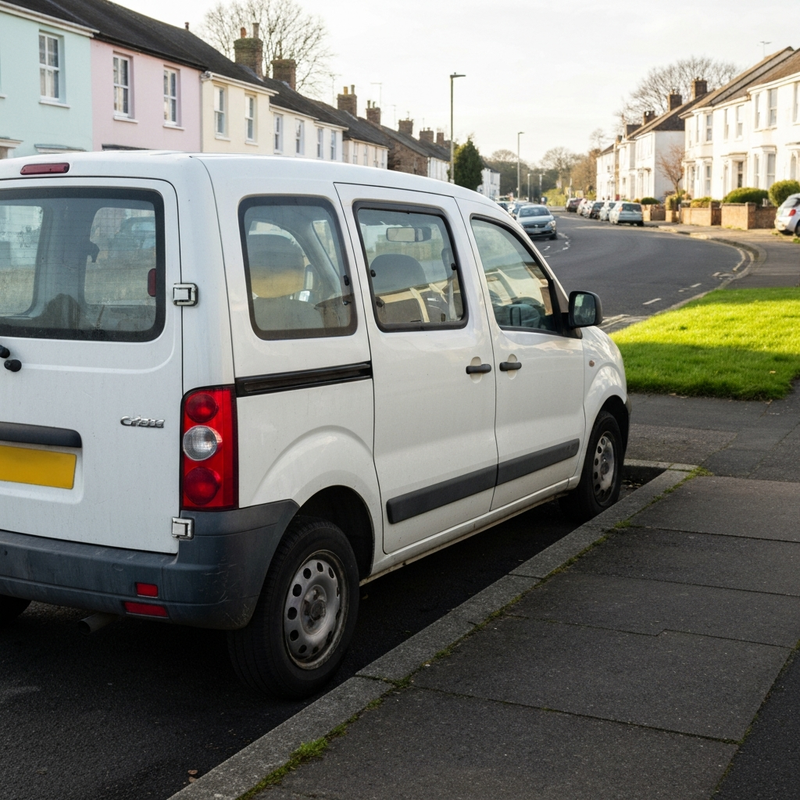
Towing with a van on a car licence
The towing rules changed in December 2021. All category B licence holders can now tow a trailer up to 3,500kg MAM without taking a separate towing test, which was previously required for heavier trailers.
Drivers who passed their car test before 1 January 1997 generally keep wider entitlement, able to drive a vehicle and trailer combination up to 8,250kg MAM. Either way, you must still stay within the van's own towing limits and load everything safely.
Size and weight are not the only differences behind the wheel - how a van differs from a car to drive is worth reading before your first trip.
Speed limits for vans are lower on single carriageways than they are for cars - our guide to single carriageway rules sets out the specific limits that apply to larger vehicles.
What happens if you drive a van you are not licensed for?
Driving a van heavier than your licence allows is driving otherwise than in accordance with a licence, which is an offence. It carries penalty points and a fine, and crucially it can invalidate your insurance, because you are not licensed to drive that vehicle. An invalid policy means that, in an accident, you could be treated as uninsured and left personally liable.
Overloading is a separate but related risk. Even a van you are licensed to drive must not exceed its maximum authorised mass or its individual axle weights. Overloading is an offence that can bring a fine, and a seriously overloaded van handles and brakes far less safely. Both problems come down to the same habit: check the weights before you load and drive, rather than assuming a van you can fit everything into is a van you are allowed to drive fully laden. If you are ever unsure whether your licence covers a particular van, check before you drive it, because the consequences of getting it wrong fall on you, not the hire company or the owner.
Once you know you are within your licence category, a short-term van policy makes it straightforward to get covered for a one-off trip.
How to check what you can drive
To be sure, check two things: the van's MAM on its weight plate or V5C, and your own licence categories. You can view your licence entitlement online through the GOV.UK service to check your driving licence information.
The official rules are set out in the GOV.UK guidance on driving a van, which covers who can drive a van along with the speed limits, weight limits and loading rules. If the van is 3,500kg or under and your licence is category B, you are good to go, just make sure you are insured before you drive.
Frequently asked questions
Can I drive a Transit van on a normal car licence?
Yes. A standard category B car licence covers any van up to 3,500kg maximum authorised mass, which includes Transit-size vans and smaller. You only need an additional licence for vans heavier than 3,500kg.
What does MAM mean for a van?
Maximum authorised mass is the most the van is allowed to weigh fully loaded, including the vehicle, fuel, driver, passengers and cargo. A category B licence covers vans up to 3,500kg MAM. You can find the figure on the van's plate or in the V5C logbook.
Can I drive an electric van on a car licence?
Yes, and the limit is higher. Category B licence holders can drive zero-emission vans up to 4,250kg, rather than 3,500kg, to allow for the weight of the battery. This applies to fully electric and hydrogen vans.
What licence do I need for a 7.5 tonne van?
A 7.5-tonne van needs a category C1 licence, which covers vehicles from 3,500kg to 7,500kg. Drivers who passed their car test before 1 January 1997 usually have C1 automatically; those who passed later must take a separate test.
Can I tow a trailer with a van on a car licence?
Yes. Since December 2021, category B licence holders can tow a trailer up to 3,500kg without a separate towing test. You must still stay within the van's own towing limits and secure the load safely.
Temporary insurance quote
Get a price in under 60 seconds!