

Driving a van vs a car: the key differences
A van drives much like a car in principle, but several differences matter. There is usually no interior rear-view mirror, the blind spots are bigger, the vehicle is taller and longer, and it takes longer to stop, especially with a load. Knowing these before you drive makes the switch easy.

Earn points and use them to save money in the app. Download today.


Do you drive a van differently from a car?
The controls of a van are the same as a car, a steering wheel, the same pedals, and either a manual or automatic gearbox. If you can drive a car, you can drive a van. What changes is everything around the controls: visibility, size, weight and how the vehicle behaves.
Most people adapt within a few miles, but the first few minutes can feel unfamiliar. Understanding the specific differences in advance is what makes that adjustment quick and safe rather than a surprise on a busy road.
Bus lane restrictions are one of the road rule differences that most affect van drivers in urban areas - our guide to vans and bus lanes covers exactly which van types can and cannot use bus lanes.
No interior rear-view mirror
The single biggest difference is the mirror. A car has an interior rear-view mirror as your main view behind; most vans do not, because a bulkhead or a full load area blocks the view entirely.
In a van, the two door mirrors are your only view of the road behind, so they have to be set carefully and used constantly. This takes a little getting used to if you are accustomed to glancing at an interior mirror, and it is the change first-time van drivers notice most.
Smaller panel vans that share a car platform sit in their own category - our guide to car-derived vans covers how they are defined, what rules differ, and how that affects your insurance.
Bigger blind spots
With no rear-view mirror and a larger body, a van has significantly bigger blind spots than a car, especially directly behind and on the nearside. A vehicle, cyclist or pedestrian can sit completely unseen in these areas.
This makes mirror discipline and shoulder checks more important than in a car. Check your mirrors early before any manoeuvre, look twice before changing lanes, and take extra care pulling out at junctions where the nearside blind spot can hide an approaching cyclist.
Blind spots are not unique to vans - our guide to windscreen pillars and blind spots explains how car design affects what you can see.
Height and width
A van is taller and wider than a car, which matters in places a car driver never thinks about. Low bridges, height barriers in car parks, drive-throughs and overhanging branches all become hazards you have to plan for.
The extra width affects your road positioning and how much room you need in narrow lanes and when passing parked cars. Always know the van's height before you set off, and give yourself more space on both sides than your instincts from car driving suggest.
Knowing the theory is one thing, but a practical guide to driving a van for the first time covers what to actually do on the road.
Length and manoeuvring
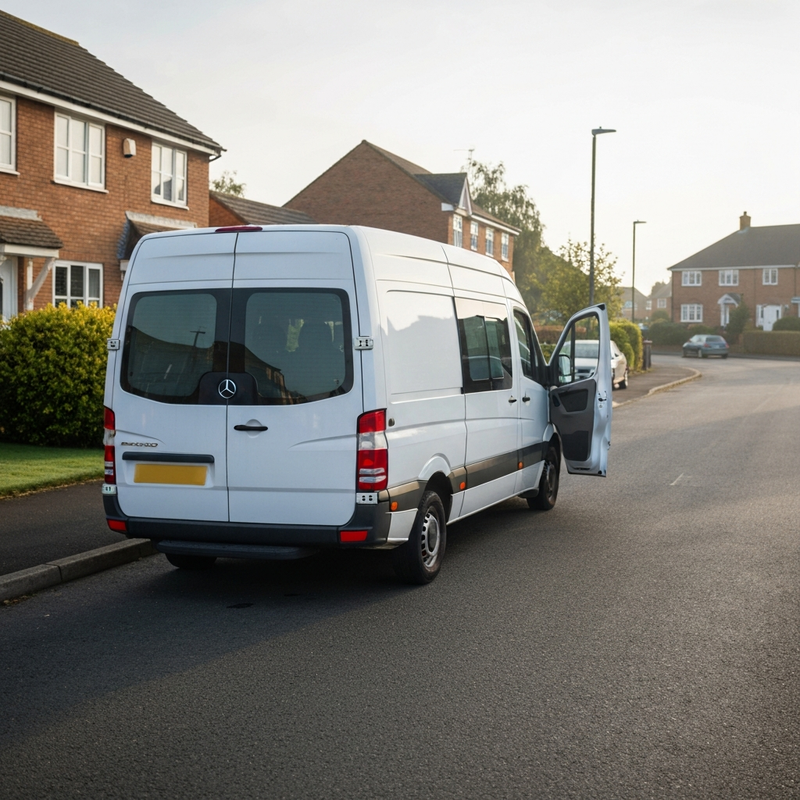
A van is longer than a car, so it turns and parks differently. Corners need to be taken wider and later, because the rear wheels follow a tighter line than the front, and the back overhangs more.
Parking takes more space and more care, particularly reversing without a rear-view mirror. Use the door mirrors to judge the back of the van, reverse slowly, and use a camera or sensors if fitted. If someone can guide you in, accept the help on a tight space.
Braking and weight
A van is heavier than a car even when empty, and much heavier when loaded, so it takes longer to stop. You need to leave a bigger gap to the vehicle ahead and brake earlier and more progressively.
A load also changes the handling, raising the centre of gravity and affecting balance if it is not secured low and over the axles. The same van can feel completely different empty versus full, so adjust your driving to the load you are carrying.
Knowing what you are legally allowed to drive is the first step, and our guide to what vans you can drive on a car licence covers the weight limits and categories.
Everyday differences behind the wheel
Beyond visibility and size, a few everyday things feel different in a van. A manual van can have a heavier clutch and a longer gear throw than a car, and the higher seating position changes your view of the road, which most drivers find an advantage once they are used to it.
Vans are also more affected by side winds because of their tall, flat sides, so you notice gusts on exposed roads and motorways more than in a car. Fuel and running costs differ too, as many vans are diesel and are taxed and serviced as commercial vehicles. None of this makes a van hard to drive; it simply adds up to a vehicle that rewards a bit more anticipation and a more measured pace than a small car. Give yourself a few quiet miles to get a feel for the size and the mirrors before tackling anything busy or tight, and the differences quickly become second nature.
Cost is one factor - the man with a van versus DIY borrowed van trade-off depends on what you are moving and how confident you are driving one.
Speed limits also vary by vehicle type on many roads - our guide to single carriageways explains what the national speed limit means for vans versus cars.
If you need to drive a van you do not own - borrowing one for a move or a one-off job - you will need cover in your own name rather than relying on the owner's policy. A temporary van policy covers you as the driver for the specific period you need, from a single hour to 28 days.
Getting used to a van
The practical advice for switching from a car to a van is simple: take it slowly at first, set and use the mirrors deliberately, and give yourself extra time and space for everything. A few careful miles is usually all it takes.
If a van is new to you, the GOV.UK guidance on driving a van is worth reading for the rules on speed, weight and loading, which differ from a car. And if you are borrowing or hiring one, make sure you are covered with short-term van cover before you drive.
Frequently asked questions
Is driving a van the same as driving a car?
The controls are the same, so if you can drive a car you can drive a van. What differs is visibility, size, weight and handling: no interior rear-view mirror, bigger blind spots, more height and length, and longer braking, especially with a load.
Why is there no rear-view mirror in a van?
A bulkhead behind the seats or a loaded cargo area blocks the view, so an interior mirror would be useless. Instead you rely on the two door mirrors for everything behind you, which is the main adjustment for drivers used to a car.
Are van blind spots bigger than a car's?
Yes. With no rear-view mirror and a larger body, a van has bigger blind spots, especially directly behind and on the nearside. Careful mirror use and shoulder checks matter more, particularly when changing lanes or pulling out at junctions.
Does a van take longer to stop than a car?
Yes. A van is heavier than a car even when empty, and much heavier loaded, so braking distances are longer. Leave a bigger gap to the vehicle in front and brake earlier and more gently than you would in a car.
What is the hardest part of driving a van for a car driver?
Most people find the lack of an interior rear-view mirror the biggest adjustment, along with judging the van's height and length when manoeuvring and parking. Taking it slowly and using the door mirrors deliberately makes the switch straightforward.
Temporary insurance quote
Get a price in under 60 seconds!