

Man with a van vs borrowing a van: which is better?
A man with a van does the driving and the heavy lifting for you, in exchange for paying for their time. Borrowing a van can work out cheaper, but only if you know someone willing to lend one, and you take on the job of driving and insuring it yourself. The right choice comes down to help, effort and responsibility.

Earn points and use them to save money in the app. Download today.


Man with a van vs borrowing a van
Both options solve the same problem, getting your belongings from one place to another, but they ask very different things of you. A man with a van is a service: someone else provides the vehicle, drives it, and usually helps you load and unload. Borrowing a van is a favour: you get the vehicle, but everything else is on you.
Neither is automatically cheaper or better. It depends on how much you have to move, whether you can do the lifting, and whether you have someone who will lend you a van in the first place.
A man-with-van service and a borrowed van are both valid options for a university move - the costs and effort differ significantly - using a van for university move-in day covers insurance options, what size van to book, and how to handle the common chaos of freshers move-in day.
What does a man with a van offer?
With a man with a van, you are paying for the driver's time and their help. They bring the vehicle, handle the driving, and in most cases help you carry and load, which matters a great deal if you have heavy or awkward items.
That help is the real value. If you cannot lift a sofa or a washing machine on your own, or you simply do not want to spend a day hauling boxes, having a second pair of hands and someone who moves things for a living can make the whole job faster and far less stressful.
A garden centre run is one of the most common reasons to borrow a van for the day - and the cover options are the same as for any single-trip borrowed vehicle - temporary insurance for a garden centre van trip explains how to arrange one-day cover for a borrowed van and what loading capacity to check before you set off.
The pros and cons of a man with a van
The main advantage is convenience. You do not drive an unfamiliar vehicle, you do not need your own insurance for it, and you get help with the heavy work. For anyone without access to a van, or without the means to lift large items, it is often the simplest answer.
The trade-off is that you pay for that time and labour, and availability can be limited at busy times such as month-end and weekends. You also have less control over timing than if the van were your own for the day.
When borrowing a van makes sense
Borrowing a van can be the most economical option, but it comes with two conditions. First, you need to actually know someone who owns a van and is willing to lend it. Second, you have to be comfortable driving it and taking responsibility for it.
If both of those are true, borrowing is hard to beat. You set your own timings, take as long as you need, and avoid paying for a service. Just be realistic about the lifting, because unlike a man with a van, there is no one there to help you carry the heavy things.
Licence restrictions apply too, and the vans you can drive on a standard car licence explains the maximum weights and categories.
The responsibility of driving a borrowed van
Driving a borrowed van is not the same as driving your own car. A van is larger, heavier and handles differently, and most vans have no interior rear-view mirror, so you rely entirely on the door mirrors. If you have never driven one, it is worth knowing what to expect before you set off on moving day.
The official rules on who can drive a van, the speed limits and the loading requirements are set out in the GOV.UK guidance on driving a van. It is well worth a read if a van is new to you.
Understanding the driving differences is as important as the insurance, and our guide to how vans handle differently from a car covers what to expect behind the wheel.
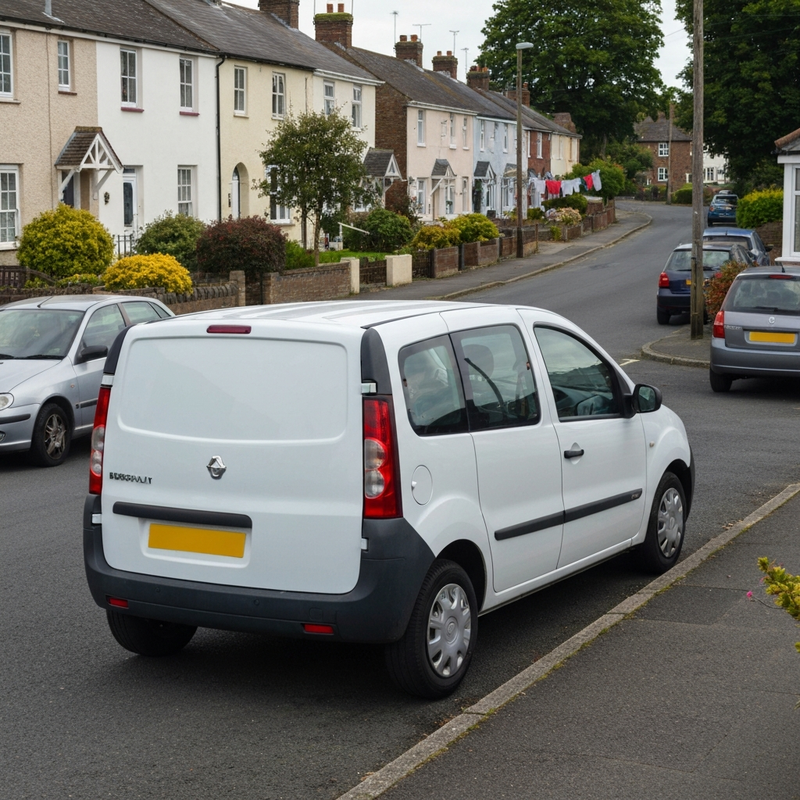
Insuring a borrowed van
If you borrow a van, you almost always need your own insurance, because the owner's policy rarely covers other drivers for a job like a house move. Driving it on their cover, or with no cover, is not worth the risk.
Short-term cover solves this cleanly. A short-term van policy covers you to drive a borrowed van for exactly the days you need, with comprehensive cover as standard, and it keeps any claim away from the owner's policy and their no claims discount. Our guide to insuring a borrowed van to move furniture covers the detail.
If you have never driven a van before, our first-time van driving guide runs through everything from mirrors to manoeuvring.
What about a removals company?
For a bigger move, a full removals company is a third option that sits beyond both. Unlike a man with a van, a removals firm typically brings a team and handles packing, loading, transport and unloading, which suits a whole house rather than a single room or a few items.
It is the most hands-off choice and the most expensive, so it tends to make sense for larger households or longer-distance moves rather than a student move or a small flat. For most one-room or small moves, a man with a van or a borrowed van remains the more proportionate choice, which is why those two are the realistic comparison for most people.

How to decide
The simplest way to choose is to weigh help against responsibility. If you have heavy items, no van to borrow, or no wish to drive one, a man with a van earns its keep. If you have a willing lender, you are happy behind the wheel of something bigger, and you can handle the lifting, borrowing a van and arranging your own short-term cover is usually the cheaper route.
Be honest about the lifting in particular. Saving money on the vehicle is little comfort if you cannot safely move what you need to move once it is parked outside.
Frequently asked questions
Is a man with a van cheaper than borrowing a van?
Not necessarily. With a man with a van you pay for the driver's time and help, but you avoid insuring and driving a van yourself. Borrowing can be cheaper if you have someone to lend you one and you handle the driving and lifting, but it is not free of cost or effort.
Do I get help lifting with a man with a van?
Usually yes. Most man-with-a-van services help you load and unload, which is a major advantage for heavy or awkward items. When you borrow a van, there is no one to help you carry things unless you bring your own helpers.
Can I drive a borrowed van on the owner's insurance?
Rarely. Most van policies do not cover other drivers for a job like a house move, so you usually need your own cover. Temporary van insurance lets you get covered for the days you need without affecting the owner's policy.
What do I need to consider before driving a borrowed van?
A van is bigger, heavier and handles differently from a car, and most have no interior rear-view mirror. Check what your licence allows, arrange your own insurance, and read the GOV.UK guidance on driving a van if it is unfamiliar to you.
Which is better for a long-distance move?
For longer moves, weigh the cost of a man with a van's time against the effort of driving a borrowed van that far yourself. If you are confident driving a van over distance and have one to borrow, it can be cheaper; if not, paying for the service may be worth it.
Temporary insurance quote
Get a price in under 60 seconds!