

Moving to university: how to transport your belongings
Moving to university is mostly a logistics problem: how to get a room's worth of belongings from home to halls in one go. Your options run from packing it all into the family car to hiring or borrowing a van. The right choice depends on how much you are taking and how far you are going.

Earn points and use them to save money in the app. Download today.


How to move your belongings to university
Start by being honest about how much you are actually taking. A single room of clothes, bedding, a few boxes and a desk lamp fits in most cars. A full kitchen kit, a mini-fridge, a bike and a term's worth of everything does not.
Once you know roughly how much there is, the decision is simple: can it go in a car, or do you need something bigger? Distance matters too, because a short local move opens up options that a 200-mile trip does not.
Option one: fit everything in a car
For many students, a well-packed car is all you need. Fold the rear seats down, load heavy items low and towards the back, and fill the gaps with soft bags rather than rigid boxes that waste space.
Vacuum bags for bedding and clothes save a surprising amount of room, and stackable storage boxes travel better than bin bags. If you can see out of the rear window and the boot is not straining to close, you are fine. If not, it is time to think bigger.
Option two: a larger car or multiple trips
If one car load is close but not quite enough, two smaller options often beat hiring a van. Borrowing a larger car, an estate or an SUV, from family for the day can add just enough space without the cost and hassle of a van.
If your university is close to home, making two trips can be simpler and cheaper than any van. It also lets you drop the first load, see the room, and pack the second trip more sensibly around what actually fits.
Option three: hiring a van
When you genuinely have more than a car can take, hiring a van is the straightforward answer. Rental companies offer everything from small vans to Luton vans with a tail lift, and you collect, load and return it yourself.
Check what the hire includes before you book, particularly the insurance. Hire companies usually provide cover with an excess, and you can often reduce that excess or arrange your own short-term policy instead. Make sure whoever is driving meets the hire company's age and licence requirements.
Borrowed vans are used for all kinds of one-off trips beyond moving house - garden centre van insurance explained covers temporary van cover for a garden centre or allotment run, including borrowed and hired vans.
If you are driving a hired or borrowed van for the day, checking bridge height limits before you set off avoids a very expensive mistake.
Option four: borrowing a van
If a friend or family member has a van, borrowing it can be the cheapest route of all. The catch is that you take on the responsibility of driving it and insuring it for the trip.
You will usually need your own cover, because the owner's policy rarely extends to other drivers for a job like this. Short-term van insurance lets you get covered for exactly the days you need without affecting the owner's policy. Our guides on insuring a borrowed van to move furniture and for an IKEA or DIY trip cover how that works.
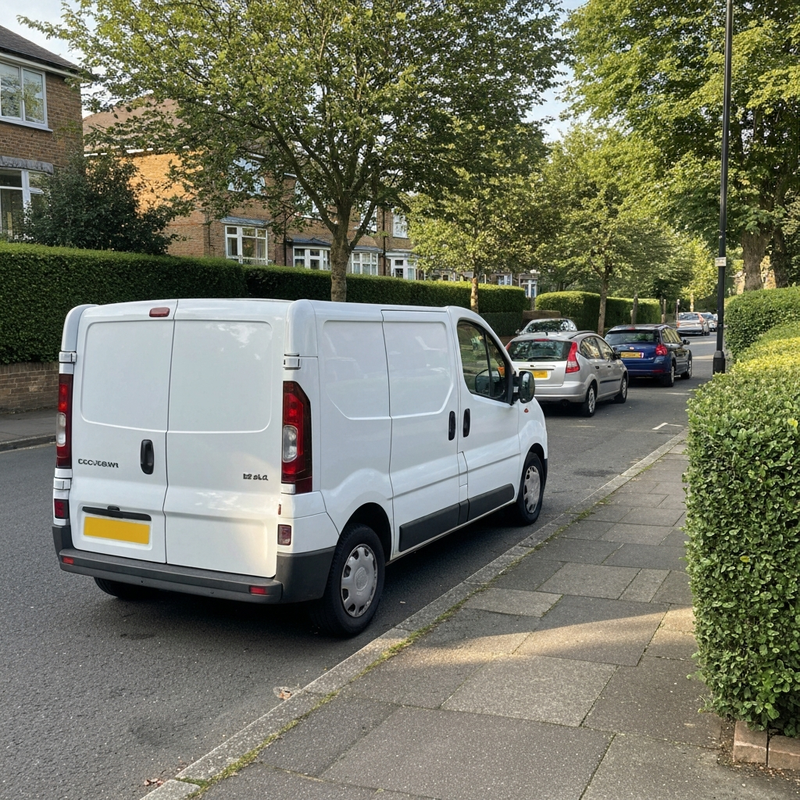
Do you need short-term van insurance?
If you hire or borrow a van, you need to be properly insured to drive it. With a hire van, the company provides a base level of cover, but the excess can be high and you may prefer to arrange your own. With a borrowed van, you almost always need your own policy.
This is where short-term cover is useful. Rather than committing to an annual van policy for a one-off move, a temporary policy covers you for the days you actually need, from a single day upward, with comprehensive cover as standard.
Getting your belongings there is only half the story - our guide to driving at university covers whether you need a car on campus at all, and the insurance implications.
Packing tips to fit more in
A few habits make a real difference to how much you can carry:
- Pack heavy items low and over the rear axle so the load is stable
- Use soft bags to fill awkward gaps that boxes leave empty
- Fill containers rather than moving them empty, including the kettle and bin
- Keep a clear line of sight through the rear window at all times
- Put a "first night" bag somewhere easy to reach so you are not unpacking everything at once

What you actually need to bring
The easiest way to cut the size of the move is to take less. Halls come with the basics, a bed, desk, wardrobe and chair, so you rarely need furniture. Bedding, kitchen essentials, clothes and study gear are the priorities; bulky items you are unsure about can usually wait or be bought locally once you arrive.
It is often cheaper and easier to buy heavy or bulky things, such as a duvet, kitchenware or a clothes airer, near your new university rather than transporting them across the country. That can turn a van-sized move into a car-sized one, and it spreads the cost rather than loading everything into day one.

Planning your move-in day
Universities usually give you an arrival slot and parking guidance for move-in day, so check yours and plan around it. Arriving early in your window avoids the worst of the congestion at halls.
Have a plan for unloading quickly, as parking near accommodation is often time-limited. If two of you can travel, one can stay with the vehicle while the other carries, which makes a tight parking window far less stressful.
Frequently asked questions
Do I need a van to move to university?
Often not. A single room of belongings fits in most cars once the rear seats are down and everything is packed well. You only really need a van if you are taking large items or far more than one car load can hold.
Is it cheaper to make multiple trips or hire a van?
If your university is close to home, two car trips can be cheaper and simpler than hiring a van. For longer distances or a lot of belongings, a single van trip usually wins on both cost and effort.
Do I need my own insurance to hire a van for a move?
Hire companies include a level of cover, but often with a high excess. You can sometimes reduce the excess through them or arrange your own short-term van policy instead. Always check the age and licence requirements before booking.
Can I borrow a friend's van to move to university?
Yes, if they are happy to lend it, but you will usually need your own insurance to drive it, as the owner's policy rarely covers other drivers for this. Temporary van insurance covers you for the days of the move without affecting their cover.
How do I fit more into a car for a university move?
Fold the rear seats down, pack heavy items low and to the back, use vacuum bags for bedding and clothes, and fill gaps with soft bags rather than rigid boxes. Keep the rear window clear so you can still see behind you.
Temporary insurance quote
Get a price in under 60 seconds!