
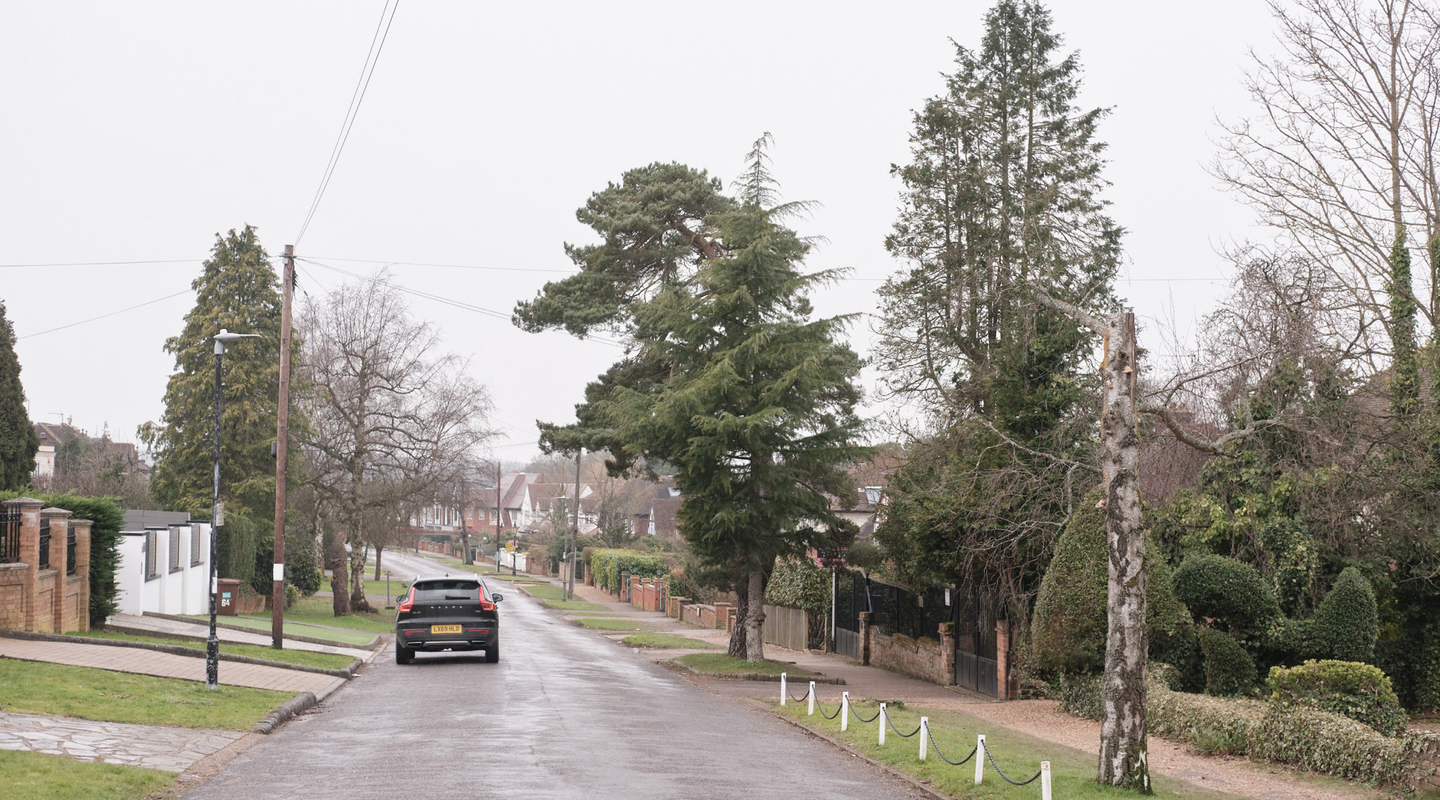
Stopping distances UK: the complete guide
Stopping distance is how far your car travels from the moment you spot a hazard to the moment you stop. At 30mph that is around 23 metres; at 70mph it is around 96 metres, roughly 24 car lengths. It is made up of thinking distance and braking distance, and it grows sharply as speed rises.

Earn points and use them to save money in the app. Download today.


What are stopping distances?
A stopping distance is the total distance a vehicle travels from the moment a driver sees a hazard to the moment the vehicle comes to a complete stop. It is one of the most important figures in safe driving, because it determines how much space you need to avoid a collision.
The Highway Code publishes typical stopping distances for a car in good conditions. They are a baseline: real distances can be much longer in rain, ice or with worn tyres, so they represent the best case, not a guarantee.
Tailgating is one of the offences most drivers do not expect - our guide to driving laws you might not know you are breaking covers the surprising rules around following distance, eating at the wheel, and flashing your headlights.
Stopping distances at dual carriageway speeds require significantly more road than at 30mph - dual carriageways explained - rules, speed limits, and overtaking covers how dual carriageways differ from motorways, the default speed limit, and the rules for joining and leaving.
Thinking distance vs braking distance
Stopping distance is made up of two parts. Thinking distance is how far you travel during the time it takes to react and move your foot to the brake. Braking distance is how far you then travel while the brakes bring the car to a stop.
Thinking distance increases steadily with speed, because you cover more ground in the same reaction time. Braking distance increases far more steeply, because the energy to be lost rises with the square of the speed. Together they make up the overall stopping distance.
Passenger safety is the driver's responsibility on every journey - our guide to UK child car seat laws explains what seat a child requires by height and age and who is legally responsible for compliance.
Whether you are driving your own car or a borrowed one, proper cover matters - temporary car insurance insures any eligible car in your name for as little as one day.
The Highway Code stopping distances
The typical overall stopping distances from the Highway Code, in good dry conditions, are:
- 20mph: 12 metres (about 3 car lengths)
- 30mph: 23 metres (about 6 car lengths)
- 40mph: 36 metres (about 9 car lengths)
- 50mph: 53 metres (about 13 car lengths)
- 60mph: 73 metres (about 18 car lengths)
- 70mph: 96 metres (about 24 car lengths)

These figures assume an alert driver, a car in good condition and a dry road, so treat them as a minimum rather than what you can rely on.
Speed limits and stopping distances are closely linked, and our guide to single carriageway rules and speed limits covers what to expect on these roads.
Under-inflated tyres are a significant, often overlooked factor here, and how to check your tyre pressure properly takes just a few minutes and makes a real difference.
How speed affects stopping distance
The headline point is that stopping distance does not rise evenly with speed; it rises much faster. Doubling your speed from 30 to 60mph far more than doubles the stopping distance, because the braking part grows with the square of the speed.
This is why a small increase in speed has a large effect on safety. The difference between 20 and 30mph in a built-up area is not just 10mph; it is roughly double the stopping distance, which is why 20mph limits exist around schools and homes.
Higher speeds mean much longer gaps needed, and the UK's biggest motorways are where this matters most - especially in the outside lane.
Following too closely is the direct consequence of underestimating that gap - our guide to tailgating laws and fines explains what counts as dangerous following distance and the penalties for getting it wrong.
What increases your stopping distance?
The Highway Code figures are best-case. Several things make real distances longer:
- Wet roads can double your braking distance
- Ice can increase it tenfold
- Worn or under-inflated tyres reduce grip and lengthen braking
- Tiredness, distraction or alcohol increase your thinking distance
- A heavy load or towing increases braking distance
In poor conditions you must leave far more room. Our guide to driving in bad weather covers how rain, ice and fog change what is safe.
Standing water is one of the biggest hidden factors here, and what aquaplaning is and how to avoid it is worth reading before a wet-weather journey.
Stopping distances and the theory test
Stopping distances are a staple of the driving theory test, so learners need to know the typical figures and the difference between thinking and braking distance. They also appear in hazard perception, where leaving enough space is the safe response.
If you are revising, learning the 20 to 70mph figures and the factors that increase them is well worth the effort. Our guide to the theory test pass mark explains what you need to score to pass.
Do modern brakes change stopping distances?
Modern cars brake better than the cars the Highway Code figures were first based on, thanks to better tyres, brakes and electronics. This leads some drivers to assume the published distances are overcautious, but that is a risky assumption to drive by.
Anti-lock brakes (ABS) help you keep steering control during hard braking and prevent the wheels locking, but they do not necessarily shorten the distance needed to stop, especially on a slippery surface. The braking distance is still governed by physics: speed, grip and the road surface. More importantly, the largest part of stopping distance at speed is often the thinking distance, which no technology improves, because it depends on you. Newer systems such as autonomous emergency braking can reduce the severity of a collision, but they are a safety net, not a reason to drive closer or faster. Treat the Highway Code figures as a sensible minimum whatever you drive.
Phone use extends thinking distance significantly - our guide to mobile phone driving law explains the legal obligations and the new AI cameras that enforce them.
How to keep a safe distance
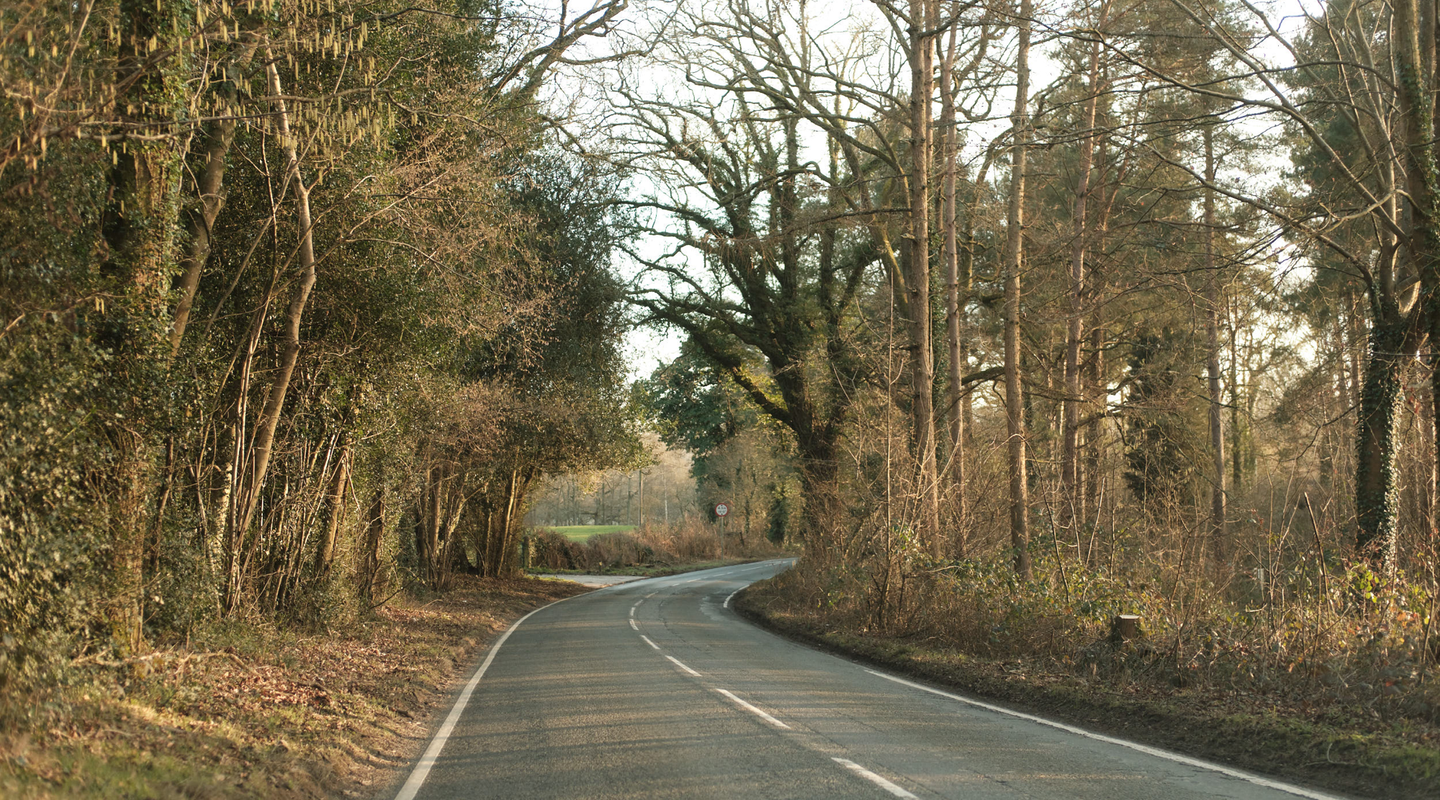
Remembering exact metres while driving is impractical, so the Highway Code offers the two-second rule: leave at least a two-second gap to the vehicle in front on a dry road. In the wet, double it to four seconds, and in ice leave even more.
To measure it, pick a fixed point such as a sign and count the time between the vehicle ahead passing it and you reaching it. If it is less than two seconds, drop back. It is the simplest way to apply stopping distances in real driving.
Frequently asked questions
What is the stopping distance at 70mph?
Around 96 metres in good dry conditions, roughly 24 car lengths, according to the Highway Code. That is made up of about 21 metres of thinking distance and 75 metres of braking distance. In the wet or with worn tyres it is considerably longer.
What is the difference between thinking and braking distance?
Thinking distance is how far you travel while reacting and moving your foot to the brake. Braking distance is how far you travel while the brakes stop the car. Thinking distance rises steadily with speed; braking distance rises far more steeply.
What is the stopping distance at 30mph?
About 23 metres in good conditions, roughly 6 car lengths, made up of around 9 metres thinking and 14 metres braking. This is the figure most often quoted for built-up areas and is a common theory test question.
What increases your stopping distance?
Wet roads can double braking distance and ice can increase it tenfold. Worn or under-inflated tyres, a heavy load and towing all lengthen braking, while tiredness, distraction and alcohol increase thinking distance. Always leave more room in poor conditions.
What is the two-second rule?
A simple way to keep a safe gap: leave at least two seconds between you and the vehicle in front on a dry road. Double it to four seconds in the wet, and leave even more in ice. Count the gap as the vehicle ahead passes a fixed point.
How do you remember stopping distances for the theory test?
The most widely used memory trick is to square the speed and divide by 20, then add the speed again for the thinking distance. For example at 40mph: 40 squared (1,600) divided by 20 equals 80 feet of braking distance, plus 40 feet of thinking distance gives 120 feet total — which matches the Highway Code figure. You can also learn the sequence: 6, 6, 6, 9, 12, 18 car lengths at 20, 30, 40, 50, 60, 70mph respectively.
Temporary insurance quote
Get a price in under 60 seconds!