
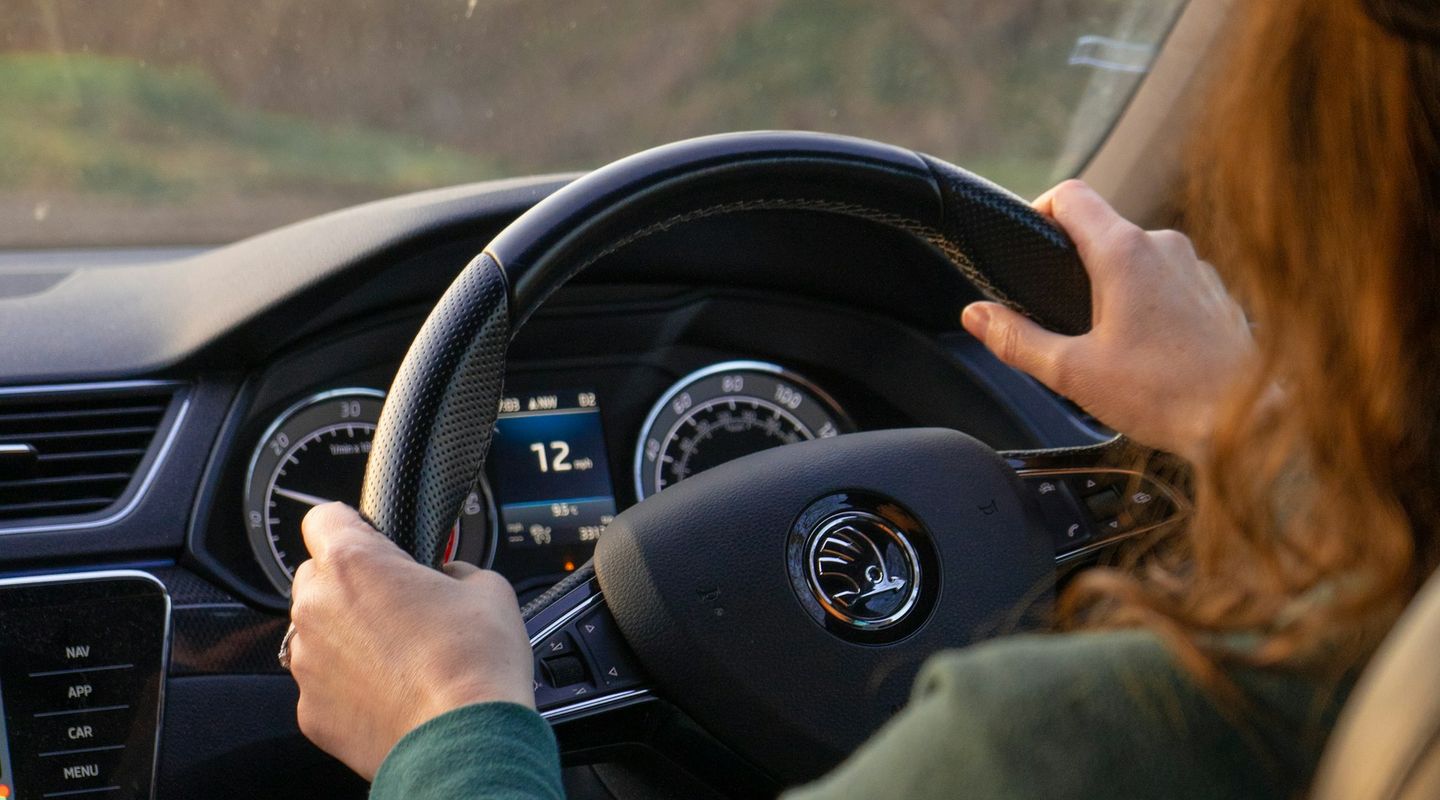
Using a mobile phone while driving: what is legal
It is illegal to hold and use a mobile phone while driving for almost any reason. Since March 2022 the law covers any handheld use at all, including taking photos, scrolling or changing music, even when you are stopped in traffic. The penalty is £200 and six penalty points.

Earn points and use them to save money in the app. Download today.


What is the law on using a mobile phone while driving?
It is against the law to hold and use a phone or similar device when driving, when stopped at lights, or when supervising a learner. The rule applies whenever you are in charge of a vehicle with the engine running, not just when it is moving.
The penalty is a £200 fixed penalty notice and 6 penalty points. For drivers who passed their test less than two years ago, those 6 points alone mean an automatic licence revocation. More serious cases can go to court, with a larger fine and a possible driving ban.
Phone use is one of many rules people break unknowingly, so see the driving laws you might not know.
Six points on your licence will push up your insurance significantly - our guide to how points affect your premium explains the typical cost increase and how long the impact lasts.
What counts as using a phone under the law?
Since the law was tightened in March 2022, almost any handheld interaction counts. Making or receiving a call, texting, scrolling social media, taking a photo or video, playing a game, or selecting a song are all covered. It no longer matters whether you are sending or receiving data.
The key word is handheld. The offence is holding the device and using it. If the phone is in your hand and you are doing something with it while in charge of the car, you are committing the offence, even momentarily at a red light.
A passenger using their own phone is fine, and you may still use a two-way radio in the limited way the rules allow. But the moment you, as the driver, pick up and interact with a handheld phone, the law is engaged, regardless of how brief the action is or whether the car is moving.
Fixed penalty notices extend to parking too, and the UK parking rules explain yellow lines, residential restrictions, and Parking Charge Notices.
Phones are not the only distraction that can attract a penalty - our guide to the rules on eating and drinking while driving explains when it crosses into careless driving and what the potential fine is.
Is it legal to use a phone hands-free while driving?
Hands-free use is not specifically illegal, so you can take a call through a Bluetooth connection or your car's system as long as you do not hold the phone. The device must be in a cradle or connected, not in your hand.
However, hands-free is not a free pass. If the police judge that a call distracted you to the point of not being in proper control, you can still be prosecuted for careless driving. Hands-free is legal, but you remain responsible for driving safely.
Impaired driving covers more than phones - whether driving tired is illegal explains where the law stands on fatigue.
If a conviction has pushed up your annual insurance premium, temporary car insurance is a flexible option for occasional use while you compare longer-term quotes.
Can you use your phone as a sat nav?
Yes, provided it is secured in a cradle or mount and you do not hold it. Using your phone for navigation is allowed in the same way as a built-in sat nav, as long as it is fixed in place and positioned so it does not obstruct your view of the road.
What you must not do is pick it up to set the route, change the destination or do anything else handheld while driving. Programme it before you set off, or pull over safely and switch off the engine if you need to make changes.
Sat nav rules and many other laws vary when you cross the border, and our guide to driving abroad explains what UK drivers need to know before they go.
Apple CarPlay and Android Auto operate differently from a handheld phone and sit in a legal grey area - our guide to Apple CarPlay explained covers how it works, whether it counts as using your phone, and the current legal position.
Can you use your phone at a red light or in traffic?
No. This is the change that surprises people most. Being stationary at a red light or stuck in a traffic jam does not make it legal to pick up your phone. You are still driving in the eyes of the law, and the offence applies.
The only narrow exception is using a handheld phone to make a contactless payment, for example at a drive-through or a toll, when the vehicle is stationary and you are paying for goods or services there and then.
Phone penalties are serious, but drink driving carries heavier consequences still, as the UK drink and drug driving limits and penalties make clear.
What are the penalties for using a phone while driving?
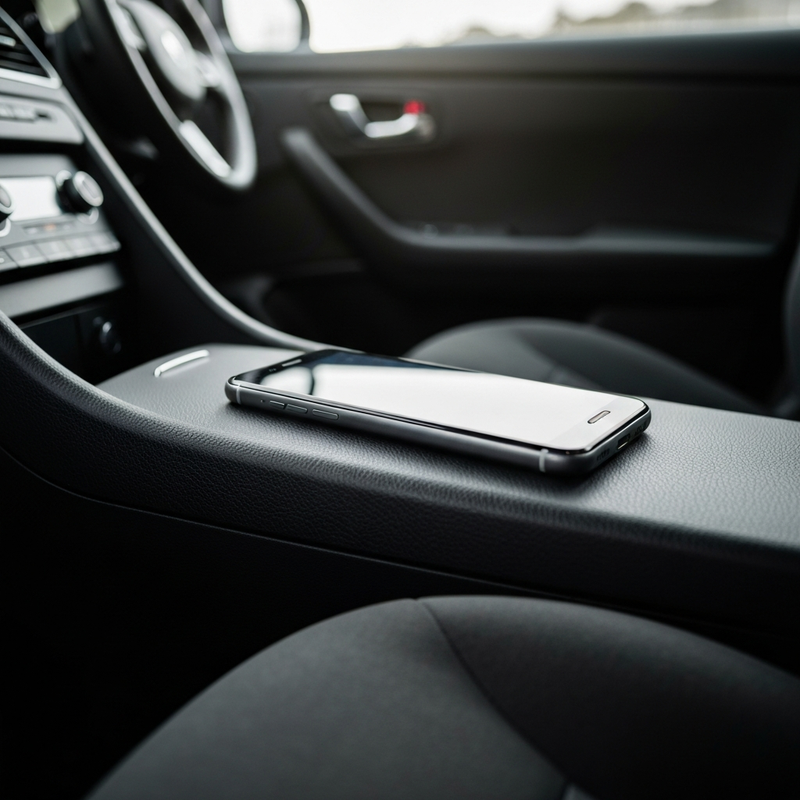
The standard penalty is £200 and 6 points, issued as a fixed penalty notice. If the case goes to court, the maximum fine rises to £1,000, or £2,500 for drivers of buses, coaches or goods vehicles, and the court can disqualify you.
Because 6 points is half the totting-up threshold, a single offence puts you halfway to a ban, and new drivers lose their licence outright. It is one of the most heavily penalised everyday driving offences for that reason. A second offence within a short period leaves an established driver perilously close to a totting-up disqualification.
A phone offence is six points, so understanding how penalty points work matters.
When a phone-related collision happens, our step-by-step guide on what to do after a car accident explains what to do at the scene.
Speeding penalties follow the same tiered framework - our guide to speeding fines explains the three bands, the fixed penalty process, and when a case goes to court.
Distraction at the wheel increases the thinking component of stopping distance significantly - our complete guide to stopping distances in the UK shows the Highway Code figures and everything that affects them.
Can AI and new cameras detect phone use?
Yes. Newer AI-assisted cameras photograph the inside of vehicles and use software to flag drivers who appear to be holding a phone. A human officer reviews the image before any penalty is sent, but the technology has made enforcement far more likely than it once was.
These cameras have been deployed at sites across England and Wales, so the old assumption that phone use is hard to catch no longer holds.
Other obligations apply on every journey, including the UK child car seat laws which every driver carrying young passengers must follow.
The same AI cameras enforcing phone laws also catch speeding - our guide to UK speed cameras explains how the new AI systems work and what they detect beyond a speed violation.
The AI camera technology used to catch phone users is also central to how driverless vehicles navigate - our research into driverless taxis in the UK covers the technology behind the trials and how current legislation is evolving to accommodate them.

What about smartwatches and other devices?
The law covers any handheld interactive device capable of sending or receiving data, which can include tablets and similar gadgets. Smartwatches occupy a grey area: a watch worn on the wrist is not held, but interacting with it in a way that distracts you can still support a careless driving charge.
The safest approach is to treat anything that takes your attention off the road as a risk, and to set up navigation, music and calls before you move off.
Frequently asked questions
Can I use my phone as a sat nav if it is in a cradle?
Yes. Using your phone for navigation is legal as long as it is secured in a cradle or mount and you do not hold it. Set the route before you drive, and pull over and switch off the engine if you need to change anything.
Is it illegal to use a hands-free phone while driving?
Hands-free use is not specifically illegal, so you may take calls through Bluetooth or your car system without holding the phone. You can still be prosecuted for careless driving if a hands-free call distracts you from proper control of the vehicle.
Can I check my phone at a red light?
No. Being stopped at a red light or in traffic does not make handheld use legal. You are still driving in the eyes of the law. The only narrow exception is making a contactless payment while stationary, such as at a drive-through.
What is the penalty for using a mobile phone while driving?
The fixed penalty is £200 and 6 points. In court the fine can reach £1,000, or £2,500 for larger vehicles, with a possible ban. Drivers in their first two years lose their licence outright, because 6 points triggers revocation.
Can new cameras detect phone use through a windscreen?
Yes. AI-assisted cameras photograph the vehicle interior and flag apparent handheld phone use for a human officer to review. They have been rolled out at sites across England and Wales, making enforcement far more likely than before.
Temporary insurance quote
Get a price in under 60 seconds!