
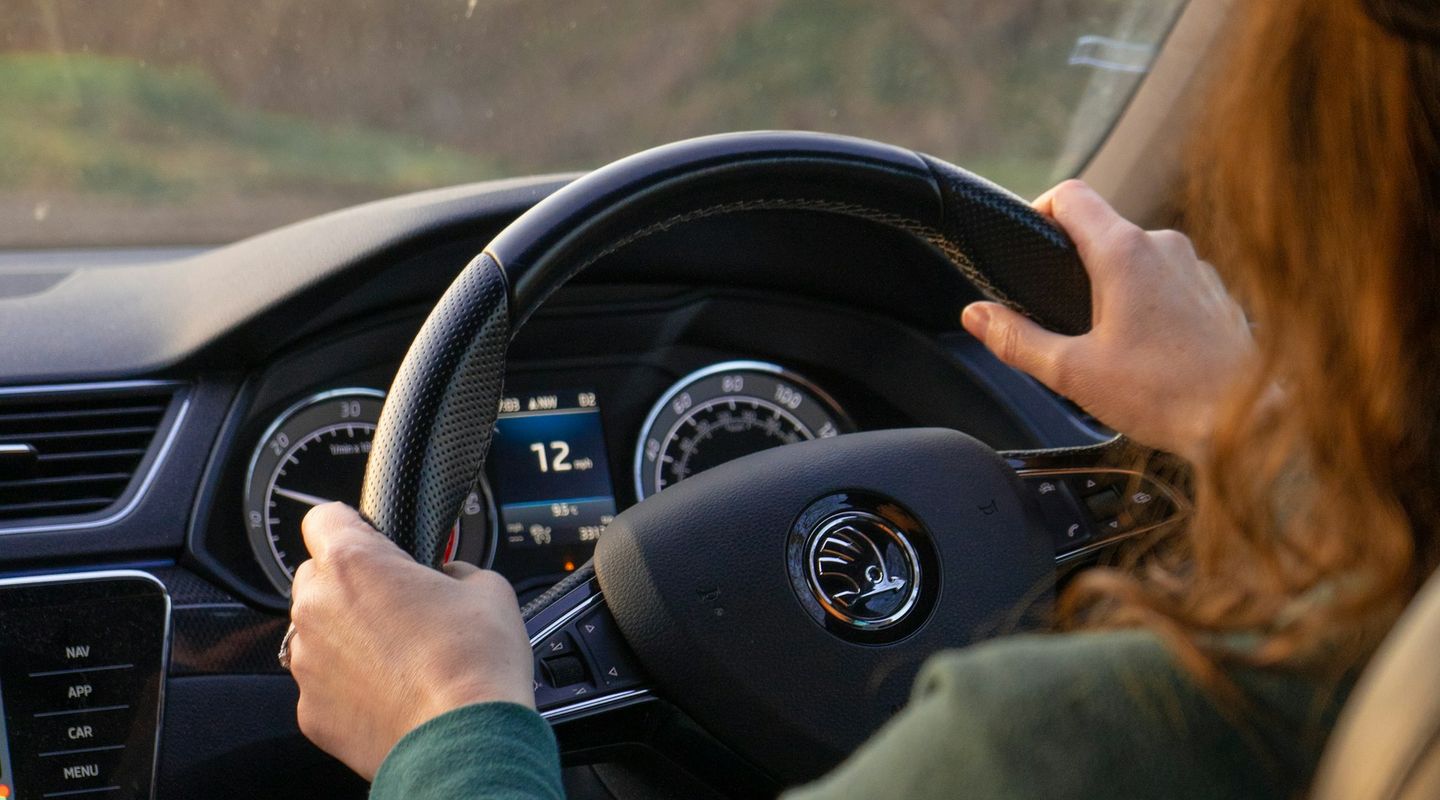
Eating or drinking while driving: what UK law says
There is no specific law against eating or drinking non-alcoholic drinks at the wheel in the UK. The legal risk comes from distraction: if eating or drinking affects your control of the vehicle or your concentration, police can charge you with careless driving, which carries a £100 fine and three penalty points.

Earn points and use them to save money in the app. Download today.


Is it illegal to eat while driving?
There is no specific law that makes eating or drinking at the wheel a criminal offence in itself. You will not be pulled over and fined simply for biting into a sandwich or taking a sip from a bottle of water.
The risk comes from what eating or drinking may cause. Highway Code Rule 148 lists eating and drinking among the distractions drivers must avoid. If eating affects your concentration or vehicle control in a way that is visible to police, a careless driving charge becomes possible. The food itself is not the offence - the driving behaviour it causes is.
Footwear is another area where drivers are often unsure of the exact legal position - driving barefoot or in flip-flops in the UK explains whether there is a specific offence and when footwear could contribute to a careless driving charge.
What is the actual legal risk?
Careless driving means driving without due care and attention, or without reasonable consideration for other road users. An officer who observes you drifting, braking late, failing to respond to hazards or otherwise showing reduced control while eating has grounds to issue a fixed penalty notice.
The standard penalty for careless driving is a £100 fixed penalty notice and three penalty points. If the case reaches court, fines can rise to £5,000 and a driving ban is possible. In serious cases - where loss of control causes an accident or poses danger to others - a more serious charge may apply. The driving, not the snack, is what triggers prosecution.
Splashing a pedestrian is another action that carries a similar careless driving risk - our guide to whether splashing pedestrians is illegal in the UK explains when it constitutes an offence, what charge applies, and the typical penalty.
Does the type of drink matter?
Hot drinks carry a meaningfully higher practical risk than cold ones, not because the law treats them differently, but because a spill is a far greater distraction. Flinching, reaching for the cup and dealing with a burn while driving at speed is exactly the kind of split-second lapse that causes accidents.
Cold bottled water presents a lower physical risk than lidless coffee. But the legal principle is identical: if holding or drinking from a container requires you to steer one-handed, take your eyes off the road or reach across the car, the careless driving standard applies to any consequences. A lidded cup in a secure cup holder reduces both the practical risk and the legal exposure.
Box junction offences sit alongside several other driving laws that carry fixed penalties drivers often underestimate - the rules on yellow box junctions explains when blocking the box is an offence, how it is enforced, and the typical penalty.
Snacks, wrappers and packaging
Some foods create more distraction risk than others, and this matters practically even if the law does not distinguish between a crisp and a burger.
Unwrapping food while moving - opening a packet, wrestling with a fast food bag, peeling something - adds distraction on top of distraction. Foods that require two hands, foods that are hot or messy, and foods that involve reaching into packaging beside you all raise the risk of a driving behaviour that attracts police attention. If you need to deal with packaging, the sensible approach is to pull over rather than attempt it at 60mph on a dual carriageway.
Pets in the car are treated as a potential distraction in the same way as eating or drinking at the wheel - the law on pets in cars in the UK explains Highway Code Rule 57, what counts as an inadequately restrained animal, and the insurance implications of an unrestrained pet.
Can passengers eat and drink?
Yes. Passengers can eat and drink freely - the careless driving rules apply to the driver only. Children in the back seat eating, a front-seat passenger with a takeaway coffee, a rear passenger with a snack box: none of this is restricted.
The indirect risk is that a passenger's food or drink becomes a distraction to the driver. Highway Code Rule 148 includes distracting passengers in the list of things drivers should avoid. If a passenger's drink spills into the driver's lap, or a passenger is handing food to the back seats while the driver is managing busy traffic, the driver remains responsible for their reaction to that distraction.
How this compares to mobile phone law
The contrast with phone use is instructive and often surprises drivers. Using a handheld phone while driving carries an automatic fixed penalty of £200 and six penalty points - regardless of whether it caused any distraction or change in driving behaviour. Our guide to mobile phone driving law in the UK covers what counts as "using" a phone and when hands-free use is and is not permitted.
Eating and drinking only becomes an offence if driving behaviour deteriorates as a result. The phone law is absolute; the eating and drinking rule depends on what actually happens on the road.
The eating rule sits alongside several other lesser-known laws worth being aware of - our guide to UK driving laws you might not know you are breaking covers a dozen non-obvious offences from horn use to interior lights and pavement parking.
Ready for the journey?
Long drives are when the temptation to eat at the wheel is strongest. If you are making an unusual trip - borrowing a car for a road trip, driving a friend's van, or covering a long distance in a vehicle that is not normally yours - make sure your cover matches the journey. Temporary car insurance covers you comprehensively for exactly the time you need, from one hour to 28 days. It takes minutes to arrange and keeps the car owner's no claims discount completely separate. Pull over for the coffee stop when you can - and make sure you are properly covered for the road in between.
Frequently asked questions
Is it illegal to eat while driving in the UK?
No specific law makes eating while driving a criminal offence. The legal risk comes from distraction: if eating affects your ability to drive safely and police observe a change in your driving behaviour, they can charge you with careless driving. The offence is the driving, not the act of eating itself.
Can you drink coffee while driving in the UK?
It is not specifically illegal. However, if holding or drinking from a coffee cup causes you to lose concentration or control - particularly in the event of a spill - police can charge you with careless driving. A lidded cup in a secure cup holder reduces the risk. Hot drinks carry a higher risk of distraction than cold ones if they spill.
What is the fine for eating while driving in the UK?
There is no fixed fine for eating while driving specifically. If a careless driving charge is issued as a result of distracted driving, the fixed penalty is £100 and three penalty points. In more serious cases that reach court, fines can reach £5,000 and a driving ban is possible.
Can passengers eat and drink in a moving car?
Yes. Passengers are not subject to the careless driving rules that apply to the driver. However, if a passenger's food or drink becomes a distraction that affects the driver's behaviour, the driver remains responsible for how they respond to it.
What does Highway Code Rule 148 say about eating and drinking?
Rule 148 lists eating and drinking among the distractions that drivers must avoid. The rule covers any activity that reduces concentration or control of the vehicle. It does not create a standalone offence for eating, but it establishes the standard of care that applies when driving behaviour deteriorates as a result.
Temporary insurance quote
Get a price in under 60 seconds!