UK road signs explained: what they all mean
UK road signs follow a logic you can read at a glance. Triangles warn, circles give orders, and rectangles inform. Red circles tell you what you must not do, blue circles tell you what you must do, and the shape and colour together tell you how seriously to take the sign before you even read the words.

Earn points and use them to save money in the app. Download today.


How UK road signs are organised
UK road signs are not random. Their shape and colour carry meaning before you read a single word, which is what lets you understand them at speed. Learn the system and most signs become readable even if you have never seen that exact one before.
The three core shapes are the foundation. Triangular signs warn you of a hazard ahead. Circular signs give a firm instruction, either an order or a prohibition. Rectangular signs provide information, such as directions, distances and place names. Colour then refines the message within each shape, which is why a red border tends to mean danger or prohibition while blue tends to mean something positive or informational.
Parking restrictions are shown by signs and lines, and our UK parking rules guide explains them.
Whether you are getting back behind the wheel after a break or driving an unfamiliar car, temporary car insurance provides daily or weekly cover without a long-term annual commitment.
Triangular warning signs
Triangular signs, almost always with a red border and a white background, warn of something ahead that you need to prepare for. A bend, a junction, a steep hill, a level crossing, schoolchildren, or the road narrowing.
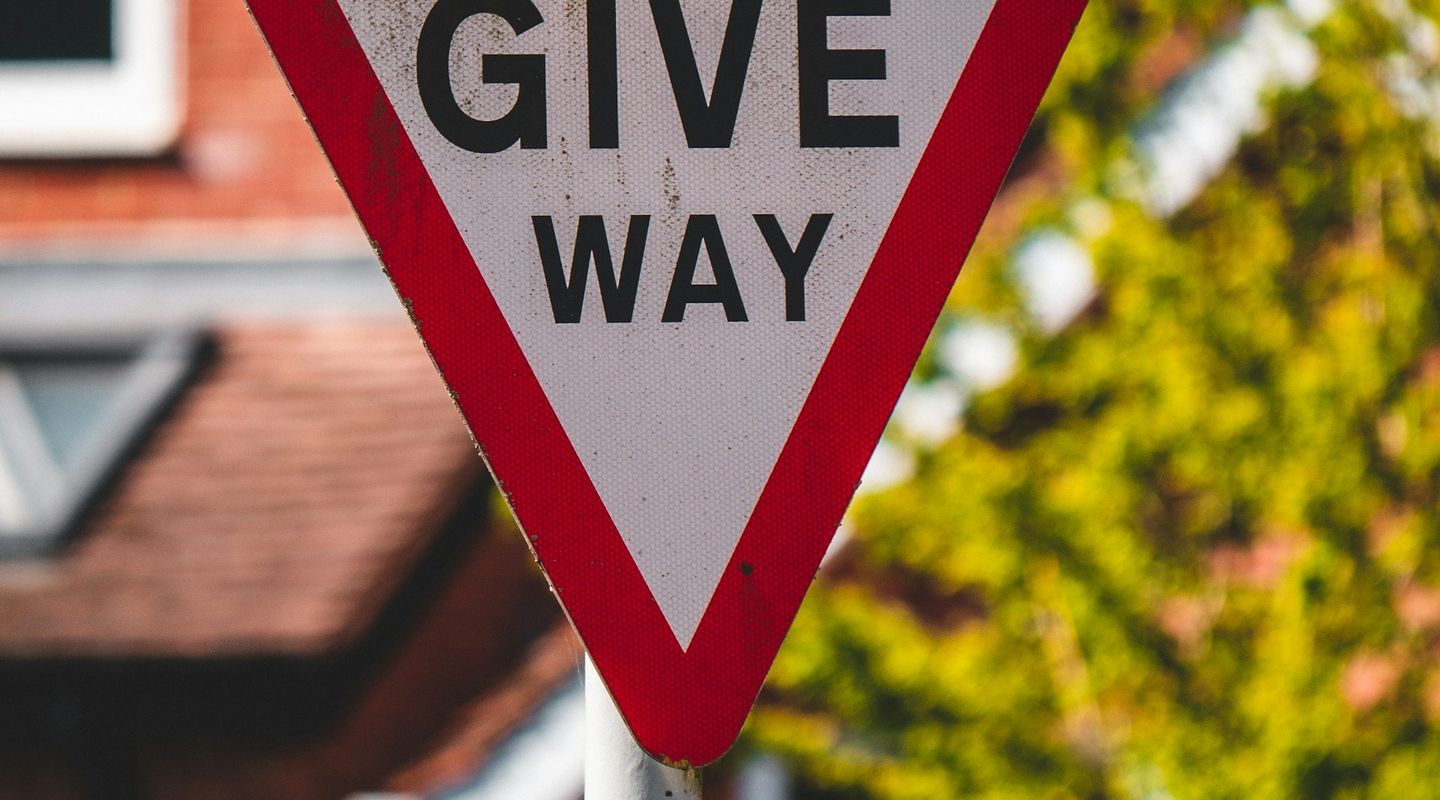
They do not order you to do anything specific. Their job is to give you time to react, slow down, or look for a hazard. The picture inside the triangle tells you what to expect. An upward-pointing triangle with a red border is also used for the "give way" sign, which is the main exception to the rule that triangles only warn.
Speed limit signs on single carriageways are among the most commonly misread - our guide to single carriageways explains the national speed limit, when it applies, and how it differs from a dual carriageway.
Some warning signs cover very specific hazards, and our guide to animal road signs explains what each one means and where you will see them.
Circular signs: orders and prohibitions
Circular signs give compulsory instructions, and the colour tells you which kind. A red circle prohibits or restricts something, for example a speed limit, no entry, or no overtaking. A blue circle gives a positive instruction you must follow, such as turn left, or a minimum speed.
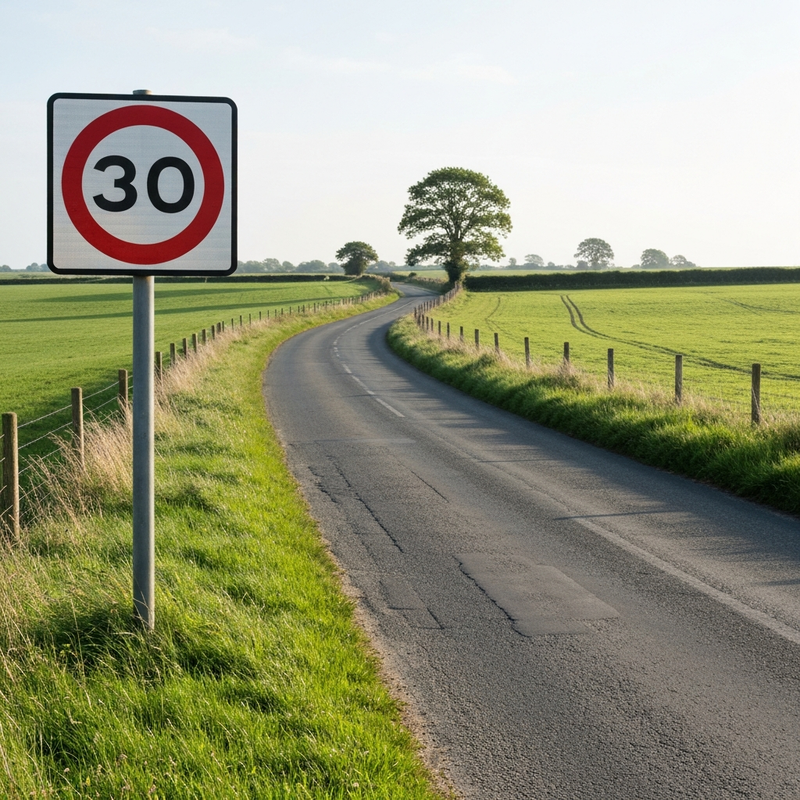
Because circular signs carry legal force, ignoring one is generally an offence in its own right. A red ring around a number sets the maximum speed limit, while the national speed limit is shown by a white circle with a single diagonal black stripe.
Dual carriageway signs use a specific symbol that many drivers misread - the rules for driving on dual carriageways covers the national speed limit, how they differ from motorways, and the rules around overtaking on a two-lane carriageway.
A blue circular sign often marks the start of one, and pedestrian zone rules covers what counts as a genuine exemption.
Rectangular informational signs
Rectangular signs tell you things rather than ordering or warning you. Their colour indicates the type of road: blue for motorways, green for primary routes, and white for minor roads and local directions.
These signs cover directions, distances, lane guidance, services, and tourist destinations. They will not penalise you for ignoring them, but reading them correctly is what keeps you in the right lane and on the right road, especially at busy junctions where late lane changes cause collisions.
Seatbelt legislation is part of the broader road safety framework that road signs reinforce - seatbelt laws in the UK - who must wear one and when covers the fines, who carries responsibility for adults versus children, and the process for obtaining a medical exemption.
Bus lane signage falls into this category, and our guide to bus lanes explains who can use them and when.
Blue circular signs: what they mean
Blue circles are easy to confuse with red ones, but they do the opposite job. Where a red circle says "do not", a blue circle says "you must". A blue circle with a white arrow means you must take that direction, for example "turn left ahead" or "keep left".
Blue is also used for some information signs in rectangular form, such as motorway signs and parking, but as a circle it always means a positive, mandatory instruction. If the sign is a blue circle, the action it shows is one you are required to take.
Speed limit signage is a significant part of what the speed awareness course covers - what happens on a speed awareness course explains the format, the eligibility threshold, and whether the certificate removes the need for a fixed penalty notice.
Parking is one of the most common places drivers misread a sign, and our dedicated guide to parking signs breaks down what they all mean.
Road markings: lines, boxes and arrows
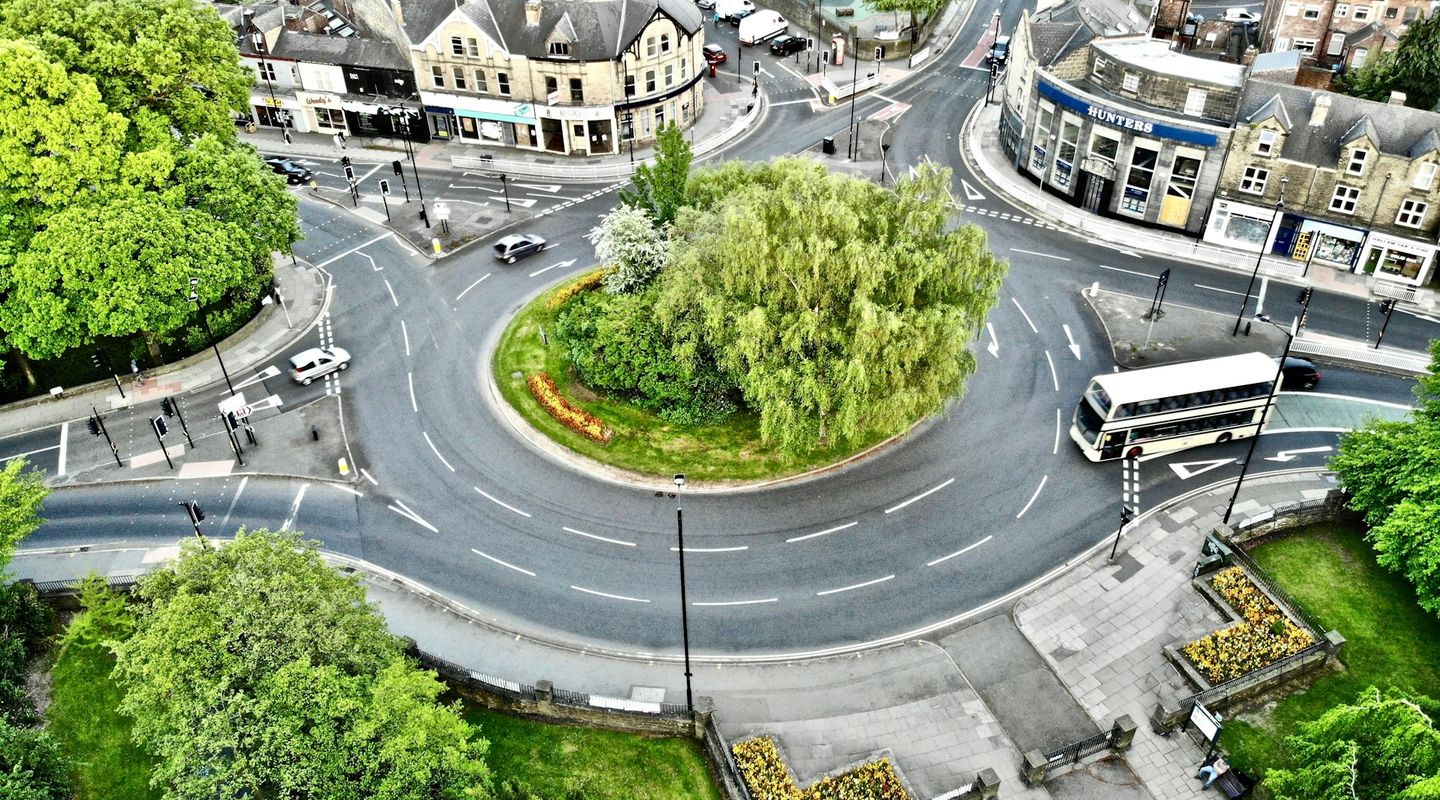
Markings painted on the road carry as much authority as signs on posts. Double white lines along the centre, with a solid line on your side, mean you must not cross to overtake. A yellow box junction means you must not enter unless your exit is clear.
Single and double yellow lines at the kerb restrict waiting and parking. Zig-zag lines outside schools and crossings mean no stopping or parking. Arrows on the carriageway guide you into the correct lane in good time before a junction.
Ice and snow warnings on road signs prompt the same question about vehicle preparation - including whether your roof is clear - snow on a car roof - is it illegal and what are the risks explains the careless driving standard, the fine if snow falls onto another vehicle, and the safe clearance process.
Signs you are most likely to get wrong
A few signs catch drivers out regularly. The national speed limit sign, a white circle with a diagonal line, is often misread as "no restrictions" when it actually means the standard limit for that road type applies. The "no waiting" and "no stopping" (clearway) signs look similar but mean different things.
Box junctions, bus lane times, and red-route markings also trip people up. Temporary signs at roadworks are another: these have a yellow background rather than white, and they override the permanent signs while the works are in place. When a sign is unfamiliar, the shape and colour give you the safe default: if it is a red circle, treat it as a prohibition until you are sure.
Emergency vehicle signs and road markings inform the rules drivers must follow - but the obligations go beyond what the signs say - the rules for emergency vehicles in the UK covers what drivers must do when an emergency vehicle approaches, the box junction exception, and the fines for incorrect responses.
Where to find the full official list
No single page can show every sign in use. The definitive reference is the Highway Code and the Department for Transport's "Know Your Traffic Signs", both of which list the complete set with official artwork.
If you are learning, or returning to driving after a break, working through the official signs section is worth the time. Recognising a sign instantly, rather than reading it late, is what gives you the seconds you need to respond safely on the road.
Frequently asked questions
What is the difference between a triangular and a circular road sign?
Triangular signs warn you of a hazard ahead, such as a bend or a junction, and give you time to react. Circular signs give a compulsory instruction: a red circle prohibits or restricts something, while a blue circle tells you what you must do.
What does a red circle with a number mean?
A red ring around a number sets the maximum speed limit for that road in miles per hour. You must not exceed it. It is different from the national speed limit sign, which is a white circle with a single diagonal black stripe.
What does a blue circle sign mean compared with a red circle?
A blue circle gives a positive instruction you must follow, such as turn left or keep left. A red circle prohibits or restricts, such as no entry or no overtaking. In short, blue means you must, red means you must not.
What does a white circle with a diagonal black line mean?
It is the national speed limit sign. It means the standard limit for that type of road now applies: usually 30mph in a built-up area with street lighting, 60mph on a single carriageway, and 70mph on a dual carriageway or motorway for cars.
What do double white lines in the middle of the road mean?
Where the line nearest you is solid, you must not cross or straddle it to overtake, except in limited circumstances such as passing a stationary vehicle or a cyclist. Where the line nearest you is broken, you may cross if it is safe to do so.
Temporary insurance quote
Get a price in under 60 seconds!