

Seatbelt laws in the UK: who must wear one and when
If a seatbelt is fitted, you must wear it. Adults are responsible for belting themselves, while the driver is responsible for any passenger under 14. Not wearing one carries a fine of up to £500 but no penalty points, and it can sharply reduce any compensation if you are injured.

Earn points and use them to save money in the app. Download today.


Who must wear a seatbelt in the UK?
The law is straightforward: if a seat has a belt fitted, the person sitting in it must wear it, in the front and the back. This applies to drivers and passengers alike, on every type of road.
The duty has been in place for front seats since 1983 and rear seats since 1991, and it covers cars, vans and most other vehicles. Wearing a belt is one of the single most effective things you can do to survive a collision, which is why the requirement is near-universal. It applies on every journey, however short, because most collisions happen close to home and at ordinary speeds, not on long high-speed trips.
The Highway Code contains parking rules that apply in car parks as well as on public roads - car park rules in the UK explains what counts as a valid parking charge notice and when private landowners can legally enforce.
Whenever you are driving an unfamiliar or borrowed vehicle, temporary car insurance ensures legal cover is in place for the journey in your own name.
Who is responsible for making sure passengers wear seatbelts?
Responsibility splits by age. The driver is legally responsible for ensuring that any passenger under 14 is wearing the correct restraint or child seat. If a 12-year-old is unbelted, it is the driver who is penalised.
Passengers aged 14 and over are responsible for themselves. If an adult passenger chooses not to belt up, the fine falls on that passenger, not the driver. So a driver must take charge of the children in the car but cannot be penalised for an adult's own choice.
Driver distraction rules apply regardless of whether the technology is built into the car or handheld - CarPlay explained - features, legality, and safe use covers what Apple CarPlay and Android Auto do, the hands-free rules, and how courts have treated in-car screen use.
Are children required to wear seatbelts?
Yes, and younger children need more than a belt. A child must use an appropriate car seat until they are either 135cm tall or 12 years old, whichever comes first. After that, they use an adult seatbelt.
The type of seat depends on the child's height or weight, and a rear-facing seat must never be used in a front passenger seat with an active airbag. Our reference here is the law; for the specific seat your child needs, follow the manufacturer's height and weight guidance.
Younger children need more than a belt, and the child car seat laws set out what is required by height and age.
What are the legal seatbelt exemptions?
There are a few. Holders of a medical exemption certificate, issued by a doctor, do not have to wear a belt. Drivers are exempt while reversing, and so is a person supervising a learner who is reversing.
Other exemptions cover drivers making local deliveries or collections in a vehicle designed for the purpose, and licensed taxi drivers while carrying passengers or available for hire. Vehicles with no seatbelts fitted, such as some classic cars, are also exempt, though children must still travel in the back.
Seatbelt rules sit within the Highway Code, which has been updated in recent years to reflect new priorities - the recent Highway Code rule changes covers the new hierarchy of road users, updated cycling and pedestrian rules, and what changed for drivers at junctions.
What is the fine for not wearing a seatbelt?
The penalty is a fixed penalty notice, and if the case goes to court the fine can rise to £500. Importantly, the standard seatbelt offence does not carry penalty points on your licence, which sets it apart from many other motoring offences.
That said, the absence of points does not make it minor. The fine applies per person not wearing a belt, so several unbelted occupants can each attract a separate penalty, and the safety consequences in a crash are severe, which is the real reason the law exists.
Seatbelt rules for humans and restraint guidance for pets come from the same section of the Highway Code - pets in cars - the UK law and Highway Code rules explains Rule 57, how an unrestrained animal can contribute to a careless driving charge, and the recommended restraint options.
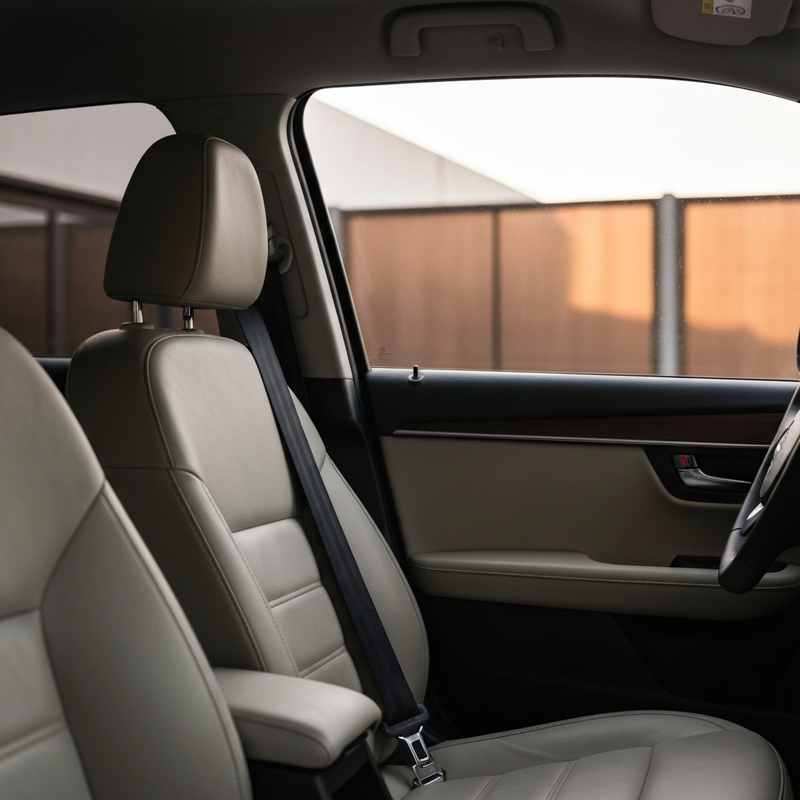
Can AI cameras now detect seatbelt violations?
Yes. Newer AI-assisted cameras photograph the inside of vehicles and use software to flag occupants who do not appear to be wearing a seatbelt, as well as drivers using phones. A human officer reviews each flagged image before any penalty is issued.
These cameras have been deployed at sites across England and Wales. The result is that seatbelt enforcement, once almost entirely down to being stopped by an officer, is now far more likely to be picked up automatically.
Are there different rules for seatbelts in vans and commercial vehicles?
The basic rule is identical: if a belt is fitted to a seat, the person sitting in it must wear it, in a van or lorry just as in a car. The driver is still responsible for any passenger under 14, wherever they are seated, and adults remain responsible for themselves.
There are narrow exemptions for genuine working use. A driver making frequent local deliveries or collections is exempt while travelling the short distances between stops, because constantly belting and unbelting would be impractical. That allowance applies only to that kind of stop-start working journey, not to ordinary driving. For any normal trip in a van, including moving house or a one-off load, the seatbelt requirement is exactly the same as in a car, and the same fine applies for each person not wearing one.

Does not wearing a seatbelt affect an insurance claim?
It can significantly reduce what you recover. If you are injured in a collision while not wearing a seatbelt, any compensation for your injuries can be cut for contributory negligence, on the basis that wearing one would have reduced the harm.
The reduction commonly applied by the courts is up to 25% where a belt would have prevented or lessened the injuries. So beyond the fine, going unbelted can cost you a substantial part of any injury claim, even when the crash was entirely someone else's fault.
Frequently asked questions
Is it the driver's responsibility if a passenger does not wear a seatbelt?
Only for passengers under 14, for whom the driver is legally responsible. Passengers aged 14 and over are responsible for themselves, so the fine for an unbelted adult falls on that passenger rather than the driver.
Are there any legal exemptions from wearing a seatbelt?
Yes. Holders of a medical exemption certificate are exempt, as are drivers while reversing, certain local delivery drivers, and licensed taxi drivers carrying passengers. Vehicles with no belts fitted are also exempt, though children must still travel in the rear.
What is the fine for not wearing a seatbelt?
You can be given a fixed penalty, rising to a fine of up to £500 if the case goes to court. The penalty applies for each person not wearing a belt. The standard seatbelt offence does not carry penalty points on your licence.
Do you get penalty points for not wearing a seatbelt?
No. The standard offence of not wearing a seatbelt carries a fine but no penalty points. This sets it apart from many motoring offences, though the fine and the safety risk in a collision are both significant.
Does refusing to wear a seatbelt affect my insurance claim if I am injured?
Yes. Compensation for your injuries can be reduced for contributory negligence if you were not belted, commonly by up to 25% where a belt would have lessened the harm. This applies even if the collision was entirely the other driver's fault.
Temporary insurance quote
Get a price in under 60 seconds!