
Reversing manoeuvres in the driving test
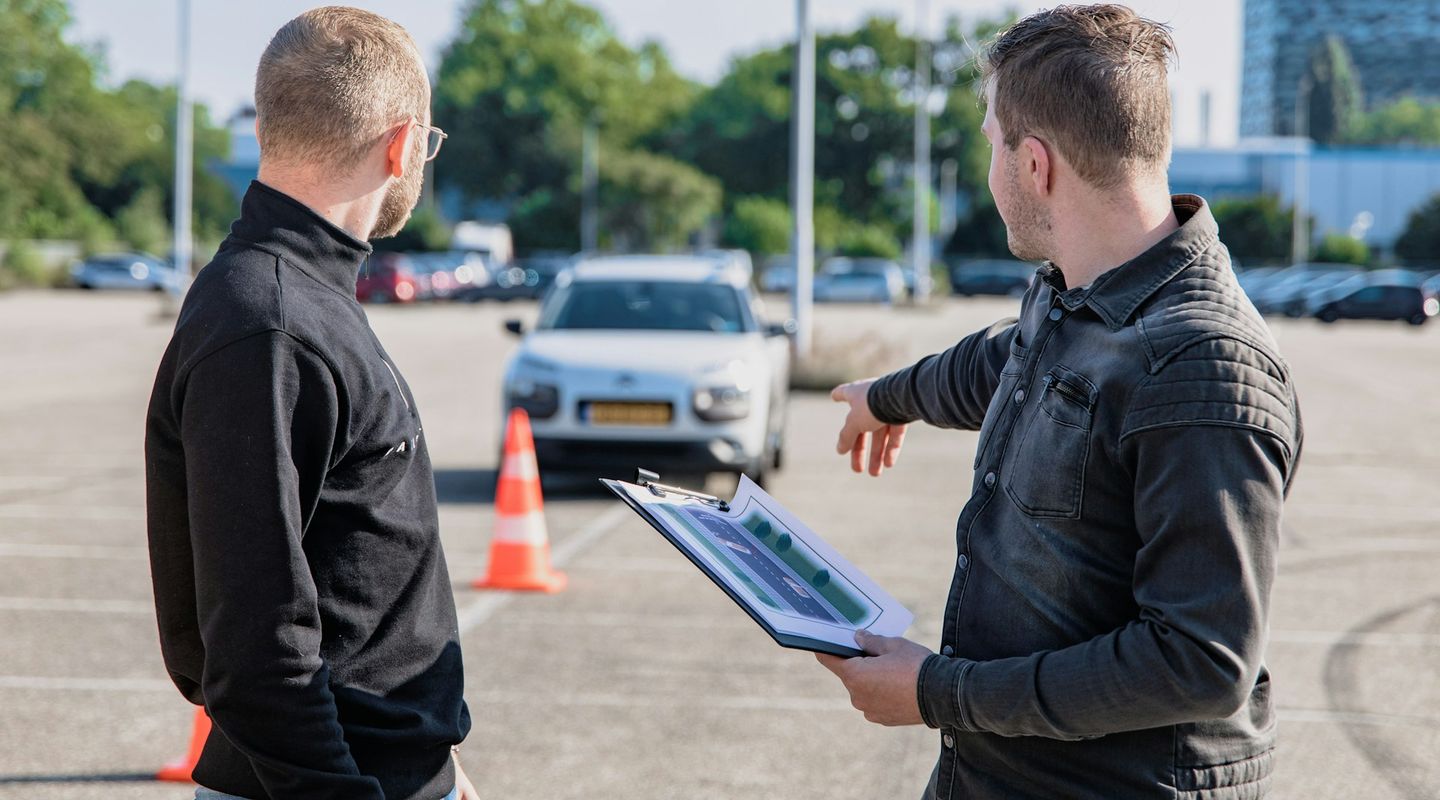
The practical driving test includes one reversing manoeuvre, selected by the examiner from four options: parallel parking, pulling up on the right and reversing, reverse bay parking, and forward bay parking with a reverse exit. You will not know which one until the examiner requests it during the test. Here is how each works and how they are marked.

Earn points and use them to save money in the app. Download today.


What manoeuvres are in the driving test?
The DVSA updated the manoeuvre set in December 2017, replacing the turn in the road and reverse around a corner with options that better reflect real-world driving situations. Research showed that the old manoeuvres were rarely performed by qualified drivers after passing, while bay parking and parallel parking are everyday tasks. The current four are:
Parallel parking - pulling up alongside a parked vehicle and reversing into the space behind it. The examiner identifies a suitable space on the route and asks you to pull up in front of it.
Pulling up on the right and reversing - pulling over to the right-hand side of the road (against normal traffic flow), stopping, and then reversing two to three car lengths before rejoining traffic. This is the most unconventional of the four in terms of road position and catches some candidates by surprise.
Reverse bay parking - reversing into a parking bay, either at the test centre or in a car park on the route. Bays are standard-width marked spaces.
Forward bay parking and reversing out - driving forward into a bay, then reversing out to leave. This is the mirror situation to reverse bay parking.
The reversing exercise is one of the highest-anxiety parts of the test - knowing how the full test is structured reduces nerves - what happens in the UK driving test explains each section of the test, how it is assessed, and what candidates most commonly fail on.
The challenge of each manoeuvre also depends on the road layout around the test centre - pass rates by test centre in Great Britain shows how consistently urban centres score lower than rural ones, and why the route environment is the main driver of that gap.
The manoeuvre is one component of the overall test structure - our guide to driving test duration breaks down each part in sequence, from the eyesight check through to the result.
How does the examiner choose the manoeuvre?
The examiner selects whichever is most convenient given the route and the available environment - a car park that suits bay parking, a quiet road for parallel parking, a suitable stretch for pulling up on the right. You cannot predict or influence the choice. You must be confident with all four before test day.
Test day preparation starts before you arrive at the centre - having the right documents ready is the first step - the documents and items to bring to your driving test covers the mandatory licence and pass certificate check and what the examiner expects at the start of the appointment.
How are manoeuvres assessed?
Each manoeuvre is assessed on three criteria: control, accuracy, and observation.
Control covers clutch and speed management. A slow, controlled speed throughout the manoeuvre demonstrates control; rushing or jerky movements indicate a lack of it. For bay parking and parallel parking, a very slow, creeping speed gives you more time to assess your position and make corrections.
Accuracy covers finishing in a legal and safe final position. For bay parking, the vehicle should be within the marked bay. For parallel parking, within approximately two car lengths of the kerb and roughly parallel to it. The examiner allows for normal adjustment - minor shunts to correct position are expected and accepted.
Observation covers mirror checks, blind spot checks, and awareness of other road users throughout the manoeuvre. Failing to check mirrors and blind spots, or completing the manoeuvre while another vehicle or pedestrian is present without acknowledging them, generates faults. Observation must be continuous throughout, not just at the start.
The independent driving section follows the manoeuvres element in the standard test order - the independent driving test section explained covers what following sat-nav directions involves, how the examiner assesses it, and the most common faults picked up during the independent element.
What happens if you make a mistake?
Stop, check your mirrors and surroundings, and correct your position. Adjusting during a manoeuvre is normal and is not in itself a fault. What generates faults is creating danger, mounting a kerb, finishing in a position that would be illegal to remain in, or failing to check mirrors and blind spots.
Candidates who recognise an error, stop, look around, and correct the position are demonstrating exactly the kind of observation the test is assessing. Panicking and rushing a correction is more likely to produce a fault than a calm reassessment.
The gap between booking and test day is the window to refine your manoeuvres - and driving test waiting times vary significantly by area so checking availability at your nearest centre early gives you a realistic preparation window.
Is the emergency stop a manoeuvre?
No. The emergency stop is assessed separately and appears on approximately one in three tests. If your test includes an emergency stop, you will also complete a reversing manoeuvre - they are independent elements of the test.
The emergency stop and the reversing exercise are the two physical elements most candidates worry about - what happens during the emergency stop on the driving test explains how the examiner signals the stop, what the correct response is, and how it is assessed.
If you are practising manoeuvres or sitting your test in a family member's car, you need insurance in your own name for those sessions and for the test itself. Learner driver insurance for the driving test covers the test window and the drive home, without affecting the car owner's no-claims discount.
How to practise the manoeuvres
Practise all four, not just your preferred one. The examiner's choice is not predictable. Candidates who have practised only two or three manoeuvres are exposed on test day.
Practise in your test vehicle. Reference points for parallel parking in particular vary between cars. Points that work in an instructor's car may not transfer directly to your own or a parent's vehicle. If you are planning to use your own car for the test, see our guide to taking the driving test in your own car for vehicle preparation requirements.
Practise in real bays. Bay parking dimensions are standardised - practising in actual marked bays builds an accurate spatial sense that improvised spaces cannot replicate.
Give pulling up on the right enough time. It is often underpractised because it feels unusual. Nervousness about the road position can cause hesitation, which creates faults.
Build a consistent process for each manoeuvre, not just a feel for it. A reliable sequence - mirror checks, positioning, slow controlled speed, regular blind spot checks throughout - is more repeatable under test pressure than an approach based on intuition. Practise the process until it becomes automatic.
Learner driver insurance covers private practice sessions between lessons, giving you more time to work on specific manoeuvres at your own pace without using instructor time.
Frequently asked questions
Which manoeuvres are in the driving test?
Parallel parking, pulling up on the right and reversing, reverse bay parking, and forward bay parking with a reverse exit. The examiner selects one - you do not know which in advance.
Can I choose which manoeuvre I perform?
No. The examiner selects the manoeuvre based on what is available and appropriate on the route. You must be ready for any of the four.
Are the old manoeuvres still tested?
No. The turn in the road and reverse around a corner were removed in December 2017 and are no longer part of the test.
What happens if I need to adjust my position during a manoeuvre?
Stop, check your mirrors and surroundings, and correct. Minor adjustments are normal and expected. Faults occur for creating danger, mounting a kerb, or failing to check mirrors and blind spots - not for needing to shunt.
Is the emergency stop one of the manoeuvres?
No. The emergency stop is a separate element that appears on around one in three tests. If your test includes one, you still complete a reversing manoeuvre as well.
Temporary insurance quote
Get a price in under 60 seconds!