
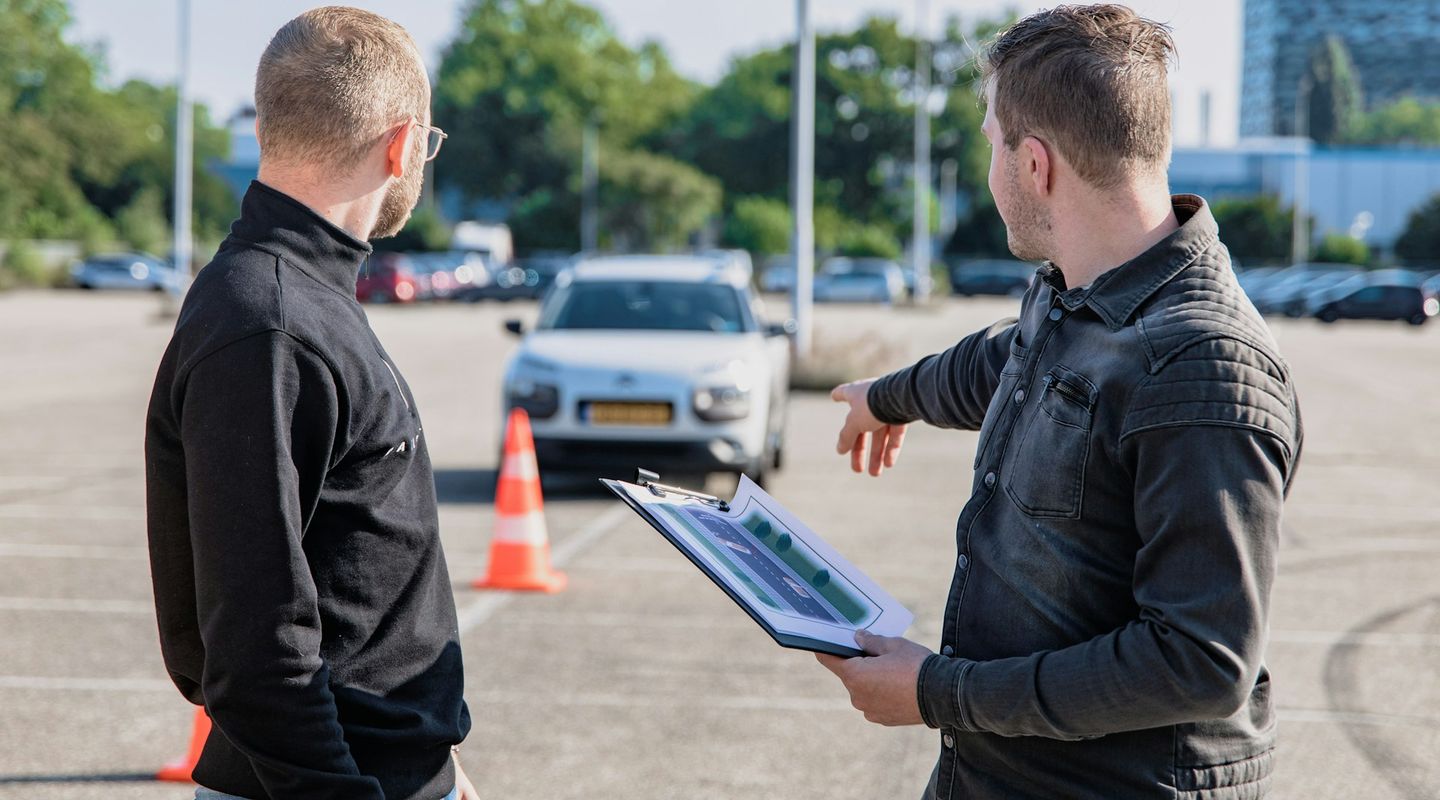
The emergency stop in the driving test
The emergency stop is included on approximately one in three practical driving tests. When it happens, the examiner raises their hand while you are driving and says stop. You respond by braking as quickly and firmly as possible while keeping the car under control. Here is how it works, how it is marked, and what candidates actually get wrong.

Earn points and use them to save money in the app. Download today.


What is the emergency stop?
The emergency stop tests your ability to bring the car to a halt promptly and under control in response to an unexpected hazard. It simulates a real situation - a child running into the road, a vehicle pulling out without warning - where normal, progressive braking is not sufficient.
It does not appear on every test. Around one in three practical tests include an emergency stop. Before the test begins, the examiner explains that they may ask you to carry out an emergency stop, and that their signal will be to raise a hand while driving. They do not confirm whether the emergency stop will actually occur - so you cannot know.
The briefing before the test is worth listening to carefully. The examiner describes exactly what they will do and what they expect you to do in response. Candidates who miss this briefing sometimes react incorrectly to the signal, treating it as a routine instruction rather than an emergency response cue.
Emergency stops are one of the elements that can be called during the practical - understanding the full test structure helps - the UK driving test format explained covers the order of events, how faults are marked, and what causes an immediate fail.
How does the examiner give the signal?
The examiner raises their hand, typically combined with a verbal instruction like "stop". The signal is given while you are driving at a normal road speed - usually between 20 and 30 mph on a quiet stretch of road. The examiner always checks behind the vehicle for following traffic before giving the signal.
On the signal, brake firmly and bring the car to a halt as quickly as possible. Do not check your mirrors before braking - in a genuine emergency there is no time, and the examiner has already verified it is safe to stop. Checking mirrors before braking is a fault.
Arriving prepared - both mentally and with the right documents - reduces test-day anxiety significantly - what you need to bring to the driving test explains which documents are mandatory, what happens if you forget one, and the test centre check-in process.
How is the emergency stop marked?
Three things are assessed:
Speed of reaction. You should react to the signal without hesitation. Pausing or applying the brakes gradually is a fault. The response should be immediate - the examiner is checking that you can stop quickly enough to avoid a genuine hazard.
Braking control. Apply the footbrake firmly. On modern cars with ABS, the system prevents wheel lock automatically - pressing the brake pedal as hard as needed is correct. On older vehicles without ABS, excessive brake pressure can lock the wheels; easing off slightly and reapplying restores control. The goal is maximum deceleration within the limits of tyre grip.
Steering control. The car should stop in a straight line. Losing directional control, veering toward the kerb, or steering while braking is a fault. Keeping both hands on the wheel throughout the stop assists straight-line stability.
After stopping, the examiner asks you to move off when you are ready. Check your mirrors and blind spot before pulling away - the move-off after the stop is part of the overall assessment.
The reversing manoeuvre and the emergency stop are the two exercises that test-day nerves most often affect - the reversing manoeuvres on the driving test covers parallel parking, bay parking, and pulling up on the right - what the examiner looks for in each and how to practise.
What about the clutch in a manual car?
Do not declutch before braking. The priority is bringing the car to a halt as quickly as possible, and using the footbrake first maintains engine braking. The car may stall - this is not a fault during an emergency stop. After the car has stopped, push the clutch down, apply the handbrake, and prepare to move off.
Declutching before braking is a technique sometimes taught on older courses; the current DVSA guidance is to brake first, clutch second.
Does the emergency stop replace the manoeuvre?
No. The emergency stop and the reversing manoeuvre are separate elements of the test. If your test includes an emergency stop, you still complete one reversing manoeuvre. Neither replaces the other.
If you are sitting your test in your own car or a family member's car rather than your instructor's, you need comprehensive insurance in your own name that is valid for the test and the drive home. Driving test insurance is a short-term policy that covers exactly this window - it runs in your name so the car owner's no-claims discount is protected throughout.

How to practise effectively
Practise with your instructor on a quiet road. The stop needs to be set up safely - your instructor checks behind before signalling, exactly as the examiner does. Repeat until stopping promptly and in a straight line feels automatic rather than something you have to think through.
Practise at different speeds. An emergency stop at 30mph feels different from one at 20mph. Your instructor should vary the speed so you are familiar with how the car responds across the likely test range.
Practise the move-off after stopping. Mirrors, blind spot check, signal if appropriate, smooth pull-away. This forms part of the overall assessment of the stop and is often underpractised.
Do not practise emergency stops in private sessions without proper supervision. Setting up a safe emergency stop requires checking behind for following traffic, selecting an appropriate road, and briefing the supervising driver properly. Stick to instructor-led emergency stop practice. Between lessons, focus private practice time on the road types and manoeuvres most relevant to your test routes.
For private practice sessions, learner driver insurance covers you to drive with a supervising qualified driver without the risk sitting on the car owner's annual policy.
Frequently asked questions
Is the emergency stop always part of the driving test?
No. It appears on around one in three tests. You are not told in advance whether your test includes one.
Do I need to check my mirrors before stopping in an emergency stop?
No. You respond to the signal immediately without checking mirrors. The examiner has already checked behind the vehicle before giving the signal. Checking mirrors before braking is a fault.
What should I do with the clutch during an emergency stop?
Brake first, then put the clutch down as the car slows. Do not declutch before braking. The car may stall - this is not a fault during an emergency stop.
Does the emergency stop replace the reversing manoeuvre?
No. They are separate elements. If your test includes an emergency stop, you still complete one reversing manoeuvre.
What happens after I stop?
The examiner will ask you to move off when ready. Check mirrors, check your blind spot, and move away smoothly. The move-off forms part of the overall assessment.
Temporary insurance quote
Get a price in under 60 seconds!