
What happens at an MOT? The test explained
An MOT is a structured roadworthiness inspection carried out at a DVSA-authorised test station. The tester follows a defined checklist that is the same at every authorised station in the country. Here is what happens from the moment you arrive to the moment you receive a result.

Earn points and use them to save money in the app. Download today.


What is an MOT test and why is it required?
The MOT test was introduced in 1960 as a compulsory annual roadworthiness inspection. It now applies to all cars, vans, and motorcycles once they are three years old. The test checks that the vehicle meets a minimum standard of roadworthiness on the test date. It is not a guarantee of the car's general condition, and it does not certify the vehicle is free from every mechanical issue - only that it passed the defined checks on the day.
A valid MOT certificate is a legal requirement to drive on UK roads. Driving without one is an offence that can result in a fine of up to £1,000 and your vehicle being seized, entirely separately from any insurance implications.
The full test process covers around 65 checks - which gives a sense of why it takes as long as it does - how long an MOT takes from start to finish explains the typical duration for a pass and a fail, and what can add time to the appointment.
What does the MOT tester check?
The MOT follows a standardised inspection schedule set by the DVSA. The main areas are:
Lights and signalling - headlights (dipped and main beam), indicators, brake lights, hazard lights, and fog lights. Each is checked for function, aim, and condition.
Steering and suspension - play in the steering, condition of joints and bushes, and that the vehicle tracks correctly without pulling to one side.
Brakes - pad and disc condition, brake balance across the axles, handbrake function, and pedal feel. Most garages use a brake roller test that measures the braking force at each wheel.
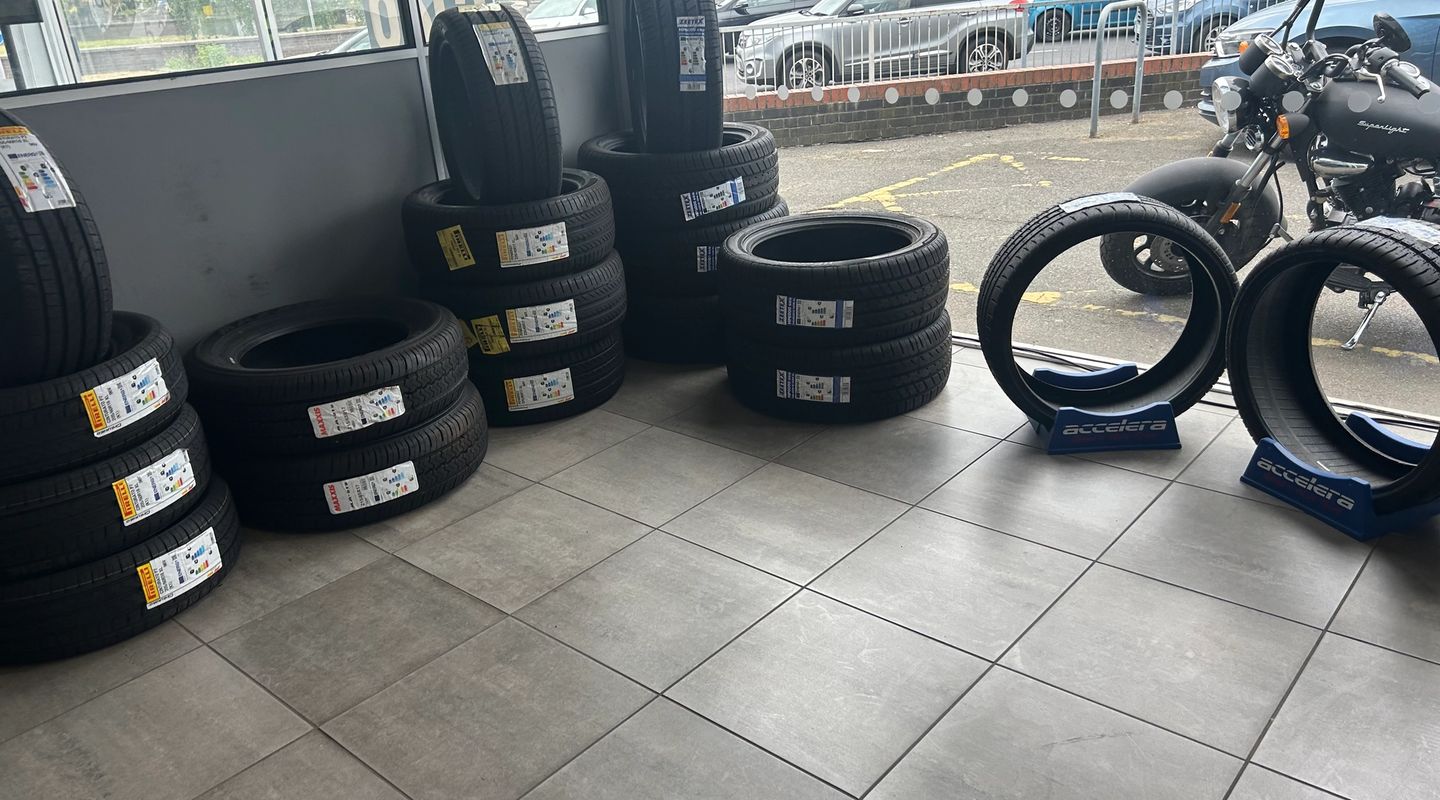
Tyres - tread depth (minimum 1.6mm across the central three-quarters of the tread), sidewall condition, and matching tyres on the same axle.
Seatbelts - every belt is extended, locked, and checked to retract cleanly. Buckles must latch positively. Inertia reels that do not lock under load are a failure.
Windscreen and wipers - chips in the driver's primary vision zone must be under 10mm; outside that zone, damage of 40mm or more is a failure. Wipers must clear the screen and washers must produce fluid.
The first MOT follows the same process as subsequent annual tests - understanding what happens on the day helps owners prepare - the first MOT for a new car - what to expect explains when the three-year period starts, what can still fail even on a relatively new vehicle, and how to book.
What else is covered in an MOT test?
The inspection also covers the vehicle's emissions, bodywork, and documentation.
Exhaust and emissions - the exhaust is checked for leaks, security, and excessive noise. Emissions are tested against limits for the vehicle's age and fuel type. Petrol cars are tested for hydrocarbons and carbon monoxide; diesel cars undergo a smoke opacity test.
Bodywork - the tester checks for sharp or protruding edges that could injure a pedestrian. Severe structural corrosion in safety-critical areas is a failure.
Mirrors - the driver must have an adequate view to the rear. All mirrors on the car must be in good condition and intact.
Horn, number plates, and VIN - the horn must sound continuously when pressed. Number plates must be correctly formatted, legible, and in the right colours (white front, yellow rear). The VIN plate is checked for legibility and consistency with the vehicle's documents.
Fuel system - checked for leaks or obvious damage that could pose a fire risk.
Engine management warning light - any warning lamp relating to an emissions or safety system that remains illuminated after the engine starts is a major defect and an automatic failure.
Understanding what the tester checks makes it much easier to prepare the car in advance - a pre-MOT checklist to run through at home covers the lights, tyres, windscreen, and other items you can check yourself before the appointment.
Does the car need to be specially prepared?
The car should be presented in a state that allows the tester to inspect all areas. A car that is excessively dirty may make it harder to assess bodywork and underside components. The vehicle should arrive on the fuel type it normally uses. The engine should be at or near normal operating temperature, since the emissions test is most accurate once the engine is warm.
Can you wait at the test centre?
Yes. Most test centres have a customer waiting area. For a standard car in reasonable condition, the inspection takes between 45 minutes and an hour. You do not need to remain on the premises - many drivers drop the car and return later. If the tester finds defects that would involve additional work, the station will contact you before carrying out any repairs.
Does the registered keeper need to be present?
No. The car can be presented by any driver with the owner's permission. The registered keeper does not need to attend. This matters if you are having someone else take the car in for you, or if the car is owned by a company.
What happens if the car fails?
A failed car receives a VT30 failure sheet listing every defect, each classified as dangerous or major. If the failure was for dangerous defects, the car must not be driven until repaired. If the failure was for major defects only and the previous certificate is still valid, the car may be driven away while repairs are arranged.
If the car needs to stay off the road, our guide to transport options when your car is in for repairs covers your options in full. Temporary car insurance lets you borrow another vehicle with comprehensive cover from one hour, without affecting the owner's policy.
Understanding what gets checked at the test makes it easier to interpret a fail certificate and decide what to do next - what to do after your car fails its MOT covers how to read the VT30 fail notice, which items you must repair, and how to book a free partial retest.
Do electric vehicles have the same MOT?
Electric vehicles are subject to the same MOT requirements and timescales as petrol and diesel cars. The test content differs slightly - there is no exhaust emissions test and no engine management lamp check in the same form - but the structural, lighting, braking, tyre, and safety checks are identical. EVs must pass their first MOT at three years old, the same as any other car.
What about the DVSA online record after the test?
Garages submit results electronically to the DVSA, and the outcome typically appears in the MOT history checker on gov.uk within a few hours. You should always leave the test station with a paper certificate or failure sheet regardless of when the electronic record updates. If you have not received a paper document, ask for it before you leave.
Frequently asked questions
Do you have to stay at the garage during an MOT?
No. You can drop the car and leave. Most test centres have a waiting area if you prefer to stay, but there is no requirement to remain on site. If defects are found that require additional work, the station will contact you before proceeding.
What do they check in an MOT?
Lights, brakes, steering, suspension, tyres, seatbelts, windscreen, wipers, exhaust and emissions, bodywork, mirrors, horn, number plates, the vehicle identification number, and the fuel system. The engine management warning light is also checked - if it remains on after startup, the car fails.
Can you drive home after a failed MOT?
If your previous certificate is still valid and the failure was for major (not dangerous) defects, you may drive away. If the certificate has expired, you can only drive directly to a place of repair. If the failure included a dangerous defect, the car must not be driven at all.
Does the registered keeper need to attend the MOT?
No. The car can be presented by any driver with the owner's permission. The registered keeper does not need to be there.
Do electric cars have the same MOT as petrol cars?
Largely yes. EVs pass or fail the same structural, safety, lighting, tyre, and braking checks. The main difference is no exhaust emissions test. The requirement and timing - first test at three years, annually after - are identical.
Temporary insurance quote
Get a price in under 60 seconds!