
Tyre laws UK
UK law sets a minimum tread depth of 1.6mm across the central three-quarters of a tyre's width, measured around the full circumference. Tyres must also be structurally sound - no cuts, bulges, or damage to the ply or cord. Each illegal tyre carries a maximum fine of £2,500 and three penalty points. Here is what tyre law requires, how to check your tyres, and when to replace them.

Earn points and use them to save money in the app. Download today.


What is the minimum tread depth in the UK?
The Road Vehicles (Construction and Use) Regulations 1986 require that car tyres have a minimum tread depth of 1.6mm across the central three-quarters of the tyre width and around the full circumference. This applies to cars, motorcycles, and light vans up to 3,500kg gross vehicle weight. Larger vehicles have different requirements.
The legal minimum of 1.6mm is not the same as the point at which tyres should be replaced. Most manufacturers and motoring organisations recommend replacing tyres at 3mm of remaining tread. Stopping distances on wet roads increase significantly below that level - the difference between 3mm and 1.6mm in wet braking performance is meaningful. Meeting the legal minimum is not the same as having safe tyres.
Tyre defects are among the most common causes of an unroadworthy ruling - our guide to driving with a damaged car covers the full range of defects that make it illegal to continue driving.
Tyre condition is especially important in high winds where grip and handling margins reduce - how to drive safely in high winds covers the Highway Code guidance, the speed reductions recommended, and the vehicles most at risk in severe gusts.
How to check tread depth
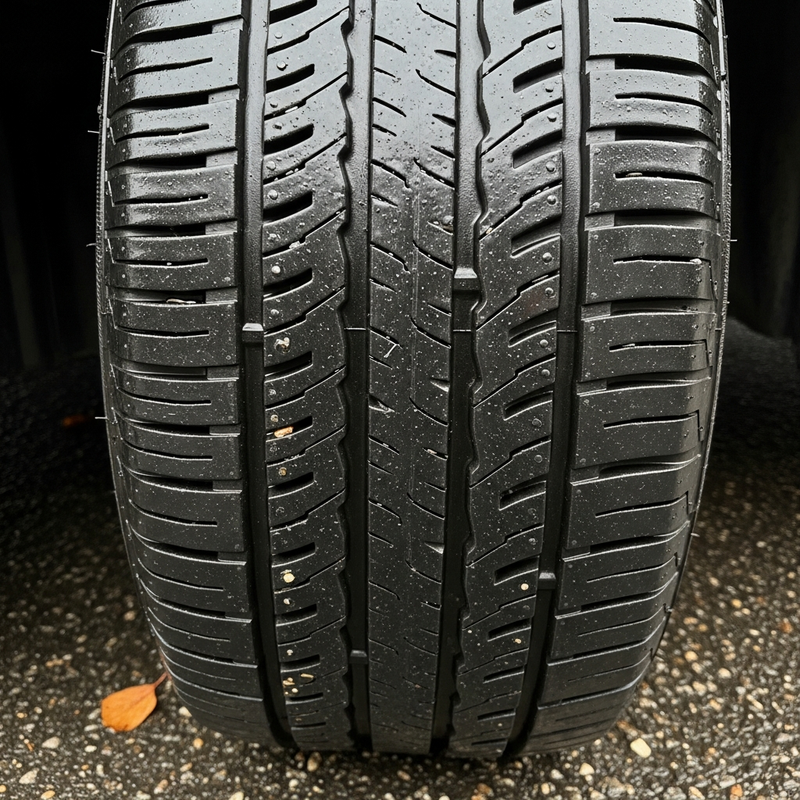
The 20 pence test is a practical way to check whether tread is close to or below the legal minimum. Insert a 20p coin into the main tread groove of each tyre. The outer border of the coin is approximately 2mm - if that border is visible above the tread surface, the tyre is at or below the legal limit and must be replaced immediately.
For a precise reading, a tread depth gauge is available for a few pounds at most motor accessory retailers and gives a numeric result in millimetres. Modern tyres also have tread wear indicators - small raised blocks moulded into the grooves at approximately 1.6mm depth. When the tread surface wears level with these blocks, the tyre has reached the legal minimum.
Window tinting is another area where exceeding legal limits can make a car unroadworthy - our guide to window tint law explains the front and rear windscreen rules and what happens at an MOT.
What else does tyre law cover?
Tread depth is one part of the legal requirement. The same regulations also require that:
- Tyres are the correct size and type for the vehicle and axle position as specified by the manufacturer
- Tyre pressure is maintained at the manufacturer's recommended level
- Tyres have no cuts in the sidewall or tread that expose the cords or ply
- Tyres have no lumps, bulges, or tears indicating internal structural failure
- Radial and cross-ply tyres are not mixed on the same axle

A tyre can have adequate tread depth and still be illegal if it has structural damage. A sidewall bulge indicates internal damage that can cause a blowout - the tyre is illegal regardless of its remaining tread depth and must be replaced.
Snow and ice on the road surface are part of the picture - but snow on the vehicle itself is a separate legal issue, covered in our guide to snow on your car roof, which explains what you are required to clear before setting off and what offences apply when debris falls onto following traffic.
What are the penalties for illegal tyres?
Each illegal tyre is a separate offence. The maximum penalty is a £2,500 fine and three penalty points per tyre. A vehicle with four illegal tyres is exposed to a maximum of £10,000 in fines and 12 points - the threshold for a totting-up driving ban. The offences are strict liability: neither intent nor ignorance is a defence.
Illegal tyres are among the most common MOT failure points. Driving without a valid MOT covers the insurance and legal implications of MOT status for drivers. Three points per tyre means four illegal tyres can accumulate 12 points in a single stop - the threshold for a totting-up disqualification.
Illegal tyres are not the only defect that can lead to a roadside prohibition - our guide to driving with a cracked windscreen covers the rules on screen damage and the conditions under which driving is still legal.
Do illegal tyres affect car insurance?
Yes. If you are involved in an accident and your tyres are found to be illegal, your insurer has grounds to reduce or refuse your claim. Most motor policies include a condition that the vehicle must be maintained in a roadworthy condition. An illegal tyre is a breach of that condition regardless of whether it was the direct cause of the accident - insurers investigate vehicle condition as part of the claims process.
Headlight defects sit alongside tyre defects as the most common vehicle condition offences - broken headlight laws in the UK covers when a headlight failure becomes a criminal offence, the fixed penalty, and your obligations as a driver.
When should you replace tyres?
Replace tyres before they reach the legal 1.6mm minimum. The professional recommendation is to replace at 3mm on the same axle. Beyond tread depth, replace tyres that are more than 10 years old regardless of apparent condition (the manufacturing date is the four-digit code in the DOT number on the sidewall - the last four digits show week and year of manufacture), that show any sidewall damage, or that have been run flat even once. Mixing tyre ages significantly on the same axle is also worth avoiding - new and heavily worn tyres together affect handling consistency.
If your car is off the road while a tyre is changed, 1 day car insurance on a borrowed vehicle keeps you mobile without touching the owner's no-claims discount.
Hot weather accelerates tyre wear and can push pressure above the safe range - our guide to driving in hot weather UK explains what to check before a long summer journey.
Tyres and MOT testing
During an MOT inspection the tester checks all four tyres for tread depth (measured with a gauge on the central three-quarters), sidewall condition, correct size and speed rating for the vehicle, and inflation. A tyre with adequate tread but a sidewall cut exposing the cord, or one that does not match the axle's specification in size or load index, is a failure point. One reason to check tyres before booking an MOT is that replacements can be organised in advance rather than discovered at the test.
Can you insure a car without an MOT? explains the legal and insurance position when a vehicle does not have a current MOT certificate.

Do spare tyres have to be roadworthy?
UK law does not require a vehicle to carry a spare tyre. However, if a spare is fitted and in use on a public road, it must meet the same legal requirements as the four main tyres. A temporary-use spare (space-saver or T-type) is only intended for use at reduced speed over a limited distance to reach a repair point; specific speed and mileage limits are printed on the sidewall and should be followed. Using a space-saver beyond its limits risks both a blowout and an insurance complication.
Frequently asked questions
What is the legal minimum tyre tread depth in the UK?
1.6mm across the central three-quarters of the tyre width, measured around the full circumference. Most professionals recommend replacing tyres at 3mm.
How do I check my tyre tread depth at home?
Use the 20p test: insert a 20p coin into the main tread groove. If the outer border of the coin is visible above the tread, the tyre is at or below the legal limit and must be replaced.
What are the penalties for driving on illegal tyres?
Up to £2,500 fine and 3 penalty points per tyre. With four illegal tyres, the maximum is £10,000 and 12 points.
Can illegal tyres void my insurance?
Yes. Most policies require the vehicle to be roadworthy. If illegal tyres are found after an accident, your insurer may have grounds to reduce or refuse the claim.
What does a bulge in the tyre sidewall mean?
A bulge indicates internal structural damage. The tyre is illegal and must be replaced immediately - it cannot be repaired and is at risk of sudden failure.
Temporary insurance quote
Get a price in under 60 seconds!