
Driving in high winds: UK road risks explained
High winds are among the least predictable hazards on UK roads. Bridges close, lorries tip, and sudden gusts can push a car sideways before you have time to correct. Understanding what wind does to different vehicles, which roads are most affected, and when to delay a journey makes a real difference to whether you arrive safely.

Earn points and use them to save money in the app. Download today.


What wind speed is dangerous for driving?
The Met Office issues yellow, amber, and red wind warnings. Yellow means disruption is likely and you should take care; amber means significant disruption is possible and non-essential travel is worth reconsidering; red means dangerous conditions and the advice is to avoid travelling altogether.
Gusts above 50 miles per hour begin to pose a serious risk to high-sided vehicles. Drivers of ordinary cars start to feel sustained effort on the steering wheel above 60 miles per hour, with pronounced buffeting on motorways, bridges, and open stretches where the road emerges from a cutting or passes through a gap between large buildings. The speed of gusts - not the average wind speed - is what catches drivers unaware. A sheltered urban road can be followed immediately by an exposed section where a 70mph gust arrives with no warning. Before setting off, check the Met Office forecast for any amber or red warnings on your route.
Winter driving rules cover both wind and snow - including the legal position on leaving snow on a car roof - the law on snow on a car roof in the UK explains when roof snow constitutes a danger to other road users, the offence that applies, and what the police can do.
Which bridges and roads close in high winds?
High-sided vehicles face restrictions first. The Humber Bridge has wind monitoring and regularly closes to caravans, motorcycles, and lorries when sustained winds exceed safe thresholds - and has closed to all traffic in extreme conditions. The Queensferry Crossing over the Firth of Forth uses live wind readings to manage lane access. The Dartford Crossing also imposes speed restrictions and vehicle-type bans in strong winds, and several other major crossings across the UK operate similar protocols.
Restrictions often appear at short notice, so it is worth checking National Highways travel alerts before any motorway journey that includes a major bridge crossing. If you are unfamiliar with variable speed limits and signal gantries used to manage conditions on smart motorways, our guide to motorway driving rules explains how they work. Being caught in queuing traffic as conditions worsen is a situation worth avoiding with a quick check before you leave.
Lorries and vans are most at risk
A lorry presents a large flat surface to the wind - far more than a car - and an unladen or lightly loaded high-sided vehicle in an exposed location during an amber warning is at genuine risk of being blown over. The higher the vehicle and the lighter the load, the more vulnerable it is.
Van drivers face the same physics on a smaller scale. An empty panel van in sustained 60mph gusts requires real concentration to keep on course, and many drivers underestimate this until they experience it. If you are driving a hired or borrowed van, reduce your speed significantly in open stretches, give yourself extra stopping distance, and avoid exposed routes during amber or red warnings. Give lorries ahead more following distance than usual - they will be moving unpredictably.
Caravans and trailers in high winds
Caravans are the most wind-sensitive combination on UK roads. The maximum speed for a caravan on a motorway is 60 miles per hour even in calm conditions. In high winds that should be reduced, and many experienced caravanners choose to stop and wait out the worst conditions.
The most dangerous situation is "snaking" - where the caravan starts to sway behind the tow car. If this happens, do not brake sharply. Ease off the accelerator gradually and hold a straight course until the movement diminishes. Sharp braking makes snaking worse and can cause the caravan to overturn. If a trailer or caravan detaches on the road, the driver and any faults in the towing setup can become part of a police investigation. Checking the coupling, stabiliser bars, and jockey wheel before a journey in forecast wind is part of safe preparation, not an optional extra.
Seatbelt rules apply in all weather conditions - and high-wind driving makes them even more important - UK seatbelt laws and who is responsible for compliance explains the legal requirement, who carries liability for each passenger, and the fine for non-compliance.
How gusts affect car steering
Crosswinds catch drivers off guard particularly at transitions - leaving a sheltered cutting and emerging onto an exposed viaduct, or overtaking a lorry and losing the protection it was providing. The car shifts sideways before your hands have had time to respond.
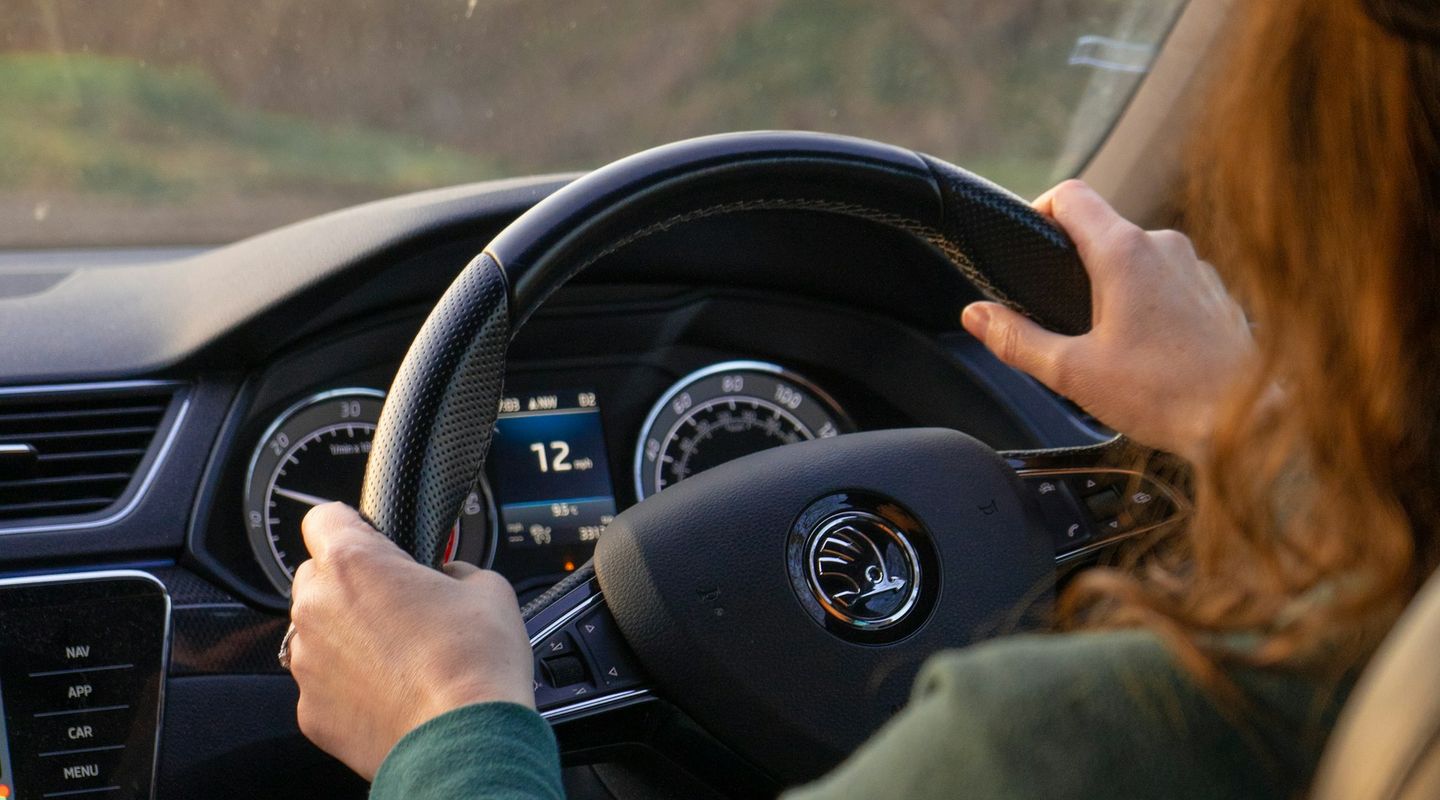
Both hands on the wheel reduces reaction time, but reducing speed matters more than grip alone. Ease off the throttle before exposed sections rather than after. Keep extra lateral space from vehicles beside you in motorway traffic, since both of you will be buffeted simultaneously. Pedestrians and cyclists near the road are also affected and may veer unexpectedly - give them more passing room than you normally would.
Tyre condition becomes especially critical in high winds where sidewall strength and tread grip matter more than usual - tyre laws in the UK - the legal minimums covers the 1.6mm minimum tread depth, the fine for a bald tyre, and what happens at an MOT inspection.
Fallen trees, power lines, and debris
Strong winds bring debris onto roads before, during, and especially in the hours immediately after a storm. Branches, roof tiles, and in severe conditions whole trees can be on the carriageway with no advance warning.
Do not swerve sharply at speed to avoid debris - the loss of control is more dangerous than striking a branch. Brake in a straight line, give the hazard space where you can, and if the obstruction cannot be avoided entirely, slow down and hit it at reduced speed rather than swerving into oncoming traffic or a barrier. Significant obstructions such as fallen trees should be reported to 999 if they pose an immediate danger, or to National Highways on 0300 123 5000 for motorways and trunk roads.
The day after a storm
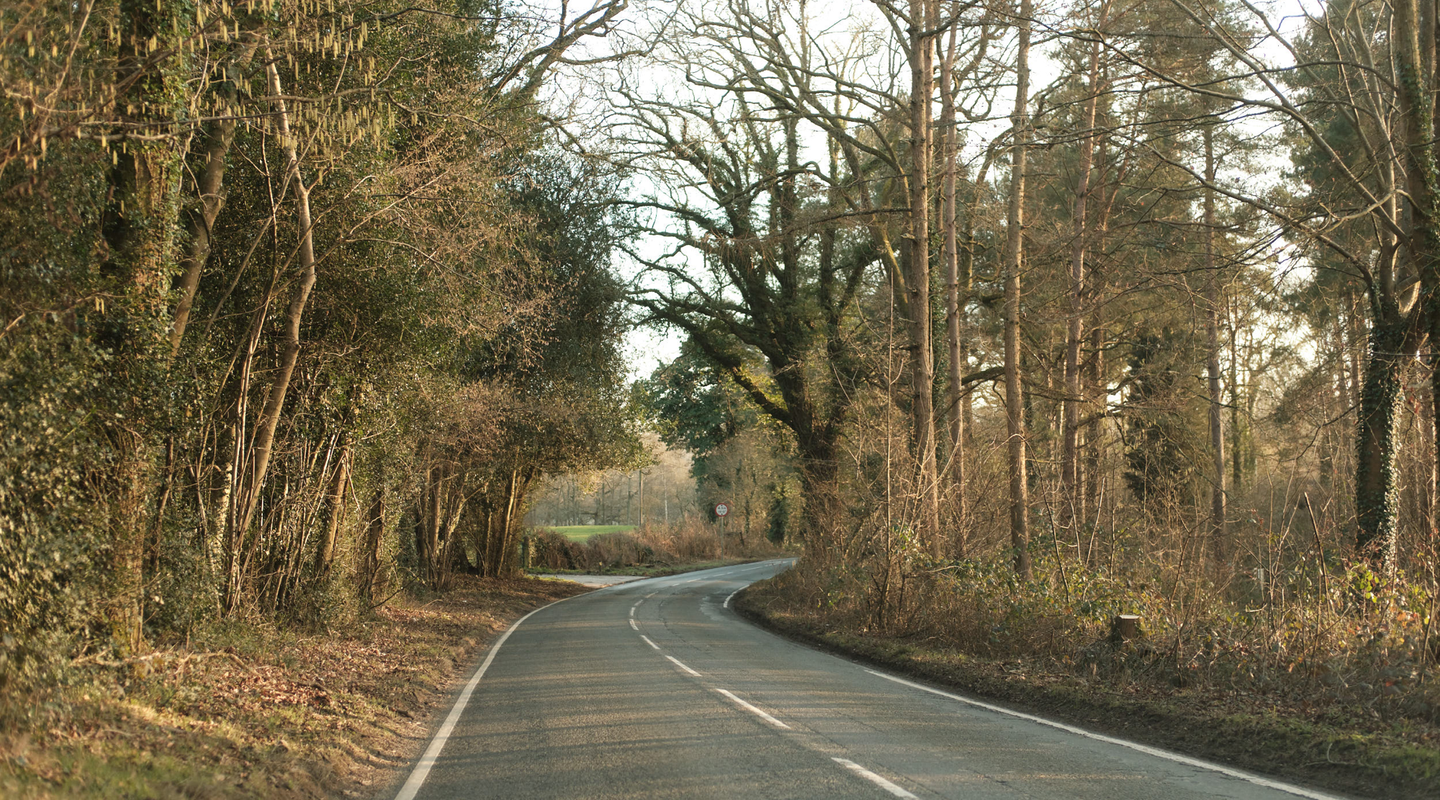
The period immediately after a severe storm is often more hazardous than the storm itself, because debris has not yet been cleared and road crews are still working. Rural roads through wooded areas are the most affected. A tree across a lane on a narrow road in the dark or in low morning light is hard to spot in time to stop safely.
After a night of severe winds, build in extra time and use main roads where possible - they are prioritised for clearing. Watch for temporary traffic signals around fallen trees or storm-damaged overhead lines, which may have appeared overnight. If a bridge was restricted during the night, check its status before setting off to avoid arriving at a queue with no warning.
When to delay your journey
A Met Office red wind warning is a clear signal not to travel. Driving into a documented red warning is also noted by insurers when assessing claims - if an accident occurs in conditions you were warned not to drive in, it may complicate your claim.
For amber warnings, the decision depends on your vehicle and your route. High-sided vehicles, caravans, and motorcycles should treat amber warnings as a strong reason to postpone. Drivers of ordinary cars on sheltered urban routes have more room to make a judgment, but open motorway sections and exposed bridges deserve genuine consideration. The safest approach is to check the forecast the evening before and again in the morning. If conditions are likely to worsen during your journey, leave earlier or reschedule. Our guide to driving in bad weather covers your legal obligations when conditions deteriorate while you are already on the road.
If strong winds change your plans and you need to borrow or use another vehicle to make your journey, temporary car insurance covers you on a car you do not own for as little as one hour.
Frequently asked questions
At what wind speed should I avoid driving in the UK?
The Met Office issues yellow, amber, and red wind warnings. A red warning means you should avoid travel altogether. For amber warnings, high-sided vehicles, caravans, and motorcycles should reconsider seriously, while drivers of ordinary cars need to assess their specific route. Gusts above 60 miles per hour affect steering in most cars on exposed roads.
Why do bridges close in high winds?
Bridges are exposed and their structure can be stressed by extreme wind loads. Suspension and cable-stayed bridges like the Humber Bridge and Queensferry Crossing monitor live wind readings and close lanes or restrict certain vehicle types when gusts exceed safe thresholds. High-sided vehicles are usually the first to face restrictions.
Are vans and lorries more at risk from high winds than cars?
Yes, significantly. They present a much larger surface area to the wind, and an unladen high-sided lorry or van in exposed conditions can be pushed off course or overturned. An empty panel van in sustained 60mph winds requires far more driver input than a car in the same conditions.
What should I do if my car is caught in a sudden gust?
Ease off the accelerator and hold a straight course. Keep both hands on the wheel and avoid oversteering in response to the gust. Reduce speed before you reach exposed sections such as bridges and open stretches rather than reacting after the gust hits. Keep extra space from vehicles beside you.
Does driving in a Met Office red wind warning affect my insurance?
It can. Insurers assess claims in the context of conditions at the time, and driving into a documented red warning, which advises against travel entirely, may be considered when deciding whether a claim is paid. This is not a standard policy exclusion, but it is a factor that can be raised.
Temporary insurance quote
Get a price in under 60 seconds!