
Parking signs UK: what they all mean
The UK's parking sign system involves road markings, kerb marks, upright signs, and zone entry signs that often need to be read together. One marking alone does not always tell the full story. This guide explains the main types and how they interact, so you can read a parking situation correctly before getting a ticket.

Earn points and use them to save money in the app. Download today.


Yellow line markings
Double yellow lines along the kerb edge mean no waiting at any time. Single yellow lines mean no waiting during certain hours, shown on a nearby sign or on the Controlled Parking Zone entry sign at the road junction.
These are waiting restrictions, not stopping restrictions. You can briefly stop at a yellow line to drop off or pick up a passenger. Loading and unloading is also permitted on yellow lines unless kerb marks on the pavement edge say otherwise. The rules around loading exceptions are covered in our parking rules guide.
Kerb marks and loading restrictions
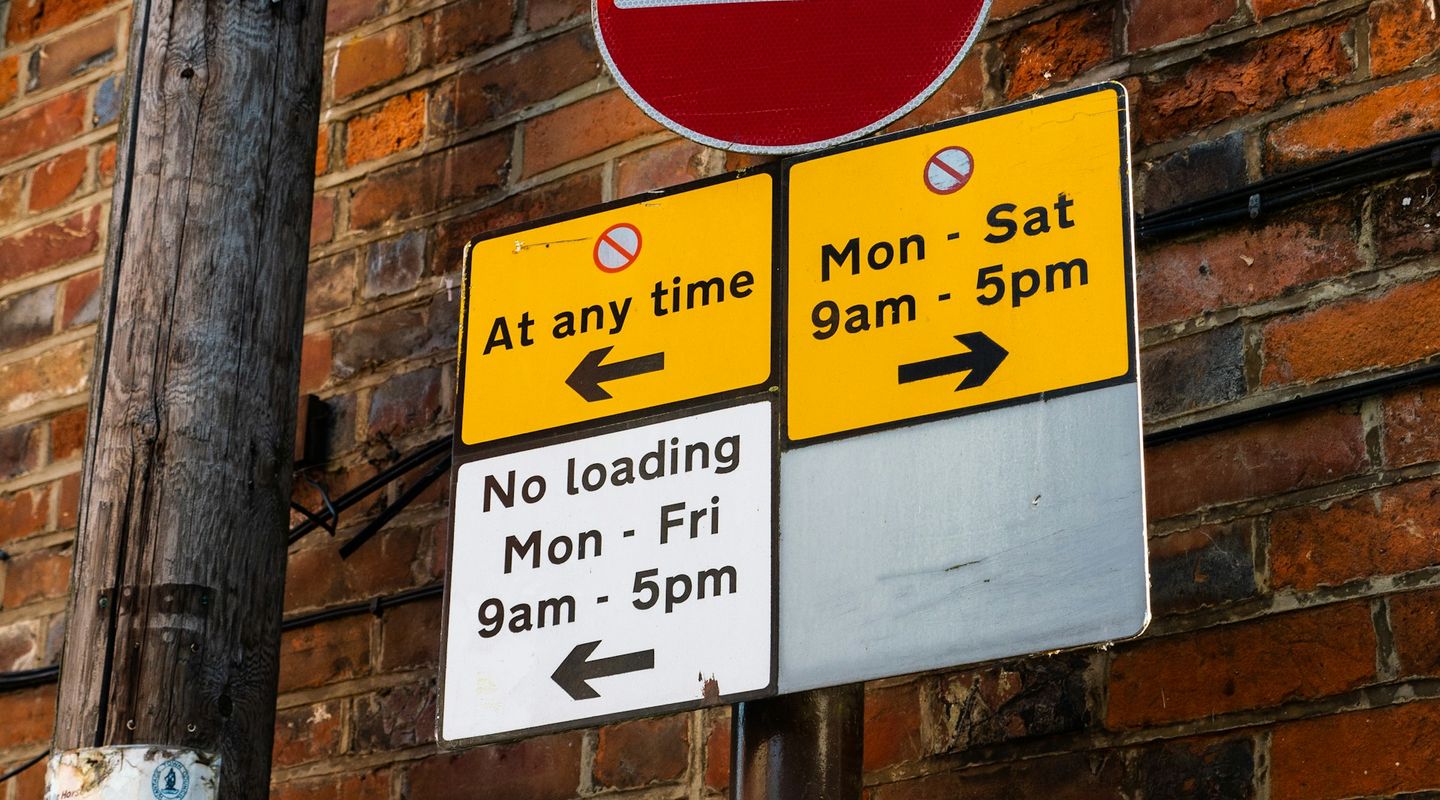
Short yellow lines painted at right angles to the kerb edge are loading restrictions. Two kerb marks mean no loading or unloading at any time. One kerb mark means no loading during the hours shown on a nearby sign.
Where there are no kerb marks at all, loading is generally permitted even on double yellow lines - provided you are actively loading and not causing an obstruction. The absence of kerb marks is as significant as their presence and is easy to miss.
Controlled Parking Zones
A Controlled Parking Zone is an area where the local council manages parking with a unified set of rules. On entering a CPZ, a zone boundary sign shows the permitted vehicle types, days, and times. Within the zone, individual bay signs give additional details for each specific bay.
In a CPZ, read the zone entry sign and any bay markings together. A pay and display bay shows its tariff and maximum stay on the sign beside the bay or the meter. A residents-only bay is marked with an R and the permit zone letter. A shared-use bay combines a permit rule with a time-limited stay for non-permit holders.
No waiting and no stopping signs
A circular sign with a red border and a horizontal bar across the middle means no entry. A similar sign with a cross means no stopping at any time - used on clearways and parts of red routes. A sign reading "No Waiting" alongside times confirms a timed restriction.
On red routes (red lines at the kerb), stopping is prohibited during the indicated hours - stricter than yellow lines. Red routes are common in London and exist in some other cities. Driving in a bus lane on a red route carries the same penalty as the red route restrictions themselves.

Disabled parking bays
Disabled bays are marked with a blue badge symbol and the words "Disabled" or "Blue Badge Holders Only." Blue badge holders can park in these bays regardless of the general parking restrictions in the area. They can also park on yellow lines for up to three hours where no loading ban applies, as explained in our parking rules guide.
Parking in a disabled bay without a valid blue badge displayed correctly is an offence and carries a Penalty Charge Notice.
Frequently asked questions
What do the yellow lines on the road mean?
Double yellow lines mean no waiting at any time. Single yellow lines mean no waiting during certain hours, shown on a sign or on the Controlled Parking Zone entry sign at the nearby junction. Neither type prevents briefly stopping to pick up or drop off a passenger.
What are the short yellow lines on the kerb?
Short yellow lines painted at right angles to the kerb are loading restrictions. Two marks mean no loading at any time. One mark means no loading during certain hours, shown on a nearby sign. Where there are no kerb marks, loading is generally permitted even on double yellow lines.
What is a Controlled Parking Zone?
A Controlled Parking Zone is an area where parking is managed by the local council. Signs at the entry points show the permitted vehicle types, hours, and days. Within the zone, individual bay signs still apply, and you need to read both the zone entry sign and the local bay markings together.
What does a no stopping sign look like?
A circular sign with a red cross on a blue background means no stopping at any time. Red lines at the kerb (red routes) also prohibit stopping during the indicated hours. These are stricter than yellow lines - even briefly stopping to drop someone off is not permitted during restricted hours.
Can you park in a shared-use bay?
A shared-use bay allows both permit holders and non-permit visitors to park, subject to different rules. Visitors can typically park for a limited time, shown on the bay sign. Permit holders can park for longer. The exact terms vary between councils, so read the bay sign carefully before leaving your vehicle.
Temporary insurance quote
Get a price in under 60 seconds!