
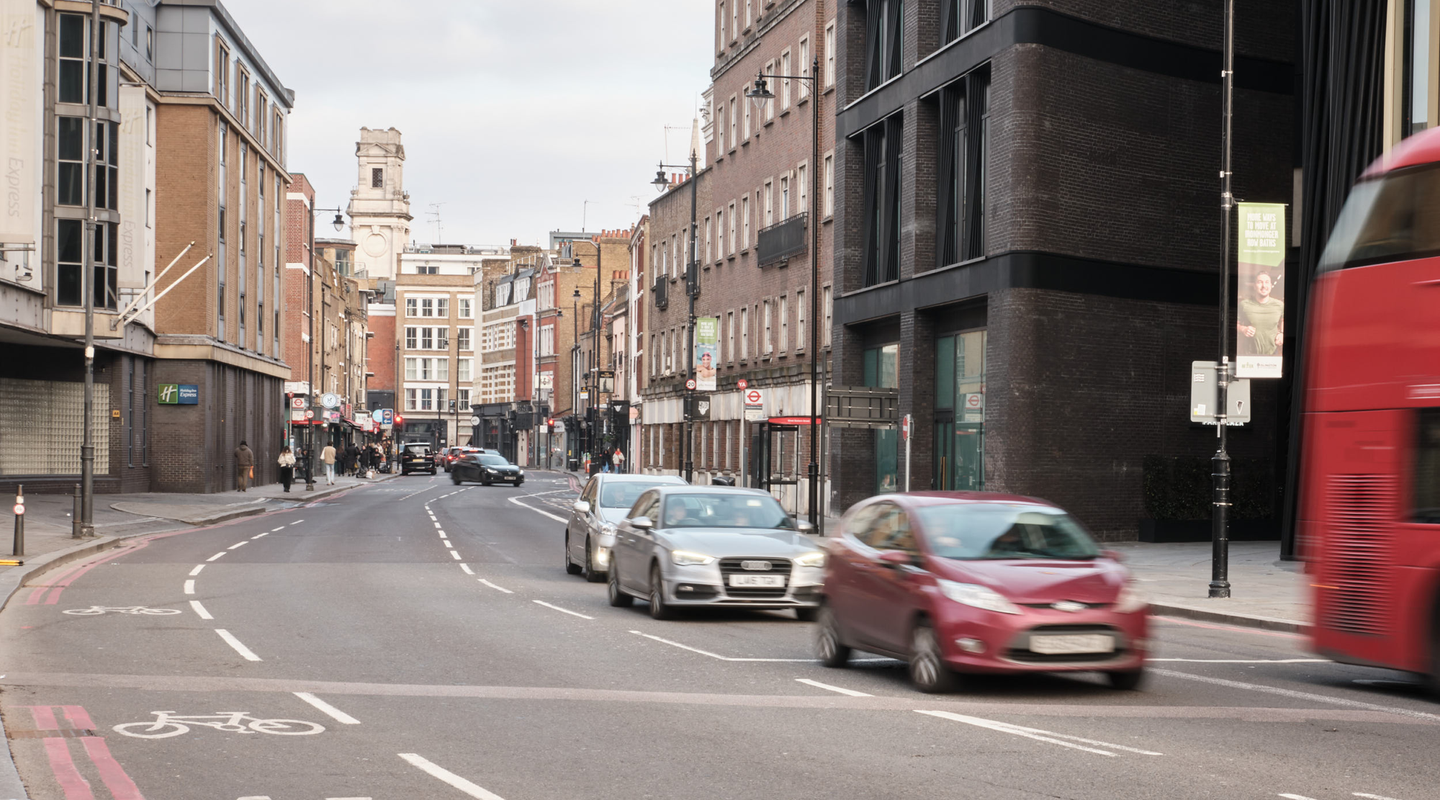
Parallel parking: how to do it step by step
Parallel parking means reversing into a space at the side of the road, between two parked vehicles. The technique uses specific reference points to guide the reversing arc and takes most learners only a few practice sessions to get reliable. On the driving test, examiners want accuracy and control, not speed.

Earn points and use them to save money in the app. Download today.


What examiners want to see
Before covering the steps, it is worth understanding the objective. The examiner is assessing:
- Accurate positioning: The car should end up reasonably close to and parallel with the kerb, within about two car lengths of the vehicle in front.
- Control: Slow, steady speed throughout. Smoothly applied clutch control (on a manual).
- Observation: Effective all-round checks before and during the manoeuvre, pausing if traffic approaches.
- No mounting the kerb: Touching or riding the kerb is a serious fault.

Speed is not assessed. There is no time pressure. Pausing to check, adjust or think is fine.
Setting up the manoeuvre
To begin:
- Pull up alongside the car in front of the target space. Position your car roughly 1 metre out from the parked car, with your bonnet approximately level with theirs.
- Check all around - use mirrors and direct observation. Signal if needed (you will not always need to signal on a quiet road, but do so if it helps following traffic understand your intentions).
- Select reverse.
The space needs to be at least one and a half car lengths. In practice, two car lengths is more comfortable for most learners. If the space is genuinely too short, do not attempt it - choose a different space.
Step 1: Reverse straight back
Begin reversing slowly. Keep the car moving very slowly - this manoeuvre is almost entirely done at a walking pace.
Continue reversing in a straight line until your rear bumper is approximately level with the rear bumper of the parked car. You can judge this by looking in the left door mirror.
Step 2: Turn towards the kerb
When your rear bumpers are approximately level, apply full left-hand steering lock (turn the wheel fully left in the UK, towards the kerb).
Continue reversing with full left lock until the front of your car begins to clear the rear of the parked car in front. You will see this clearance developing in your left door mirror and, for the front, you will need a quick glance forward to judge it.
Step 3: Straighten and steer right
When your car is at roughly 45 degrees to the kerb:
- Steer back to straight (turn the wheel to the right to straighten).
- Continue reversing briefly.
- Apply right steering lock to bring the front of the car in towards the kerb and complete the parking.
The exact timing of each steering input depends on the car, the space size and the initial position. The 45-degree angle is a guide, not a precise measurement - with practice you will develop a feel for when each stage looks right.
Common mistakes and how to fix them
Mounting the kerb (left rear): You turned left too early or too sharply. Next time, reverse a little further before applying left lock, or use less initial lock.
Front of car swings into traffic: You turned full left too late. Apply left lock earlier in the manoeuvre.
Ending up too far from the kerb: You did not apply enough total steering input, or straightened too early. Apply more right lock in the final stage.
Getting stuck diagonally: Stop, come forward slightly and adjust the steering, then reverse again to complete the angle correction. There is no penalty for taking extra moves.
How many moves are allowed?
There is no set limit. Examiners are assessing the outcome (accurate, controlled parking) rather than the number of moves. Taking an extra forward movement to correct the position is fine and is far better than trying to force the manoeuvre in fewer moves and ending up against the kerb or too far out.
Parallel parking and the driving test
Parallel parking is one of four reversing manoeuvres that may be included on a practical test. The others are: forward bay parking, reverse bay parking, and pulling up on the right side of the road and reversing back. The examiner selects one manoeuvre per test, so you will not be asked for all four.
Practising all four to a reliable standard is worthwhile - you cannot predict which will be chosen. Our guide to the UK driving test explained covers how each manoeuvre is assessed.
Insuring a learner in a private car
The best way to build manoeuvre skills is through repetition in conditions you control. If you want to practise parallel parking on quiet residential streets without an instructor, learner driver insurance lets you use a private car under supervision from a qualified driver - giving you more practice hours without the cost of lessons.
Frequently asked questions
Is parallel parking on the UK driving test?
Parallel parking is one of four possible manoeuvres on the practical driving test. The examiner chooses one manoeuvre per test - you may be asked to parallel park, or you may be asked to do a bay park (forward or reverse) or pull up on the right. Practising all four is the safest preparation.
How many moves are you allowed when parallel parking on the test?
There is no set limit. Examiners assess the accuracy, control and observation of the final result, not the number of steering adjustments or forward/reverse moves taken. Taking an extra move to correct the position is sensible and will not be marked against you.
What is a serious fault in parallel parking on the test?
Mounting the kerb at any point is a serious fault and will fail the test. Lack of effective observation before or during the manoeuvre is also a serious fault if it could have caused a hazard. Poor final positioning - too far from the kerb, or excessively close - would typically be marked as one or more minor faults.
How big does the space need to be for parallel parking?
On the driving test, the examiner will choose a space that is large enough for the manoeuvre - typically around one and a half to two car lengths. In everyday driving, if the space does not look like it has at least one and a half car lengths of room, it is usually easier and safer to find a different space.
What is the difference between parallel parking and bay parking?
Parallel parking means reversing into a space at the side of the road, between or behind parked cars, parallel to the kerb. Bay parking means parking in a marked bay, either reversing into it or driving forward into it. Both may appear on the driving test, but only one manoeuvre is tested per attempt.
Temporary insurance quote
Get a price in under 60 seconds!