
Overtaking rules UK
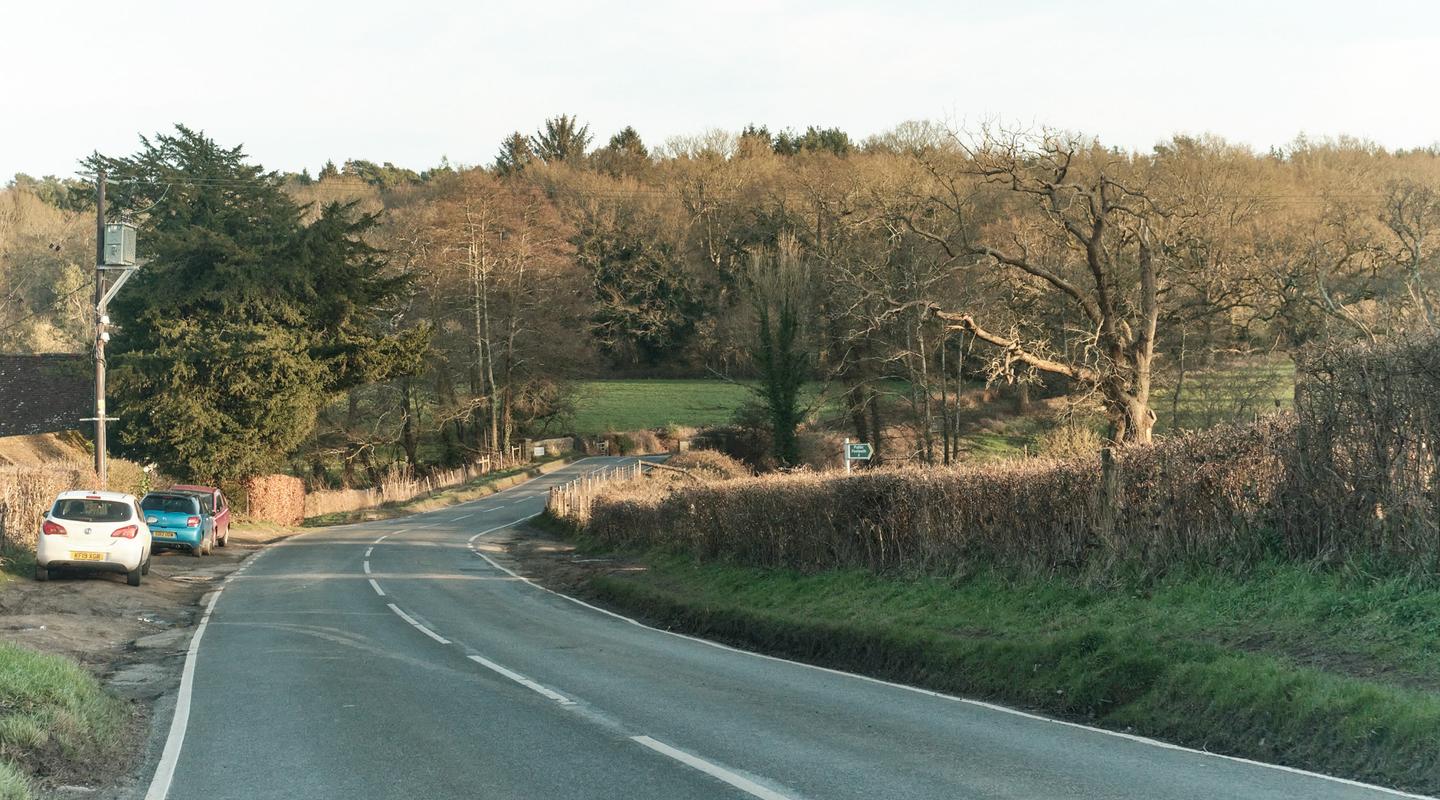
Overtaking is legal on most UK roads, but it requires accurate judgement of speed, distance, and oncoming traffic. The law prohibits overtaking in specific locations; beyond those restrictions, timing and observation determine whether a manoeuvre is safe.

Earn points and use them to save money in the app. Download today.


Is overtaking legal in the UK?
Overtaking is legal on most UK roads, provided it is done safely and in a permitted location. The offence arises not from overtaking itself but from doing so in a prohibited location or in a way that endangers other road users.
Most overtaking offences are prosecuted as careless driving (section 3, Road Traffic Act 1988) or dangerous driving (section 2), depending on the circumstances. Careless driving carries 3 to 9 penalty points and an unlimited fine. Dangerous driving can result in a prison sentence.
A legal overtake requires a clear view ahead, a genuine gap in oncoming traffic, enough road to complete the manoeuvre, and a return to your lane without forcing other road users to adjust.
Where overtaking is prohibited
The Highway Code and road markings identify locations where overtaking is not permitted. You must not overtake:
- Where a solid white line appears in the centre of the road on your side - this means no crossing
- At or approaching a pedestrian crossing, including within the zig-zag zone
- At or approaching a junction, where cross traffic may emerge
- Where a bend, crest, or hill reduces your sight line
- On the approach to a level crossing
- Where a no-overtaking sign is displayed (a circular sign showing two vehicles side by side)
- In contraflow or roadworks sections where lane directions are altered

Broken centre lines mean overtaking is permitted where safe. A solid line on your side means it is not - even if the road appears clear.
Roundabouts add another layer of complexity to lane discipline - roundabout rules explained covers priority, lane choice and exiting safely.
How to overtake on a single carriageway
Single carriageway overtaking means crossing into the path of oncoming traffic. The sequence:
- Check mirrors for following traffic - overtaking should not endanger vehicles behind you either
- Look well ahead - identify where the manoeuvre will start and where you will return to your lane
- Wait for a gap large enough to complete the full overtake and return, with margin to spare
- Signal right, check mirrors again, then move out
- Accelerate firmly to minimise the time spent alongside the vehicle being overtaken
- Signal left and return to the nearside, leaving clear space in front of the vehicle you passed
Never begin an overtake unless you can see enough road ahead to complete it. If a vehicle appears ahead before you have finished, you must be able to return to your lane safely without forcing anyone to adjust.
Overtaking on a dual carriageway
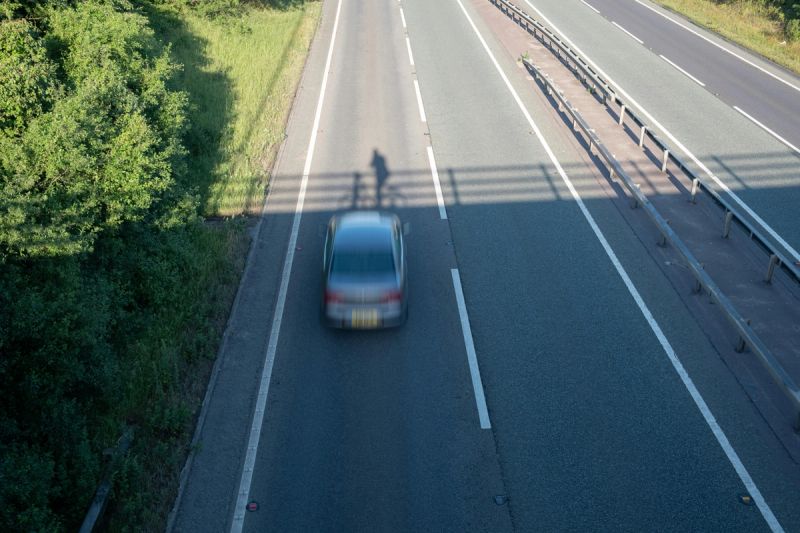
On a dual carriageway, overtaking stays on the same side of the road - you move from the left lane into the right lane, pass, and return. Because you are not crossing into oncoming traffic, the risk profile is lower, but the core principles remain the same.
Keep left as your default on a dual carriageway. The right lane is for overtaking, not cruising. After passing a vehicle, return to the left lane promptly. For the wider rules on dual carriageway lane discipline - and how they differ from motorway rules - the guide to motorway driving rules covers both in detail.
Passing cyclists and motorcyclists
When overtaking a cyclist, the Highway Code (Rule 163) recommends leaving at least 1.5 metres of clearance at speeds up to 30mph, and more at higher speeds. Give cyclists as much room as you would give a slow-moving car.
Do not squeeze past a cyclist and immediately turn left, cutting across their path. After passing, check your mirror before pulling back in - a cyclist can close a gap faster than expected.
Motorcyclists can be harder to spot than cyclists because of their narrower profile. Check specifically for motorcycles in your mirrors before moving out. Motorcyclists may filter through slow-moving traffic legally - be aware that one may appear in your mirrors quickly.
Passing a cyclist safely often means dealing with a dedicated lane, and cycle lane rules for drivers explains when you can and cannot cross into one.
Passing horses
Horses can react unpredictably to engine noise, sudden movement, and close proximity. The Highway Code guidance (Rule 215) is clear:
- Pass wide and slow - at least 2 metres of clearance and no more than 10mph
- Do not sound the horn, rev the engine, or accelerate suddenly near a horse
- Be prepared to stop if the rider or handler signals you to
- Watch for sudden movement - a startled horse can move into the road without warning
If a horse blocks the road, wait calmly. Attempting to force past a horse that is already spooked risks a serious accident for the rider, the horse, and your vehicle.
Overtaking lorries and HGVs
Large vehicles create turbulence when travelling at speed, which can affect your steering as you pull alongside. Move out far enough to clear the worst of the draft, and keep a firm grip on the wheel.
Time your overtake to avoid passing a lorry at a junction where it may turn. A lorry turning left from the outside position takes a wide path - its trailer can swing into adjacent lanes without warning.
After passing an HGV, do not pull back in until the full vehicle is visible in your interior mirror. The length of an artic can be deceptive from behind. If you are driving a borrowed car or an unfamiliar vehicle, temporary car insurance gives you comprehensive cover on a vehicle you do not own - including the confidence that you are properly insured while you build familiarity with it.
What happens if overtaking causes an accident?
If an overtake leads to a collision, the overtaking driver is typically considered to have caused or contributed to the accident. If you crossed into oncoming traffic, you may face a prosecution for careless or dangerous driving alongside any civil liability.
Dash cameras can matter in these situations - footage can establish where each vehicle was and when. If you are involved in an accident after overtaking, exchange details and report the incident correctly. Do not admit liability at the scene; let your insurer assess the circumstances.
Frequently asked questions
Is overtaking on the left legal in the UK?
Generally no. You must not overtake on the left unless traffic is moving in queues and the left lane is moving faster than the right. Passing on the left outside of slow-moving queues - known as undertaking - is illegal and can result in a careless driving charge.
When is it illegal to overtake in the UK?
You must not overtake where a solid white centre line appears on your side of the road, at pedestrian crossings or in the zig-zag zone, at junctions, where vision is limited by a bend or crest, at level crossings, in roadworks contraflows, or where a no-overtaking sign is displayed.
How much clearance should you give a cyclist when overtaking?
The Highway Code recommends at least 1.5 metres at speeds up to 30mph, and more at higher speeds. Give a cyclist similar clearance to a slow-moving car. Do not pull back in immediately after passing - check your mirror and leave adequate space before returning to your lane.
Can you overtake on a motorway?
Yes, using the right-hand lane to pass slower vehicles, then returning to the left lane promptly. You must not overtake on the left outside of slow-moving queues. The right lane is for overtaking only - staying in it when not actively overtaking is itself an offence.
What is the penalty for dangerous overtaking?
Overtaking classed as careless driving carries 3 to 9 penalty points and an unlimited fine. Dangerous overtaking can result in a prison sentence of up to 2 years and a mandatory disqualification. Either conviction affects car insurance premiums for years after.
Temporary insurance quote
Get a price in under 60 seconds!