
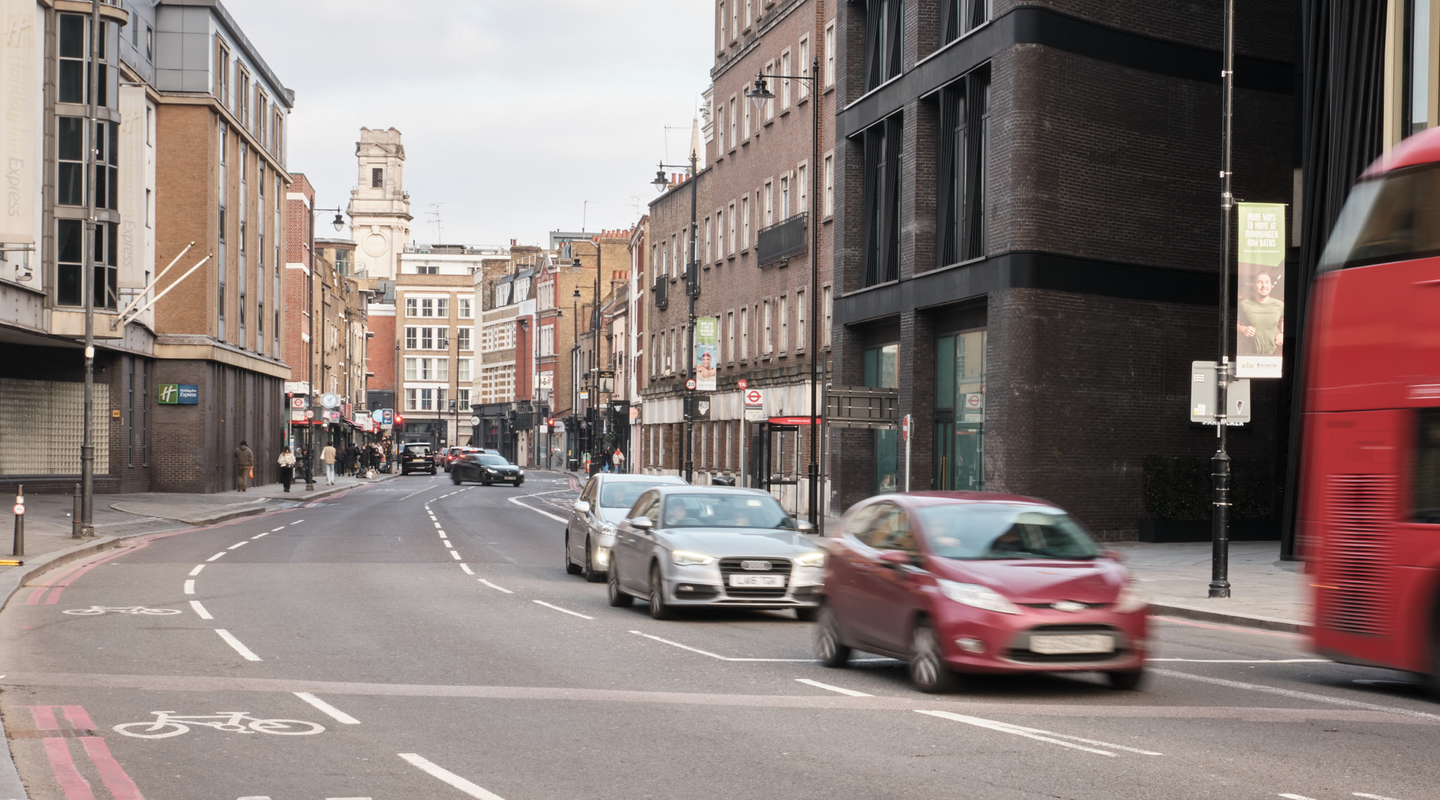
Hazard perception test tips
The hazard perception test is the second part of the theory test. You watch 14 video clips and click when you see a hazard developing. The earlier you spot it, the higher your score. Maximum is 75 points across all clips; you need 44 to pass. Here is exactly how scoring works and how to prepare.

Earn points and use them to save money in the app. Download today.


What is the hazard perception test?
The hazard perception test uses 14 short clips filmed from a driver's perspective on real UK roads. Each clip contains at least one developing hazard - a situation that requires the driver to respond by slowing, stopping, or changing course. One clip contains two developing hazards. There are 15 scoreable hazards in total across 14 clips, making the maximum possible score 75.
You click the mouse button (or tap the screen) when you see a hazard beginning to develop. The scoring system assigns points based on how early in the developing sequence you clicked. Click early and you score up to 5 points; click later but still within the scoring window and you score lower; click after the window closes and you score zero for that hazard.
Your theory test certificate has a fixed expiry date, so passing early and practising hazard perception is important - how long a theory test pass certificate is valid for explains the two-year window and what happens if your practical test is delayed past the expiry.
What is the difference between a potential and a developing hazard?
A potential hazard is something that might require action - a parked car, a pedestrian on the pavement, a junction ahead. These are not scored. A developing hazard is one that has begun to require action - the parked car door opening, the pedestrian stepping off the kerb, the vehicle pulling out of the junction.
The scoring window opens at the moment the hazard starts to develop and closes once the clip has moved past it. Clicking before the window opens scores zero. Clicking within it scores between 1 and 5, with higher scores for earlier clicks. The challenge is clicking early enough to score well without clicking before the hazard has actually started to develop.
If you fail the hazard perception section, you will need to retake the full theory test - there is no limit on attempts - how many times you can retake the theory test explains the waiting period between attempts, whether previous scores carry over, and the rebooking process.
What is the penalty for random clicking?
The test software detects random clicking patterns. If you click more than a set number of times in a short space of time, or click at a steady rhythm throughout a clip, the system records zero for that clip regardless of whether any clicks fell in the scoring window.
The safest approach is to click only when you see something developing. You will not be penalised for a few extra precautionary clicks, but continuous or rhythmic clicking across the clip will trigger the penalty. Candidates who try to "click everything and hope" consistently underperform compared to those who click selectively.
Arriving with the right documents is as important as knowing the material for the hazard perception section - what to take to the theory test covers the acceptable forms of ID, what happens if you arrive without the right documentation, and how to find your nearest test centre.
How to prepare for the hazard perception test
Use official DVSA practice materials. These are the closest match to the real test. Third-party clips vary in quality and may use different scoring logic or hazard types. The DVSA sells its own revision kit online and through third-party retailers - check that what you use is officially licensed.
Practise identifying the exact moment a hazard starts to develop. Most official practice platforms tell you whether your click was in the scoring window, too early, or too late. Reviewing this feedback recalibrates your timing more effectively than watching more clips. The goal is not volume - it is understanding precisely when the scoring window opens for each hazard type.
Scan the full frame, not just the road ahead. Hazards regularly develop at the edges - a child approaching the kerb, a cyclist from a driveway, a vehicle at a side road beginning to move. Focusing only on the middle distance means missing these consistently.
Once the theory is done, supplementing formal lessons with private practice builds hazard awareness further - learner driver insurance covers those sessions on any eligible car without going on the owner's policy.
Building the habit outside the test
Ask your instructor to narrate hazards during lessons. If you are taking driving lessons alongside theory preparation, ask your instructor to call out developing hazards as they appear on real roads. Connecting the on-screen recognition skill to live road experience accelerates your timing because you are reading the same cues in both contexts.
Practise in shorter, focused sessions. Hazard perception requires sustained attention - fatigue during a long session produces inaccurate timing that builds bad habits. Twenty minutes of focused practice is more productive than ninety minutes of distracted clicking.
Keep a note of which types of hazard you click too late. Common patterns include pedestrians at junctions and cyclists in door zones. Targeted practice on your weak types improves scores faster than general repeat watching.

Common mistakes
Clicking the moment you notice a potential hazard is the most common reason for low scores - you are clicking before the scoring window opens. Conversely, waiting for absolute certainty means clicking after it closes. The skill is in reading the moment a situation transitions from potential to developing.
The other common mistake is narrow focus. Hazard perception clips regularly feature situations at the edge of the frame that are easy to miss if you are scanning the road ahead rather than the whole picture.

What if you fail the hazard perception section?
The theory test requires you to pass both parts - the multiple choice section (43 out of 50) and the hazard perception section (44 out of 75). Failing either means the whole test is a fail. You cannot carry a passing score from one section forward to a next attempt; if you rebook, you sit both sections again.
The pass mark for the multiple choice section, how it is structured, and what to expect from the question bank is covered in our guide to the theory test pass mark.
Frequently asked questions
What is the pass mark for the hazard perception test?
44 out of 75. There are 15 scoreable hazards across 14 clips, each worth a maximum of 5 points.
What is a developing hazard?
A situation that has started to require the driver to act - for example, a pedestrian stepping into the road, or a car beginning to pull out of a side road. A potential hazard that has not yet started to develop is not scored.
Will I be penalised for clicking too much?
Yes. Clicking at a continuous or regular rhythm triggers the random-clicking penalty, which records zero for that clip. Click when you see something developing rather than clicking continuously.
Can I retake just the hazard perception section if I fail it?
No. If you fail either section of the theory test, you must rebook and sit both the multiple choice and hazard perception sections again from scratch.
What is the best way to practise?
Use official DVSA practice materials. Practise identifying the exact moment a potential hazard becomes a developing hazard, and train yourself to scan the full frame rather than just focusing on the road ahead.
Temporary insurance quote
Get a price in under 60 seconds!