
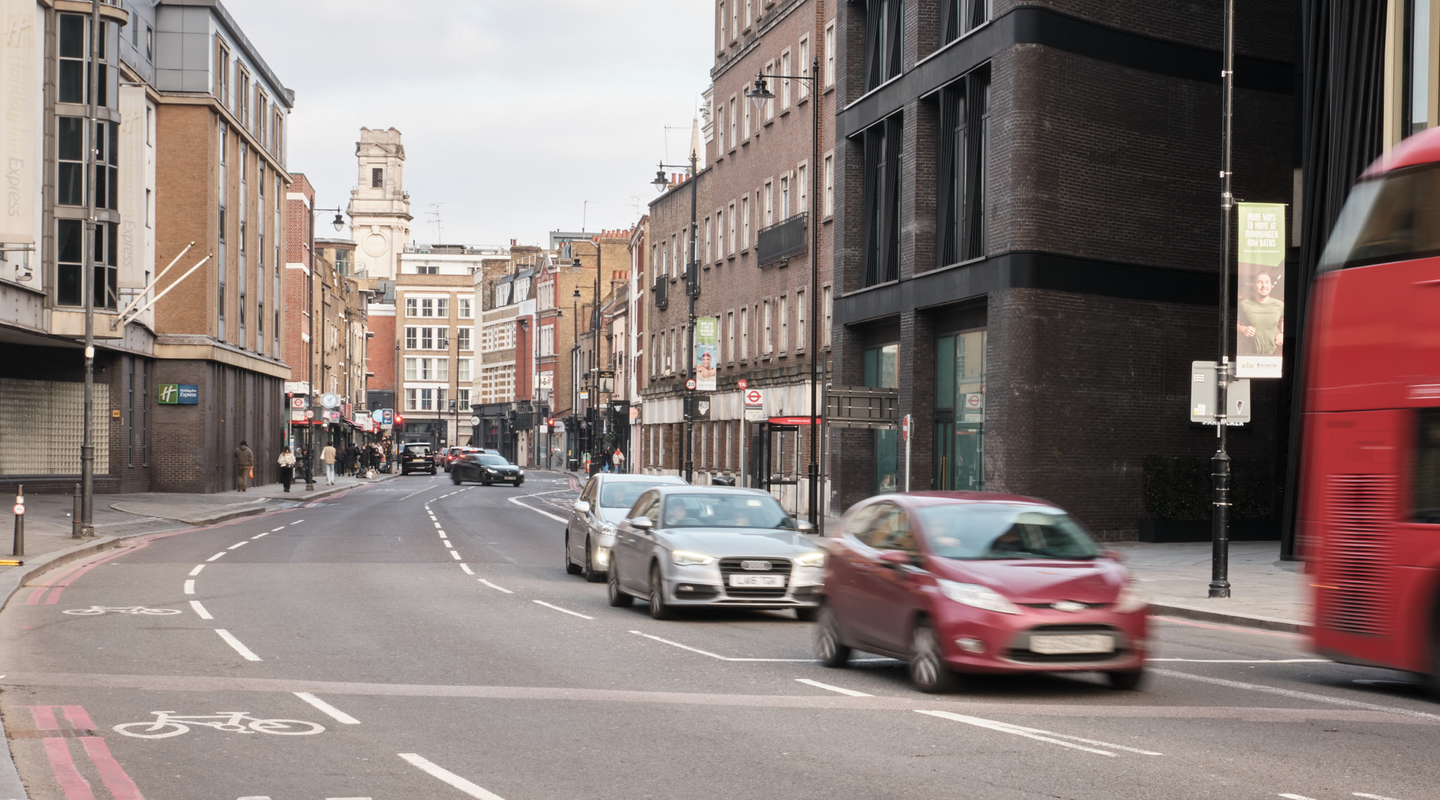
Dipped headlights: when must you use them?
Dipped headlights are required in law in several situations beyond simply driving at night. Poor visibility during the day, tunnels, and certain adverse weather conditions all require them. Understanding exactly when to switch them on - and when to switch full beam off - is straightforward once you know the rule.

Earn points and use them to save money in the app. Download today.


What are dipped headlights?
Dipped headlights are the standard driving beam, angled downward and to the left to illuminate the road ahead without dazzling oncoming drivers. On most cars, they are activated by turning the light stalk one position beyond sidelights, or automatically when the car is in a well-lit area and sensors detect lower ambient light.
Dipped headlights are different from sidelights (also called parking lights), which emit only a dim glow from the front and rear corners. Sidelights are not bright enough to illuminate the road and are not a substitute for headlights on a moving vehicle at night.
When the law requires dipped headlights
The Highway Code and Road Vehicles Lighting Regulations set out when headlights are legally required.
At night on any road: You must use headlights during the hours of darkness on any road, including those with street lighting. Sidelights are not sufficient on a moving vehicle after dark.
In poor visibility: You must use headlights - and may also use fog lights - when visibility is seriously reduced, defined as when you cannot see for more than 100 metres. This applies in fog, heavy rain, snow or any other condition that significantly restricts sight distance. In practice, this threshold is much lower than many drivers realise, and it is reached well before conditions become dangerous-feeling.
In tunnels: Headlights are required in all tunnels, regardless of how well-lit the tunnel appears.
At dawn and dusk: During the transition period between day and night, visibility drops significantly before it feels dark enough to prompt most drivers to act. Highway Code Rule 115 advises using headlights or fog lights in conditions of reduced visibility even in daylight.
Full beam: when to use and when to dip
Full beam headlights provide a much longer, brighter throw of light suitable for dark rural roads with no other traffic. You should switch to dipped headlights when:
- An oncoming vehicle is approaching
- You are following another vehicle closely
- You are in a built-up area with street lighting
- Your full beam would dazzle pedestrians or cyclists

Failing to dip for oncoming traffic is not just inconsiderate - it can temporarily blind the other driver and is a specific driving fault. Driving with full beam in a lit area is also avoidable and unnecessary.
Daytime running lights are not headlights
Many modern cars have automatic daytime running lights (DRLs) that switch on whenever the ignition is on. DRLs improve visibility to other road users but they are not headlights and do not illuminate the road ahead. They also may not activate the rear lights. In poor daytime visibility, switching to dipped headlights rather than relying on DRLs is the correct response.
Some drivers assume that because their DRLs are on, they are visible and covered. In fog or heavy rain, dipped headlights are required.
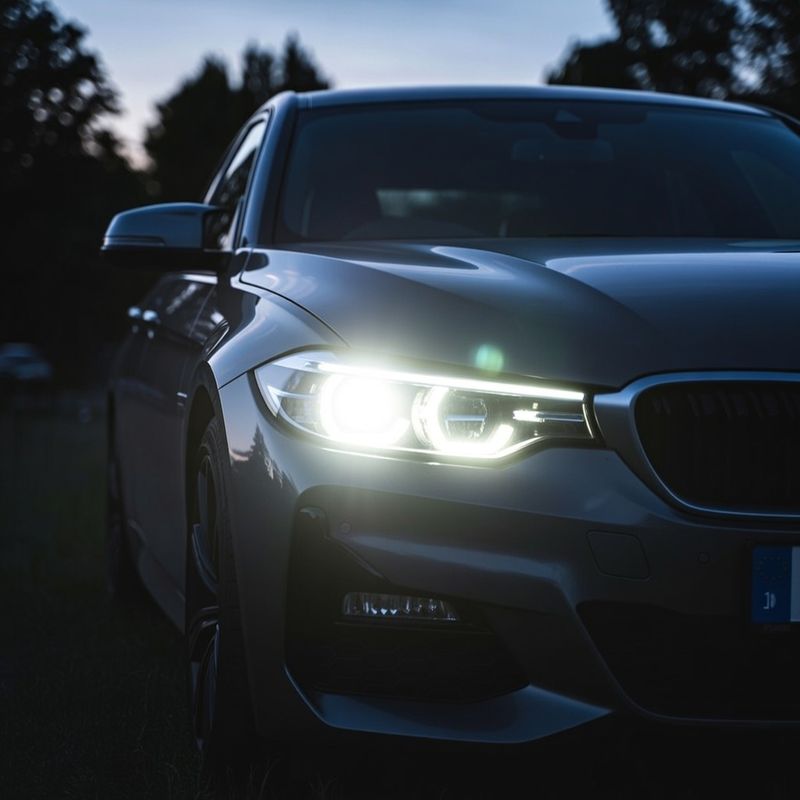
Fog lights
Rear fog lights are required to be used - and only to be used - when visibility is seriously reduced. Because they are very bright, using them in normal conditions dazzles the driver behind and is specifically prohibited. Front fog lights are optional additions not fitted to all vehicles. They should be used with the same judgment as rear fogs.
Switch fog lights off when visibility improves. Leaving them on when conditions clear is a common mistake that can result in dazzling other drivers and, technically, an offence.
Headlights and the driving test
Examiners look for appropriate use of lights throughout the test. Not using dipped headlights when required - for example, driving into a dimly-lit car park or approaching a poorly-lit stretch - is a driver fault. Using full beam inappropriately, especially when oncoming traffic is present, is marked as a serious fault. Our guide to the UK driving test covers the full marking criteria.

Cover for every journey
If you are driving a borrowed or hired vehicle that has different headlight controls from your own car, take a moment before setting off to locate the light switch and understand what the stalk or dial positions do. Temporary car insurance gives you comprehensive cover on any vehicle you are driving - and knowing the car you are covered on means you can focus on driving it correctly.
Frequently asked questions
When must you use dipped headlights in the UK?
Dipped headlights are legally required during hours of darkness on any road, in poor visibility where you cannot see for more than 100 metres (fog, heavy rain, snow), and in all tunnels. They should also be used at dawn and dusk before it feels fully dark.
Are daytime running lights the same as dipped headlights?
No. Daytime running lights (DRLs) make you visible to other road users but do not illuminate the road ahead and often do not activate the rear lights. In poor visibility, you should switch to dipped headlights rather than relying on DRLs.
When should you dip your full beam headlights?
Dip to standard headlights when an oncoming vehicle is approaching, when following another vehicle, when in a lit built-up area, and when your beam would dazzle pedestrians or cyclists. Failing to dip for oncoming traffic is a driving fault.
Is it illegal to drive with fog lights on in clear conditions?
Yes. Rear fog lights may only be used in seriously reduced visibility. Using them in normal conditions dazzles the driver behind and is an offence. Switch them off once the fog or heavy rain clears.
Can you use sidelights instead of headlights at night?
No. Sidelights emit only a dim glow and are not sufficient for driving at night. They are used only when parked at the side of a road at night - and even then, only where the speed limit is 30mph or less.
Temporary insurance quote
Get a price in under 60 seconds!