
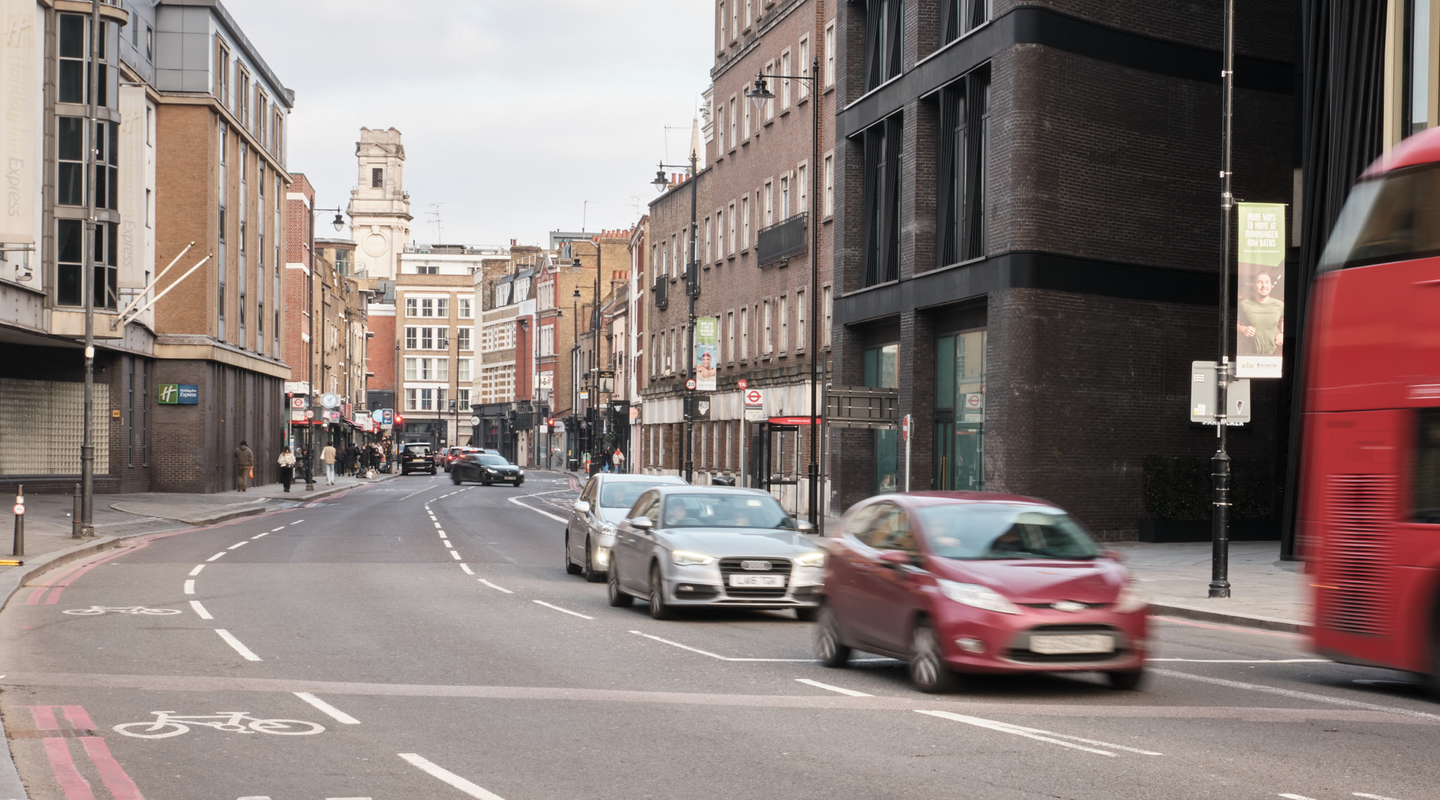
UK car ownership statistics: 26% of households have no car
26% of UK households do not own a car, according to the 2021 Census. That is 7.6 million households - ranging from 8% in the most car-dependent rural areas to over 60% in some inner London boroughs. The geography of car ownership shapes everything from commuting behaviour to the way people access occasional transport when they need it. This page uses ONS Census 2021 data to map where ownership is highest, where it is lowest, and what that gap looks like across different parts of the country.
- 26% Of UK households have no car
- 7.6m Car-free households in the UK
- 63% Peak no-car rate - Tower Hamlets
- 8% Lowest no-car rate - rural areas
The national picture
The 2021 Census recorded 29.0 million households in England and Wales. Of these, 26% had no car or van - a figure that has been broadly stable over the past decade but masks enormous regional variation. A further 41% owned one car, 25% owned two, and 8% owned three or more.
The national average of 26% no-car households compares with 27% in the 2011 Census, suggesting car ownership levels have changed little at the national level despite rising urbanisation and changing commuting patterns. However, the 2021 figure was taken during and after the pandemic period, which may have temporarily suppressed car sales and affected purchasing patterns in some areas.
Where car ownership is lowest
Inner London dominates the lowest car ownership rankings. Tower Hamlets has the highest proportion of car-free households in England and Wales at 63.4% - nearly two in three households. Hackney follows at 60.2%, then Islington (58.6%), Lambeth (55.9%), and Southwark (54.6%).
The pattern reflects the infrastructure available in these areas: dense public transport networks, high population density, limited parking, and high parking costs all reduce the incentive to own a car. Many residents of inner London boroughs can reach work, shops, and services entirely on foot or by tube and bus.
Outside London, Brighton and Hove (39.4%), Oxford (37.6%), Edinburgh (33.0%), and Manchester (30.2%) all sit above the national average. University cities feature consistently - a student population combined with walkable city centres creates the same disincentive to car ownership.
Local authorities with the highest proportion of car-free households
% of households with no car or van. National average: 26%. Source: ONS Census 2021.
- Tower Hamlets 63.4%
- Hackney 60.2%
- Islington 58.6%
- Lambeth 55.9%
- Southwark 54.6%
- Newham 53.1%
- Lewisham 50.3%
- Brighton and Hove 39.4%
- Oxford 37.6%
- Edinburgh 33%
ONS Census 2021: Number of cars or vans by household (TS045). DfT National Travel Survey 2023.
Where car ownership is highest
Car ownership rates are highest in rural English counties and suburban commuter belts. Hart in Hampshire has the lowest proportion of car-free households in England at just 8.4% - fewer than 1 in 12 households manage without a car. South Northamptonshire (9.0%), Stratford-on-Avon (9.3%), and the Cotswolds (9.5%) follow closely.
In these areas, car ownership is less a preference than a necessity. Public transport is often infrequent or absent entirely, journeys to work, school, or the GP require a car, and the distances between destinations are too large to cover on foot or by bicycle. Multi-car households are also much more common - in Hart, 39% of households own two cars and 15% own three or more.
The contrast between inner London boroughs and rural English counties is stark: Tower Hamlets has a car-free rate nearly 8 times higher than Hart. The two populations live in entirely different transport environments.
Local authorities with the lowest proportion of car-free households
% of households with no car or van. National average: 26%. Source: ONS Census 2021.
- Hart 8.4%
- South Northamptonshire 9%
- Stratford-on-Avon 9.3%
- Cotswold 9.5%
- Rushcliffe 9.7%
- South Cambridgeshire 9.8%
- Wokingham 10.1%
- Waverley 10.3%
- Surrey Heath 10.5%
- Winchester 10.8%
ONS Census 2021: Number of cars or vans by household (TS045). DfT National Travel Survey 2023.
Inner city vs rural England: the car ownership gap
- Tower Hamlets 63% of households have no car - highest in England and Wales
- Hart, Hampshire 8% of households have no car - lowest in England and Wales
ONS Census 2021: Number of cars or vans by household (TS045). DfT National Travel Survey 2023.
What no-car households do when they need to drive
Not owning a car does not mean never needing to drive one. The DfT National Travel Survey 2023 found that 18% of adults in households without a car had driven in the past year - borrowing a vehicle from family, hiring, or using a car club. For occasional use of borrowed or hired vehicles, a short-term insurance policy is often the most practical option.
The most common scenarios are: borrowing a parent's or relative's car for a weekend trip or house move; driving a hired vehicle for a one-off journey; or using a car club vehicle that requires the member to arrange their own additional cover. In each case, a standard annual policy on a car that does not exist is not an option - and being added as a named driver on the owner's policy is not always practical for a single day.
Temporary car insurance covers drivers who need to use a vehicle they do not own for a defined period - from one hour to 28 days. The cover is comprehensive and does not affect the car owner's existing no-claims bonus.
How car ownership has changed
The proportion of households with no car was 33% in 1991, fell to 27% by 2001, and has stayed broadly flat at 26-27% since. The trend is effectively flat over the past 20 years at the national level, despite a large increase in the number of car club members and a significant growth in urban cycling infrastructure.
However, multi-car ownership has grown. The share of households with two or more cars rose from 26% in 1991 to 33% in 2021. The practical picture is that the UK has become a more polarised car-ownership country: car-free households have stayed roughly constant in number, but car-dependent households have tended to add a second vehicle rather than reduce to one.
EV ownership is beginning to affect the data. The 2021 Census predates the main growth in EV adoption; the next major benchmark will be the 2031 Census, though DfT vehicle licencing data provides annual updates on fleet composition in the meantime.
Young adults and car ownership
The sharpest decline in car ownership over the past two decades has been among young adults. In 2002, 48% of 17-20 year olds held a full driving licence; by 2023 that figure had fallen to 27%. Among 21-29 year olds, licence holding fell from 75% to 63% over the same period.
The reasons are well-documented: the cost of learning to drive and insuring a first car, city living among young graduates, and the availability of alternative transport options have all reduced the incentive to get a licence early. Many young people still learn to drive and pass their test - but later, and with more intention to use the licence for specific situations rather than as a daily commuter tool.
For those in this group, learner driver insurance on a parent's car allows practice in a real vehicle without requiring the learner to own one. Once passed, car insurance after passing your driving test covers the first policy options for new drivers who do own a car.
Need to drive but do not own a car?
Whether you are borrowing a family member's car or need cover for a one-off trip, Covertime provides flexible short-term insurance without affecting the car owner's existing policy.
Get a price in under 60 seconds!
