Animal road signs UK: what they mean
Animal road signs are red triangle hazard warnings, like all other warning signs in the Highway Code. The image inside the triangle tells you what kind of animal activity to expect ahead. Some are permanent fixtures on rural roads; others are seasonal. Slowing down when you see one is not optional - an animal in the road at speed gives almost no time to react.

Earn points and use them to save money in the app. Download today.


Wild animal warning signs
The wild animal sign features a leaping deer inside a red triangle. It appears on roads passing through woodland, moorland, or areas with known deer activity. Deer are most active at dawn and dusk, and collisions peak between October and December during the rut, and in May and June when young deer are moving through new territory.
Deer move suddenly and unpredictably. On roads with a wild animal sign, reducing speed and increasing your following distance is sensible - particularly at night when deer eyes reflect in headlights only at the last moment.
Domestic and farm animal signs
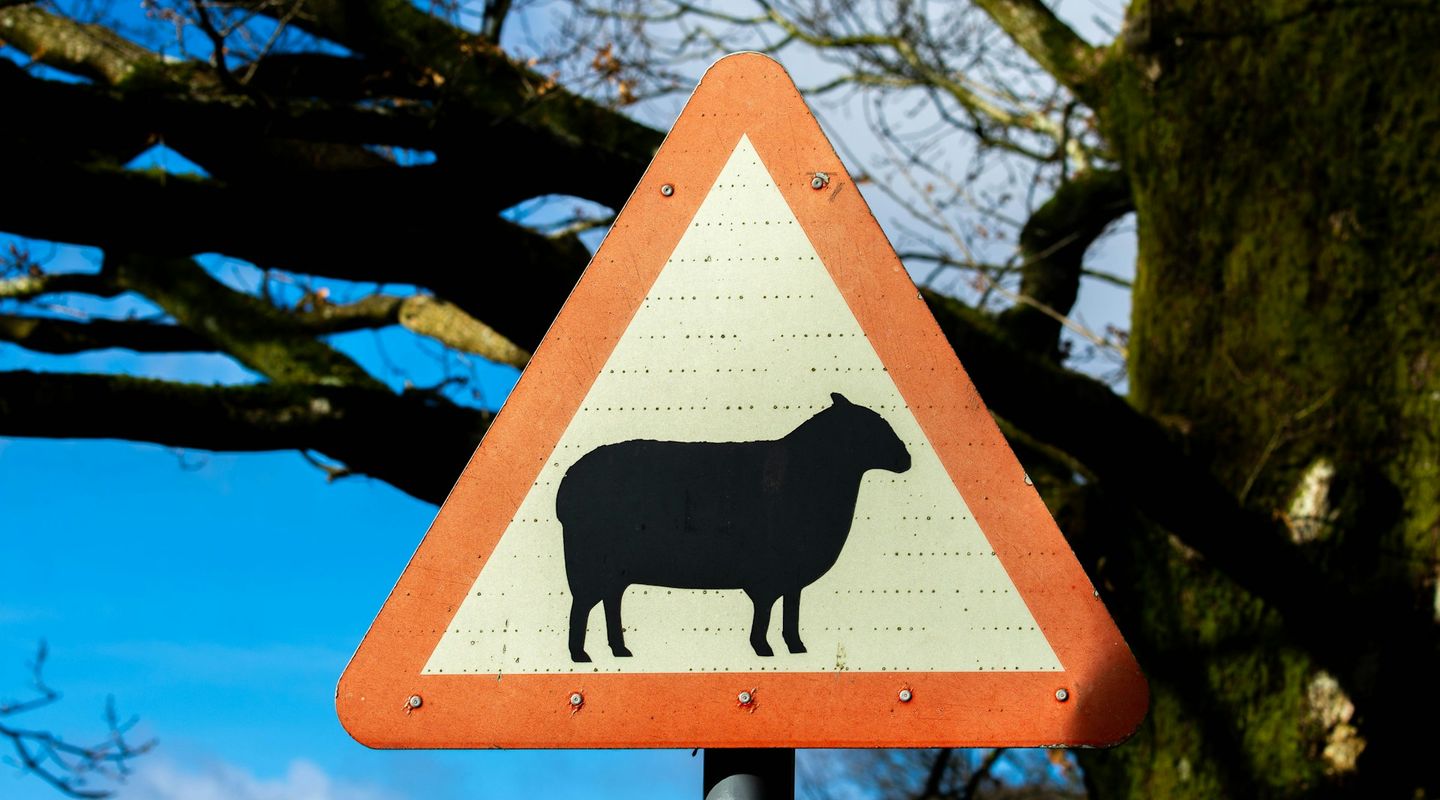
Separate warning signs cover domestic and farm animals. A sign showing a horse and rider warns of equestrian traffic near the road. A sign showing cattle warns of livestock crossings, typically where animals are moved between fields across a public road. A sheep sign appears on roads near farmland during seasonal movements.
If you see any of these signs, be prepared to stop completely. Livestock move without warning and a collision with a horse or cow at speed can be fatal to both the animal and vehicle occupants.
Migrating toad signs
One of the less expected UK road signs shows a toad in a red triangle. Toad crossing signs appear seasonally - typically February to April - on roads that pass near ponds or wetland where toads migrate in large numbers to their breeding sites. Some of these crossings are managed by volunteers.
Toad signs are temporary, removed after the migration season ends. They appear in rural areas and occasionally on suburban roads near water. The volume of toads crossing can be significant - thousands on a single night.
What to do when an animal appears in the road
If an animal appears ahead, slow down and stop if necessary. Do not swerve sharply to avoid it - losing control or moving into oncoming traffic is a greater risk than braking hard for a small animal. For large animals such as horses or deer, stopping completely is the only safe option.
After a collision with an animal, the reporting requirements vary. Hitting a dog: you are legally required to stop and report it to the police. Hitting a horse, cow, sheep, pig, goat, or donkey: you are equally legally required to report it - the Road Traffic Act 1988 treats these the same as a dog. Hitting deer or other wild animals: not a legal requirement, though it is good practice to report it, particularly if the animal is injured or blocking the road.
Insurance and animal collisions
Comprehensive motor insurance covers vehicle damage caused by striking an animal. Third-party only cover does not. If the animal belongs to an identifiable owner - a horse with markings, or farm livestock on a rural road - you may also be able to claim against the owner's public liability insurance for the damage caused.
If you are driving a borrowed or temporarily insured car, make sure the policy provides comprehensive cover. Temporary car insurance from Covertime provides comprehensive cover as standard.
Frequently asked questions
What does the deer warning sign mean?
The leaping deer in a red triangle warns that deer or other wild animals are known to cross in that area. Deer are most active at dawn and dusk and peak collision risk is October to December and May to June. Slow down and be prepared for animals to appear suddenly on the carriageway.
What should I do if an animal runs into the road?
Slow down and stop if you can do so safely. Do not swerve sharply - losing control or hitting oncoming traffic is more dangerous than braking hard. For large animals such as deer or horses, a full stop is the only safe course of action.
Do I have to report hitting an animal?
You must stop and report hitting a dog to the police. The same legal duty applies if you hit a horse, cow, sheep, pig, goat, or donkey - under Section 170 of the Road Traffic Act 1988, these animals carry the same mandatory reporting requirement as a dog. Hitting wild animals such as deer carries no legal reporting requirement, though it is good practice, particularly if the animal is injured or in the road.
What is the migrating toad sign?
A red warning triangle containing a toad image appears near ponds and wetland where toads migrate in large numbers, typically February to April. Signs are temporary and removed after the season. Some routes are managed by volunteers who help toads cross safely at night.
Does car insurance cover hitting an animal?
Comprehensive motor insurance covers collision damage from striking an animal. Third-party only cover does not. If the animal belongs to an identifiable owner, such as a horse or farm animal, you may also be able to claim against the owner's public liability insurance.
Temporary insurance quote
Get a price in under 60 seconds!